


Business Sectors
Events

Floating energy: successfully unlocking stranded gas using FLNGs and FSRUs
 24 Feb 2026
 GMT - ONLINE
Contents
Register to read more articles.
Salvage: Q2 2025 shows spike in ship fires, explosions, groundings and capsizes
Emergency response authorities and salvage companies were in high demand in Q2 2025, tackling ship fires and refloating ships


Numerous fires, explosions, groundings and capsizes in Q2 2025 have highlighted the importance of rapid emergency response and planned salvage. These incidents also demonstrated the risks involved when carrying electric vehicles and undisclosed container cargo, with sometimes deadly consequences.
Accidents involving large vehicle carriers and container ships resulted in heavily damaged or sunken vessels, keeping coast guards and emergency responders busy this quarter.
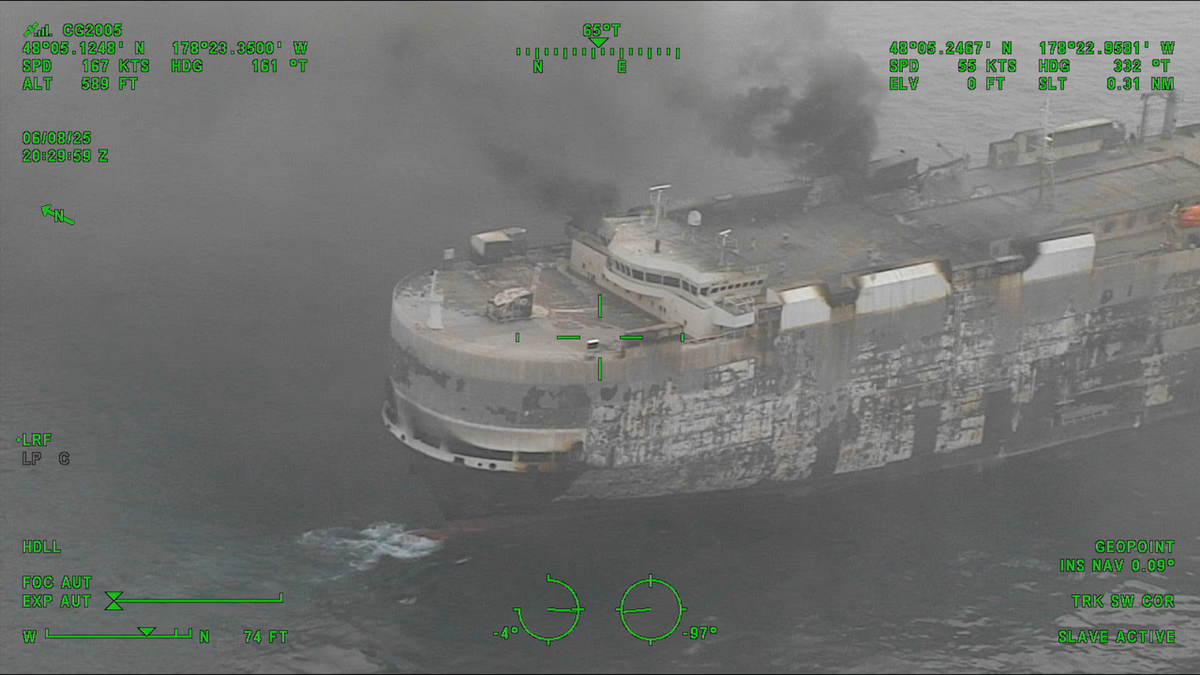
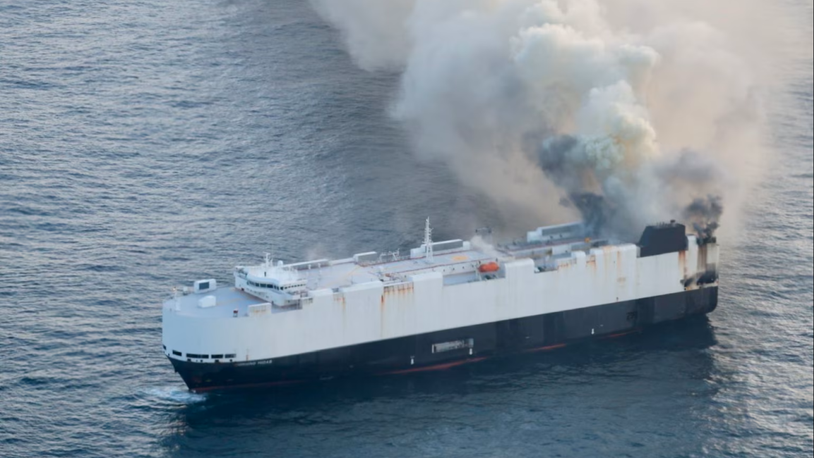
In the Pacific Ocean, a fire burned through vehicle carrier Morning Midas and its cargo while it was sailing from Yantai, China to Lázaro Cárdenas, Mexico.
Despite immediate emergency response efforts and activating onboard fire suppression systems, the fire’s intensity forced all 22 crew members to abandon ship, and the US Coast Guard (USCG) was alerted.
Crew were safely evacuated via lifeboat and rescued by the merchant vessel Cosco Hellas, with no injuries reported and by 9 June, tug Gretchen Dunlap arrived with salvage personnel and began assessing the conditions. Due to its remote location, 563 km south of Adak, Alaska, it took two weeks for other emergency response vessels to arrive.
Zodiac Maritime, the vessel’s manager, appointed Resolve Marine to lead salvage operations and worked closely with the USCG to develop response plans. Liberia-flagged, 2006-built Morning Midas was transporting 3,159 vehicles, including 70 fully electric vehicles and 681 partial hybrid electric vehicles and was carrying around 350 tonnes of gasoil fuel and 1,530 tonnes of very low sulphur fuel oil when the fire broke out.
In June, the USCG tracked the vessel’s condition through regular overflights, information from on-scene responders and drift analysis conducted in conjunction with information from the National Oceanic and Atmospheric Administration.
By 15 June, Foss Maritime’s 1994-built fire-fighting tug Garth Foss arrived to take over from Gretchen Dunlap and a third oceangoing tug was en route to support a long-distance tow. Zodiac Maritime says thermal scans and visual inspections showed no signs of active fire on board.
Also in the US, the coastguard responded when a US-flagged self-discharging bulk carrier Honorable James L Oberstar ran aground in the St Marys River after suffering mechanical issues. According to vessel owner, Ohio-based Interlake Steamship, it grounded 48 km downriver from the Soo Locks while carrying 409 litres of fuel. A salvage contractor and an oil-spill removal organisation were mobilised to stabilise and refloat this ship. It was then sailed to Fraser Shipyards in Superior, Wisconsin for repairs.
In Canada, salvage operations continued on grounded container ship MSC Baltic III in west Newfoundland, with a barge used to support fuel removal and cargo ship EEMS Dublin alongside as a walk-to-work vessel.
It grounded on 15 February 2025, and by mid-June, at least half the 1,600 tonnes of heavy fuel and marine gasoil originally on board had been removed using pumps and tanks on an alongside barge.
Around 115 containers of the estimated 470 on board were removed with a crane hoisting containers from MSC Baltic III to the deck of EEMS Dublin. Work continues to remove the rest of the fuel and containers and prevent further marine pollution from the damaged hull and fuel tanks. When this is completed, a plan will be formulated to refloat and salvage this ship.
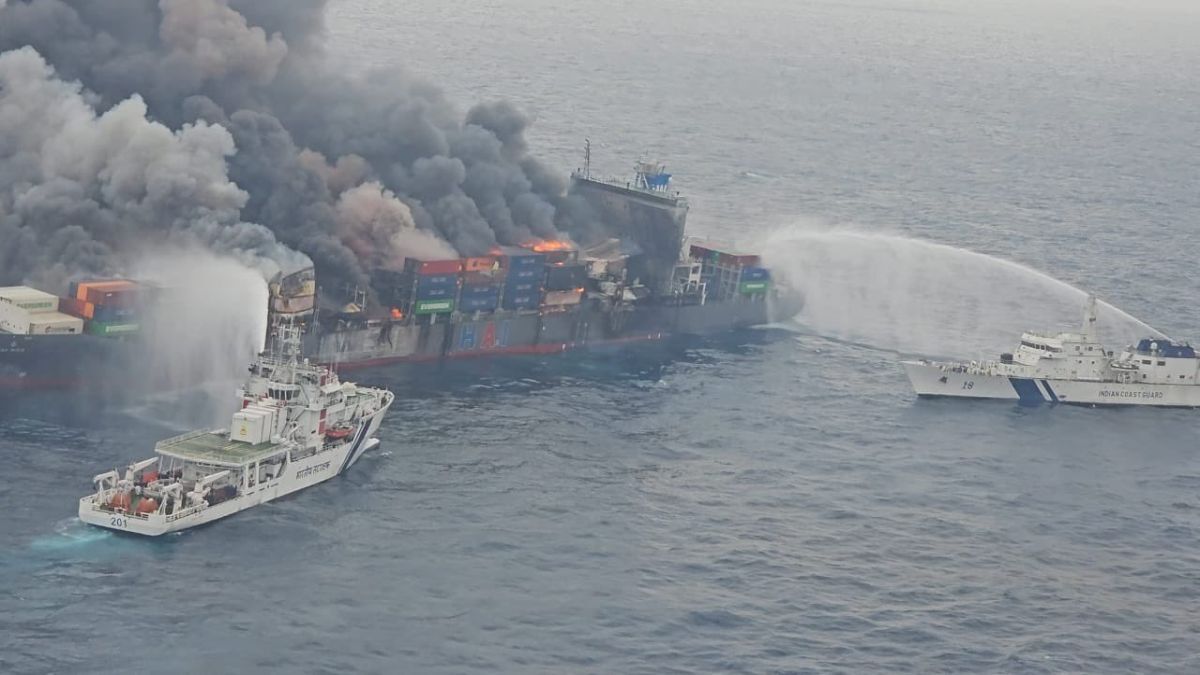
Offshore India, several incidents required assistance from the country’s coastguard. A fire engulfed a Singapore-flagged container ship while it was sailing in the Arabian Sea from Colombo, Sri Lanka to Nhava Sheva, India. Of the 22 crew members on Wan Hai 503, only 18 were rescued with four missing, presumed dead.
Two Indian Coast Guard vessels fought the blaze as it ripped through the container cargo and structures of the 2024-built ship, off India’s southern state of Kerala.
T&T Salvage Asia was mobilised to salvage the damaged and drifting ship under a Lloyd’s Open Form. On 13 June, an Indian Coast Guard Sea King helicopter lifted a salvage team onto the 42,532-gt ship, anchor handling tug Offshore Warrior arrived and a towline connection was secured.
Wan Hai 503 was towed to 50 nautical miles off the Indian coast, escorted by two coastguard fire-fighting vessels and the blaze was extinguished. T&T Salvage deployed four fire-fighting tugs - Garnet, Saksham, Water Lilly and Triton - and two more salvage vessels Saroja Blessing and Boka Winger.
This accident occurred just two weeks after Liberia-flagged container ship MSC Elsa 3 sank 13 nautical miles off the Kerala coast of India, with all 24 crew members rescued.
According to the Indian Coast Guard, that 1997-built ship was carrying 640 containers, including 13 containing hazardous cargo and 12 with calcium carbide, and carrying 84 tonnes of diesel and 367 tonnes of heavy fuel oil in its tanks. At least 100 containers were lost overboard with more than 60 washing ashore by mid-June.
Two offshore support vessels were stationed around the sunken ship for oil pollution mitigation. More than 80 tonnes of gasoil and over 360 tonnes of heavy fuel were on board. T&T Salvage was contracted to inspect this wreck using diving support vessel Seamac III, remotely operated vehicles and multibeam sonar.
In July, salvors plan to use hot tapping to remove the oil from the tanks to prevent further pollution. Shoreline clean-up is underway with teams of volunteers removing container cargo, including plastics and nurdles, along the coastline.
Also in the Indian Ocean, Panama-flagged bulk carrier Run Fun 3 started sinking 500 nautical miles south of the Maldives while sailing from Singapore to Togo. Crew abandoned to liferafts and were picked up by nearby Maple Harbour.
In the UAE, a collision between two large tankers off the coast of Fujairah led to fires on both vessels. Tanker owner Frontline says its Anglo-Eastern-managed 300,000-dwt VLCC Front Eagle and 164,500-dwt Adalynn collided 15 nautical miles off the UAE coast and its 24 crew members were evacuated safely after extinguishing the fire. Several fire-fighting vessels were mobilised to tackle the blaze on Adalynn.
In Trinidad and Tobago, Guyanese-flagged cargo vessel Hein ran aground on Monas Island and partially submerged while carrying a cargo of bricks to St Vincent. The Ministry of Energy, the Institute of Marine Affairs and the Environmental Management Authority organised a national oil-spill response with equipment deployed to contain any pollution and to refloat this vessel.
In Øresund, between Sweden and Denmark, Panama-flagged bulker Meshka ran aground on 7 June, was refloated then towed to port. Salvors emptied the ballast tanks, and two tugs connected to the stern and bow to remove it from the coastline. It was then sailed to Landskrona, Sweden, with the support of pilots and the Swedish Coast Guard.
In Thailand, an emergency response plan was implemented to contain an oil spill near a single-buoy mooring (SBM-2) used by oil tankers off the coast of Sriracha, Chonburi Province. The Thailand Maritime Enforcement Co-ordinating Center says this spill originated from Singapore-flagged crude oil tanker Phoenix Jamnagar on 6 June while it was moored at SBM-2. Thai Oil deployed three containment booms and oil dispersant chemicals on a 10-m3 spill.
Sign up for Riviera’s series of technical and operational webinars and conferences:
- Register to attend by visiting our events page.
- Watch recordings from all of our webinars in the webinar library.
Related to this Story
Events

Maritime Regulations Webinar Week
16 Dec 2025GMT - ONLINEFloating energy: successfully unlocking stranded gas using FLNGs and FSRUs
24 Feb 2026GMT - ONLINE
© 2024 Riviera Maritime Media Ltd.


