


Business Sectors
Business Sectors
Events
Contents

North American designer customises concepts


As highlighted elsewhere in this issue of OSJ, STX Marine likes to work as closely as possible with its clients in order to help them develop what are, effectively, bespoke solutions to their needs, rather than ‘off the shelf’ designs.
As the company’s Houston-based vice president for operations, Mike Carroll, told OSJ, much of the company’s recent success can be attributed to just this approach, especially its development of LNG-fuelled designs for Harvey Gulf International Marine, which are the first vessels powered by liquefied natural gas (LNG) to be designed for the Gulf of Mexico market.
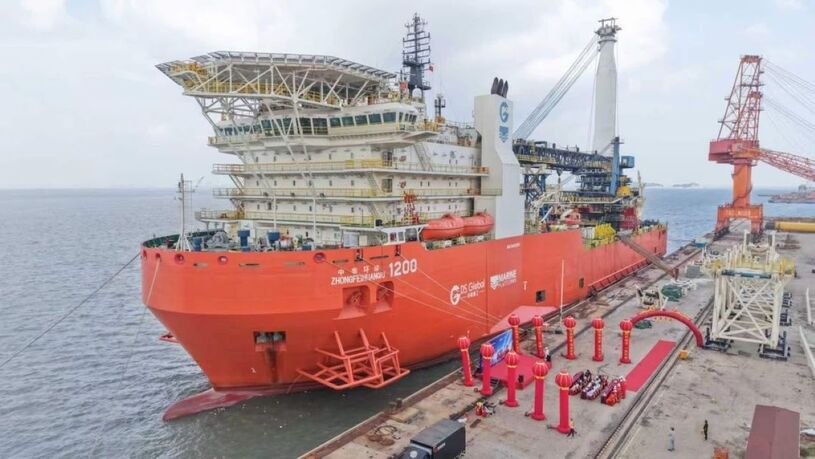
Another example of this way of working closely with a client to produce a design that exactly mirrors their requirement is the highly innovative compact semi-submersible (CSS) design, examples of which are now being built as well intervention vessels and as accommodation vessels.
“How we distinguish ourselves from other naval architects is that we work with an owner from the outset of a project. An owner might come to us only knowing that they want to build new vessels, but not knowing what it is exactly they want to specify,” said Mr Carroll.
“We specialise in working with clients who are looking to build, and who need us to help them develop a design, and present it to shipyards, get a price and take that design from the concept stage through to construction at the yard.
“That’s pretty much what we did for MAC Offshore when they approached us about the accommodation vessels they are building. They told us about the problems associated with putting accommodation on a barge-type hullform, which is pretty much what everyone had done up to then. We discussed issues such as the motions of the vessel and how they might be improved, and we looked at different concepts. The CSS concept grew organically out of that process.”
The CSS, it is claimed, has a number of advantages compared with a conventional hullform, including significantly reduced roll angles compared to a monohull, along with dynamic positioning to DP3 standard and an enhanced level of safety during stationkeeping close to any fixed structures.
A contract for the accommodation ship version of the CSS was signed in 2010, with a projected delivery date of December 2012. The contract was awarded to Fujian Mawei shipyard in China, which will build the CSS.
Mr Carroll told OSJ that 2012 had been characterised by a lot of enquiries from owners looking to develop new designs and some looking to build versions of existing designs developed by STX Marine. The second half of 2011 was also characterised by a high level of enquiries, mainly for deepwater, DP2 vessels, he explained, but the number of enquiries for vessels of this type had peaked, he believed, since Hornbeck Offshore announced its intention to order 16 deepwater vessels based on STX Marine designs. Eastern Shipbuilding Group (see box) was recently selected to build eight of these vessel for Hornbeck Offshore, based on STX Marine’s SV300 and SV310 designs.
“Hornbeck could actually end up building twice as many vessels if they exercise options in the contract,” Mr Carroll told OSJ. “A total of 32 new vessels is a tremendous amount of deepwater capacity, and I think that might make other owners think twice about building more ships like that right at the moment.”
Deepwater DP2 vessels aside, STX Marine has gained most attention in recent months for its work with Harvey Gulf International Marine on offshore ships powered by LNG. As also highlighted in this issue, Harvey Gulf International Marine recently signed a contract to build two more STX Marine SV310DF dual-fuel OSVs at Trinity Offshore, bringing the number of LNG-powered vessels on order for Harvey Gulf to four. As with the first two vessels, these vessels will be powered by a dual-fuel solution provided by Wärtsilä.
“The four OSVs will be the first US flagged dual-fuel vessels that will have the American Bureau of Shipping’s ENVIRO+ certification, and will be constructed with environmentally friendly materials and will meet the highest emissions standards,” Mr Carroll explained, noting that his company had worked particularly closely with the client on this project, and subsequently with the US Coast Guard, to ensure that the revolutionary design met all of the required standards.
STX Marine will also be providing the designs for two new contracts recently secured by Eastern Shipbuilding Group. The first contract is for a 310ft multipurpose light construction vessel for Harvey Gulf, and the second is for Brazilian owner Boldini.
The CV310 design, to be named Harvey Deep-Sea, will be an enhanced version of the STX Marine SV300s currently being constructed for Harvey Gulf Marine at Eastern Shipbuilding and will have a 165-tonne active heave-compensated deck crane, a moonpool, stern roller, helideck, fire-fighting to FiFi 2 standard, accommodation for 71 and a hangar for remotely operated vehicles.
The vessels for Boldini in Brazil are being built with the support of a US$241 million Title XI shipbuilding loan guarantee from the maritime administration (MARAD) in the US. These SV290 designs will have a deadweight of approximately 4,500 tonnes and are specifically tailored to meet the requirements of Brazil’s state-owned oil company, Petrobras.
Eastern Shipbuilding Group delivers latest Tiger Shark class vessel
Another newbuild vessel designed for STX Marine for Harvey Gulf International Marine, Sisuaq, the second of three 292ft ‘Tiger Shark’ class OSVs, was delivered to the company by Eastern Shipbuilding Group at the end of March.
STX Canada provided the design based on two earlier vessels built at Eastern Shipbuilding Group for Aries Marine.
Launched by the yard in October, Sisuaq is a DP2, SOLAS-approved, FiFi 1-classed, diesel-electric vessel with twin Z-drives. Measuring 292ft x 64ft x 24ft 6in, the vessel has four Cummins QSK60-DM 16-cylinder turbocharged ‘Tier II’ diesel engines rated 1,825kW at 1,800 rpm. Main propulsion is provided by two Converteam/GE-furnished Hyundai 2,500kW, 690V AC motors driving two Schottel SRP 2020 FP Z-drives with nozzles rated at 2,500kW at 1,025 rpm each for a total of 6,704hp. Schottel also provided two STT 4 fixed-pitch tunnel thrusters rated at 1,180kW at 1,170 rpm each with direct coupled Hyundai 690V AC electric motors. Converteam/GE provided the complete integrated diesel-electric package including drives, motors, switchboards, motor control centres, automation and navigation and communication electronics. The vessel is capable of a maximum speed of 14 knots with a cruising speed of 12 knots.
The below-deck capacities of the OSV include 241,408 gallons of fuel, 602,297gallons of water ballast, 19,480 barrels of liquid mud, 14,350ft3 of bulk mud, 1,700 barrels of methanol and 16,728 gallons of potable water.
The integrated pilothouse is arranged for increased visibility and features the latest technology in navigation and communication equipment. All three vessels are ABS classed +A1, +AMS, + ACCU, Circle E, Enviro +, Offshore Support Vessel and are certified under SOLAS. ABS class is to include DPS-2 notation and FiFi 1.
Sisuaq immediately started a long-term contract in Alaska, several upgrades to specific systems having been accomplished to facilitate operations in cold weather conditions, including heating enhancements, window heaters, added steel plating to the hull for operation in ice conditions and hardened electronics for harsh weather operations with temperatures down to -20° Fahrenheit.
Sisuaq and sister vessels are built to the highest class, environmental and safety standards. Crew comfort is paramount and Eastern Shipbuilding Group hired Noise Control Engineering to provide recommendations for the reduction of noise and vibration, in order to meet the latest IMO standards.
Harvey Gulf has also ordered a 302ft construction vessel/offshore supply vessel from Eastern Shipbuilding Group, Harvey Deep Sea, which will be ABS classed like Sisuaq but with FiFi2. It will be equipped with an active heave-compensated 165-tonne knuckleboom crane capable of lifting/setting 100 tonnes at depths up to 10,000ft. This vessel is scheduled for delivery in May 2013.OSJ




Related to this Story
Events

Maritime Regulations Webinar Week
 16 Dec 2025
 GMT - ONLINE

Floating energy: successfully unlocking stranded gas using FLNGs and FSRUs
24 Feb 2026GMT - ONLINE
© 2026 Riviera Maritime Media Ltd.


