


Business Sectors
Business Sectors
Events
Contents

Register to read more articles.

North Seas countries plan collective action on tenders for offshore wind
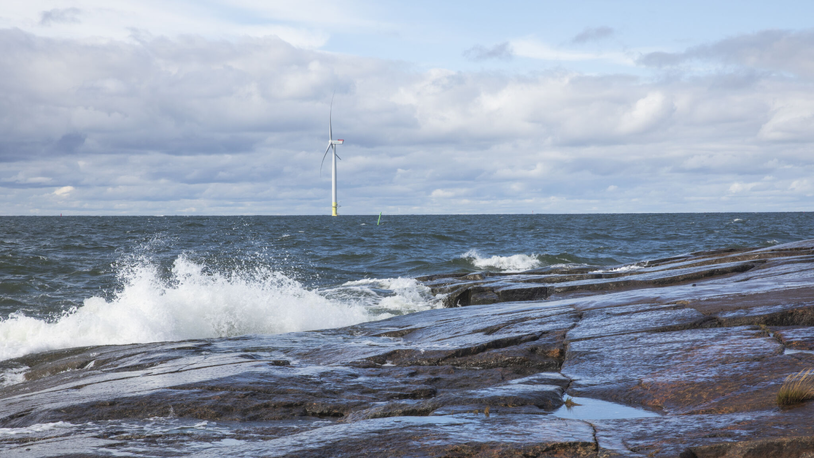
Nine North Seas countries have agreed a plan for collective action on tendering offshore wind capacity to speed up the roll-out of new windfarms


The plan was unveiled in The Hague today (20 November 2023) at the annual North Seas Energy Cooperation (NSEC) conference.
At the conference, eight EU countries, Norway and the European Commission agreed a shared ‘Action Agenda’ that will facilitate an integrated energy system by 2050, a sustainable and resilient European supply chain and a better balance between energy and nature in the North Seas.
“NSEC ministers will take action to increase visibility and predictability for the entire supply chain by enhancing co-ordination, including co-operation on ports infrastructure, access to raw materials and cables,” said a NSEC statement about the Action Agenda.
“As a first step we will publish a joint NSEC offshore wind energy tender plan for the coming years to demonstrate how national governments will translate ambitious targets into concrete action. This will enable investments in the supply chain in Europe, including port infrastructure.
“Moreover, we will seek to get investors on board and unlock final investment decisions by providing long-term investment signals in order to boost confidence.”
The agreement follows on from the shared ambitions the countries declared earlier this year and the Commission’s European Wind Power Package published in October 2023. Based on the agenda, the North Seas will be the largest source of sustainable energy in Europe.
Belgium, Denmark, France, Germany, Ireland, Luxembourg, the Netherlands, Norway, Sweden, and the European Commission participated in the meeting, with the UK as a guest.
A collective approach to tenders for offshore wind capacity will enable the EU to ‘translate national ambitions to European actions,’ the NSEC countries said. “Planning tenders together will translate NSEC countries’ broad ambitions into tangible progress, auctioning around 15 GW every year, awarding almost 100 GW between this year and 2030.
“This will increase the predictability in the wind power sector and allow for better collaboration. For example, it will facilitate better co-operation and co-ordination on cables, harbour infrastructure and access to resources. This will help the European wind power sector with mid- and long-term financial planning, and countries will better co-ordinate their infrastructure planning at sea,” the NSEC said.
In January 2024, the European Network of Transmission System Operators for Electricity (ENTSO-E) will publish a shared plan for infrastructure in the North Sea, with input from NSEC countries. This is an important step on the road to a European integrated energy system in 2050. The plan takes into account the need for a fair balance with other sectors and users in the North Sea, such as the fishing and transport industry.
EU Commissioner for Energy Kadri Simon said, “Europe’s energy mix is becoming cleaner and greener, and offshore renewables will have an indispensable part in the future energy mix.
“The North Sea is leading the way in deployment and has the potential to become Europe’s ‘Green Power Plant.’ Our discussions today showed the joint determination and commitment to continue the work to deliver on our offshore ambitions, and to take the work forward to boost the competitiveness of this vital sector.”
Dutch Minister for Energy and Climate Rob Jetten said, “North Sea countries have shared ambitious plans for the development of offshore wind. Now it is time to bring these ambitions into action. We all share the responsibility to develop the North Sea offshore energy plans in a responsible manner, in co-ordination with other North Sea users, while minimising ecological impact. Close collaboration is the only way to successfully reach our energy ambitions. Today, we start with the joint actions to take the sector to the next phase.”
A new study commissioned from Royal HaskoningDHV by the NSEC highlighted the critical role ports and harbours play in development, maintenance and system integration of offshore wind energy. The study indicates that without additional common action, the current and planned capacity of harbours surrounding the North Seas is insufficient to reach the targets of 2030. The report makes a number of recommendations, including shared European tender planning, as foreseen under the European Wind Power Action Plan.
Sign up for Riviera’s series of technical and operational webinars and conferences in 2023:
- Register to attend by visiting our events page.
- Watch recordings from all of our webinars in the webinar library.

Related to this Story

Events

Maritime Regulations Webinar Week
 16 Dec 2025
 GMT - ONLINE
Floating energy: successfully unlocking stranded gas using FLNGs and FSRUs
24 Feb 2026GMT - ONLINE
© 2026 Riviera Maritime Media Ltd.


