


Business Sectors
Business Sectors
Events
Contents
Register to read more articles.
Oil companies should reconsider age restrictions
As fleets age, energy companies and EPC contractors will be unable to find suitable and available support vessels under 20 years old


There is high demand for vessels to support subsea construction and maintenance assets in the Middle East, where state-backed energy companies and contractors have ramped up operations.
Engineering, procurement and construction (EPC) contractors involved in subsea installations and interventions have called on vessel owners to invest in support vessels, especially those capable of operating in shallow waters in the Middle East Gulf.
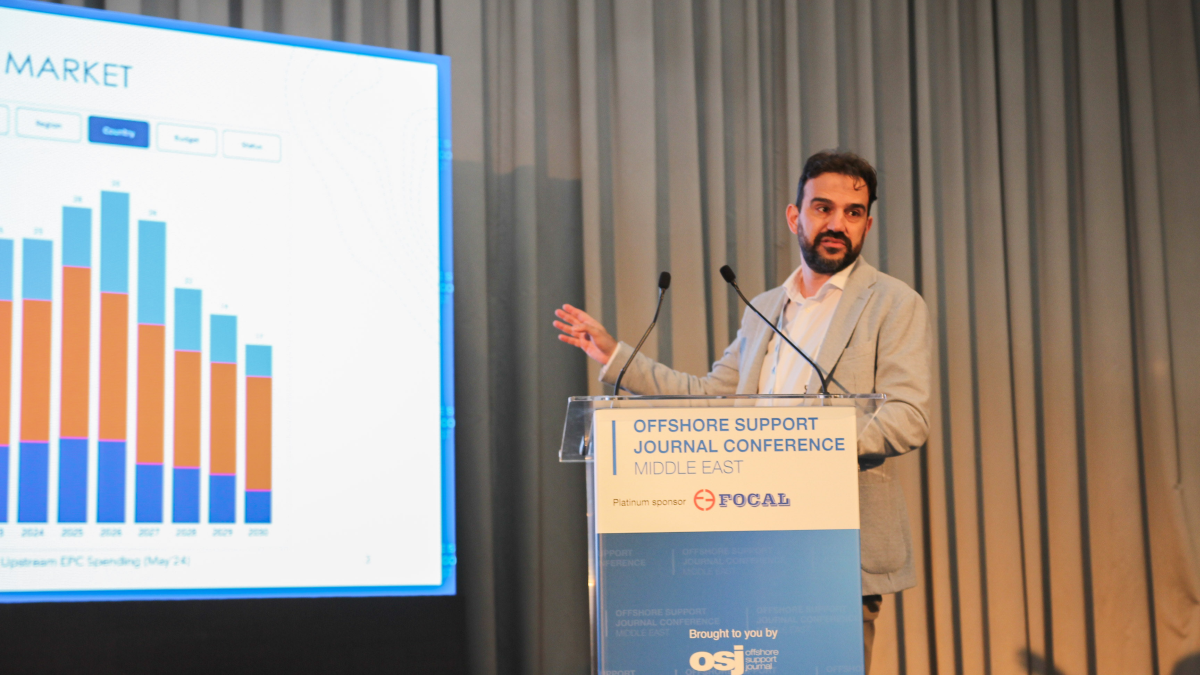
McDermott International senior director for marine operations, Francesco Calanca, says there is an active subsea pipelines construction and installation market in the region and enough project visibility to plan until the end of this decade. But he warns that planned oil and gas developments face delays due to the lack of available supporting assets.
“There are increases in capital expenditure, but a potential shortfall in suitable support vessels could impact project execution,” Mr Calanca says.
This could be exacerbated during the rest of this decade as available and active vessels age to beyond the current age restrictions national oil companies have set for operating in their waters. This is, on average, 25 years for tugs, platform supply vessels (PSVs) and diving support vessels (DSVs) and 15 years for cargo barges, and 40 to 45 years for construction vessels.
Either these restrictions should be raised or owners encouraged to order new vessels to renew their fleets and replace those deemed too old to operate. Mr Calanca thinks energy companies should “adapt vessel approval criteria to emphasise operational readiness of vessels, rather than age.”
In particular, there is high demand for tugs with shallow draughts of 2.5 m and bollard pull of 80-100 tons and capabilities to handle 20-tons anchors. “We need to develop universal support vessels and promote versatile OSVs capable of addressing the major requirements of EPC contractors,” says Mr Calanca.
There should also be no national restrictions preventing the universal use of these vessels across the region. “
“We should create unified standards for all the Middle East Gulf,” he says. “By adapting measures, the industry can better prepare for the surge in offshore activities, ensuring project execution and meeting the evolving demand of the market.”
McDermott’s own construction vessels are fully booked and expected to be busy throughout 2025. Mr Calanca says the contractor is in “discussions with potential partners for newbuilds” but has not made any commitments to order any new vessels, partially due to challenges in potential capital expenditure and securing financial support for these initiatives.
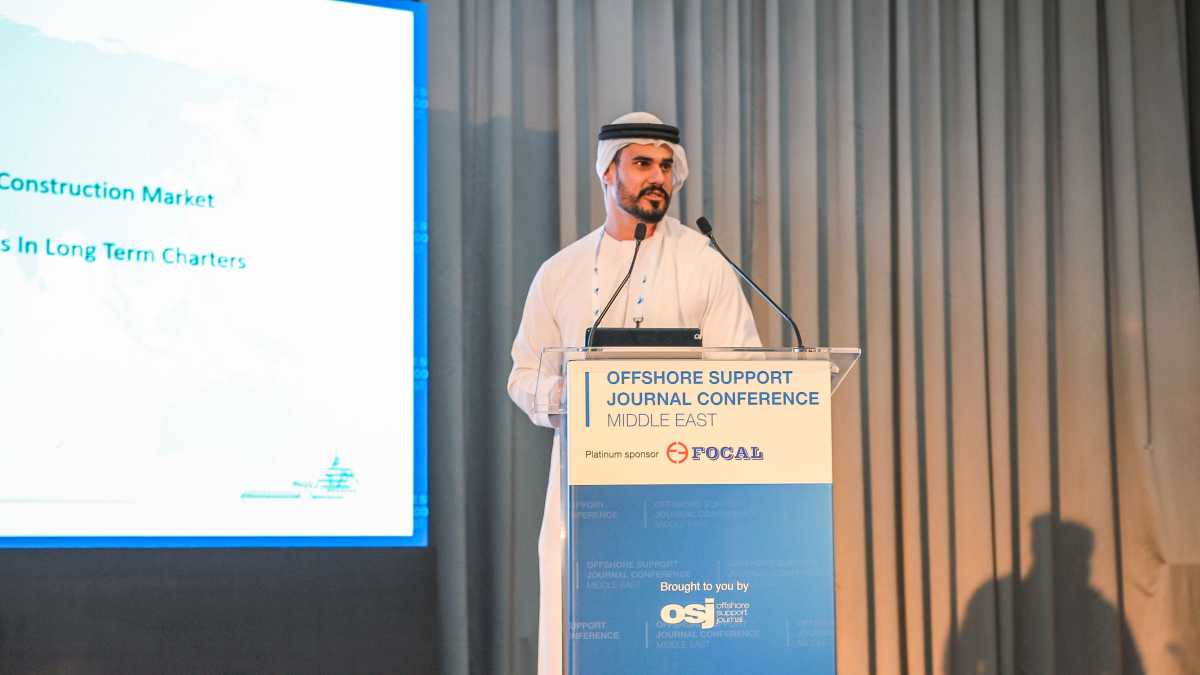
Murbarak Group strategic business development director, Marwan Mubarak, agrees there is rising demand for vessels supporting subsea developments and maintenance, including for tugs and inshore multicast. But he describes the commercial market as volatile in the region, due somewhat to recent delays in long-term oil and gas field investments in Saudi Arabia and the United Arab Emirates (UAE).
He expects there will be “small peaks” in vessel demand in 2025 and 2026, but these would not be the highs of 2006 to 2014, the last peak in the offshore industry. Some of planned operations will be affected by vessel shortages.
“By adapting measures the industry can better prepare for the surge in offshore activities”
Globally, net utilisation has risen from 70% in 2022 to 80% in 2024 for DSVs and 90% for vessels deploying remotely operated vehicles, leaving little left for hiring in the short term. It is more difficult for EPC contractors as they are “looking for high value assets in long term charters,” says Mr Mubarak.
Mubarak is working on “smaller EPC subsea projects and working our way up,” he explains.
It has 95% utilisation, including during downtime, on existing assets with a focus purely on the Middle East region. “We know the region, and we expect demand in the Middle East will remain high,” he says.
In the region, Subsea 7 has won a substantial contract, under a long-term agreement, from Saudi Aramco for decommissioning of existing subsea facilities and installing a new pipeline. This includes engineering, procurement, construction and installation of the new line and subsea equipment at the Abu Safah field, offshore Saudi Arabia. Subsea 7 said offshore operations would be undertaken in 2026.
Subsea 7 also secured more work in the US Gulf of Mexico with contracts announced in December 2024. Shell Offshore Inc awarded a sizable contract to Subsea 7 for engineering, procurement, construction and installation of a production flowline and related subsea infrastructure at its Phase 3 Silvertip development, located in the deepwaters of Alaminos Canyon. Offshore activities in water depths to 3,000 m are expected to begin in 2026.
In a second award, Subsea 7 won a substantial contract for a subsea tie-back development to an unnamed energy company. Its workscope includes engineering, procurement, construction, and installation of subsea equipment, including structures, umbilicals, production risers and flowlines. Work on both projects will be managed from its office in Houston, Texas.
Subsea 7 defines a substantial contract as being between US$150M and US$300M and a sizeable contract as being between US$50M and US$150M.
Foam subsea buoyancy material gains type approval
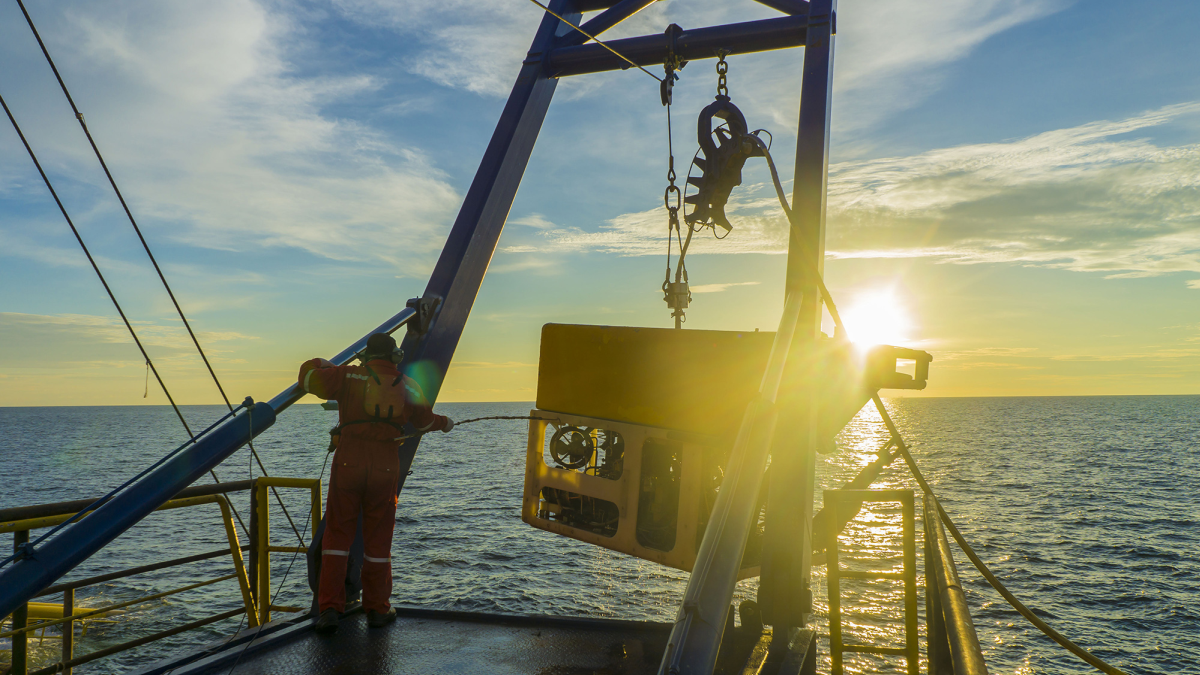
On the equipment front, UK-based Base Materials is the first to gain DNV type approval for its syntactic foam subsea buoyancy Subtec 11500 material. This followed rigorous testing by DNV, demonstrating its performance in water depths to 11,500 m. DNV also recognised the Leicester-headquartered company as an approved manufacturer. Its Subtec range has densities from 400 to 650 kg/m3 and grades to suit a range of seawater depths, from 2,000 m to 11,500 m.


Related to this Story


Events

Maritime Regulations Webinar Week
 16 Dec 2025
 GMT - ONLINE
Floating energy: successfully unlocking stranded gas using FLNGs and FSRUs
24 Feb 2026GMT - ONLINE
© 2026 Riviera Maritime Media Ltd.


