


Business Sectors
Business Sectors
Events
Contents

Register to read more articles.

OSV roundtable: digital integration tests fleet mergers
OSV industry leaders highlighted cyber-security vulnerabilities, integration challenges, and data management complexities as major obstacles in vessel digitalisation efforts at an Inmarsat-hosted roundtable in London


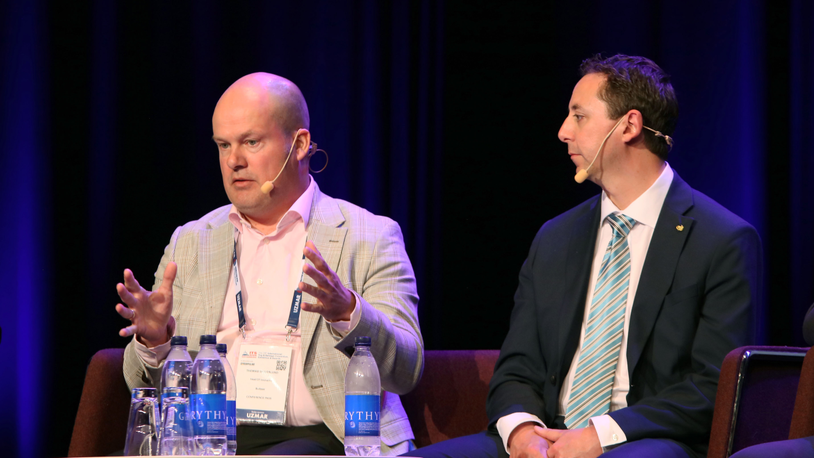
Building on discussions from last year’s Middle East roundtable on sustainable business models and technological collaboration, the discussion, held under the Chatham House Rule and moderated by Riviera’s executive editor Edwin Lampert, focused on the obstacles to digitalisation.
Vessel positioning systems were identified by several operators as a primary attack vector for cyber threats – a critical vulnerability that has been exacerbated by the rapid adoption of high-speed, low-latency satellite internet services. A director of offshore operations revealed their company has been forced to implement up to five different reference systems on vessels operating in sensitive regions, particularly in the Eastern Mediterranean and Black Sea, where GPS jamming and spoofing have become routine challenges.
The integration of legacy systems with new digital technologies is another significant operational challenge. Participants reported systems as young as five years old are becoming obsolete, creating substantial financial and technical burdens. This issue was exacerbated by the industry downturn between 2015 and 2022, during which limited technological investment created a modernisation backlog that companies are now struggling to address. One operator noted technology that previously lasted 20 years now has a lifecycle of less than five years, presenting significant challenges in an environment of flattening revenues.
Regional variations in digital transformation requirements have created additional complexities. In Brazil, operators must comply with Petrobras’ demanding specifications, including Portuguese-language interfaces and extensive video surveillance systems. One Brazilian operator described how these requirements necessitate vessel modifications taking up to two months between contracts, significantly impacting operational efficiency.
The movement toward cloud-based solutions has gained momentum, with several operators reporting complete transitions to cloud infrastructure as of January 2025. However, this shift has highlighted the challenges of data management, with one technology provider processing over 2Bn data points daily. While operators are capturing increasing amounts of data, participants noted analysis often occurs in isolated silos for individual systems, limiting its value. Several operators highlighted the potential for AI to enable more holistic analysis approaches across multiple systems.
Crew welfare has emerged as a critical factor in technology adoption, with multiple operators citing high-quality internet connectivity as essential for crew retention. The vice president of a major offshore energy company noted vessels equipped with advanced communication systems have a significant advantage in recruitment, particularly for older vessels that might otherwise struggle to attract qualified personnel.
Looking ahead, industry leaders expressed concern about increasing client-specific technical requirements and the impact of geopolitical instability on operations. The prospect of remote vessel control within the next 12 months was seen as both an opportunity and a potential security risk, with operators acknowledging the need for robust safeguards against cyber attacks.
Participants also highlighted broader industry challenges, such as knowledge retention following the recent market downturn and the need to harmonise systems after industry consolidation. In some cases, acquired vessels came with contractual obligations to maintain specific communication and monitoring systems, complicating efforts to standardise digital platforms across fleets. Additionally, newly acquired vessels often operate under different regulatory frameworks or serve clients with unique technological requirements. As a result, operators are sometimes forced to maintain parallel systems for longer than anticipated, suggesting future merger strategies may need to place greater emphasis on the implications of digital infrastructure integration during the planning phases.
Sign up for Riviera’s series of technical and operational webinars and conferences:
- Register to attend by visiting our events page.
- Watch recordings from all of our webinars in the webinar library.

Related to this Story

Events

Maritime Regulations Webinar Week
 16 Dec 2025
 GMT - ONLINE
Floating energy: successfully unlocking stranded gas using FLNGs and FSRUs
24 Feb 2026GMT - ONLINE
© 2026 Riviera Maritime Media Ltd.


