


Business Sectors
Business Sectors
Events
Contents

Rapidly expanding VLGC orderbook raises oversupply concerns for coming years
The rapidly expanding LPG carrier orderbook is raising concerns about a potential supply-demand imbalance in the market over the next four years
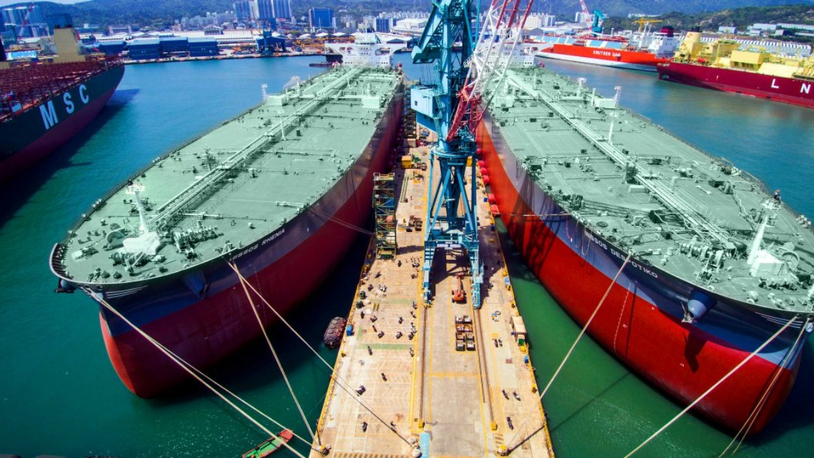
Intelligence service and data provider Anfil Gas said in its latest quarterly report that the very large gas carrier (VLGC)/very large ammonia carrier (VLAC) orderbook has reached 178 vessels, equivalent to almost 40% (39.6%) of the existing fleet. A total of 103 firm orders have been placed this year, accounting for 58% of the orderbook and 23% of the existing fleet.
Anfil Gas does not expect ammonia trade to expand sufficiently in the near term to absorb a significant number of VLACs away from the LPG market, suggesting that such a development is unlikely before the next decade.
Consequently, with the orderbook extending through 2030, the research provider argues that, “based on realism and not wishful thinking”, all these newbuildings should be expected to compete for LPG cargoes.
Examining the additional export capacity expected to come online, Anfil Gas said the US is leading the expansion, with approximately 40M tonnes per annum (mtpa) expected to be gradually commissioned by 2028-2029.
The Middle East Gulf follows, with nearly 20 mtpa of additional capacity expected around 2030-2031, while Canada is also anticipated to commission approximately 2.5 mtpa by 2028.
These figures cover firm projects, while additional export terminals are also under consideration or approaching a final investment decision (FID) in the US, Argentina and Canada.
Based on these confirmed export facilities and assuming cargo flows return to normal, Anfil Gas estimates that the additional LPG supply would generate demand for approximately 191 VLGCs.
However, as this calculation assumes 100% fleet utilisation, the research provider considers a projection based on a more realistic utilisation rate of 85% more appropriate, resulting in demand for 163 vessels.
With 218 newbuildings scheduled for delivery between 2026 and 2030, the resulting gap of 55 vessels “should not be considered a non-negligible supply-demand imbalance”, the research noted.
Anfil Gas also examined developments surrounding the Panama Canal and plans to develop an energy corridor pipeline.
The company said a final investment decision on the project is expected towards the end of 2027, with the pipeline and associated terminals targeted to become operational around 2030.
“If this project materialises, it will eliminate delays and shorten voyages. Shipping inefficiencies that have greatly benefited freight in the past due to Panama Canal congestion will disappear along with tonne-miles,” Anfil Gas explained.
What could prevent a crisis?
But what could prevent what Anfil Gas describes as a “serious crisis for the VLGC market over the next four years”?
First, a slowdown in additional newbuilding orders could help contain the expansion of the fleet. However, given the current orderbook, this alone may not be sufficient.
Anfil Gas also believes that the global fleet will need to shed a considerable amount of ageing tonnage.
According to the firm’s estimates, if sanctions on Iranian LPG were lifted, as many as 56 overaged VLGCs currently serving the trade could be scrapped, as they would likely be uncompetitive in mainstream markets or rejected by terminals because of their age.
Further final investment decisions on additional export terminals could also help absorb more of the incoming tonnage by generating additional demand for LPG transportation.
Anfil Gas identifies 2029 as a potentially challenging year for the freight market, with 65 VLGCs scheduled for delivery, representing a record annual number.
If all these vessels enter service as planned, the resulting pressure on freight rates could be significant, the research provider suggested.
However, if the expected infrastructure developments are delayed while newbuilding deliveries remain on schedule, the market could face similar challenges a year earlier, in 2028.
You have viewed your 10 articles for this month.
To continue reading this article please register or login below.





Related to this Story


Events

Maritime Regulations Webinar Week
 16 Dec 2025
 GMT - ONLINE

Floating energy: successfully unlocking stranded gas using FLNGs and FSRUs
24 Feb 2026GMT - ONLINE
© 2026 Riviera Maritime Media Ltd.


