


Business Sectors
Business Sectors
Events
Contents

Register to read more articles.
Rethinking the future of passenger evacuation
As passenger capacities on cruise ships and ferries have grown, marine evacuation systems have evolved to safely facilitate large-scale evacuations from these behemoths in minutes


When it hit the water in 1996, Carnival Destiny became the world’s largest cruise ship, surpassing 100,000 gt. Over the last 30 years, mega cruise ships have continued to grow in size, scope, and imagination. As proof positive, the new Carnival Destiny, set to debut in 2029 as the lead ship of Carnival’s Ace-class, will carry more than three times as many passengers (2,600 to 8,000) and have twice as much volume (100,000 to 230,000 gt) as her legendary namesake.
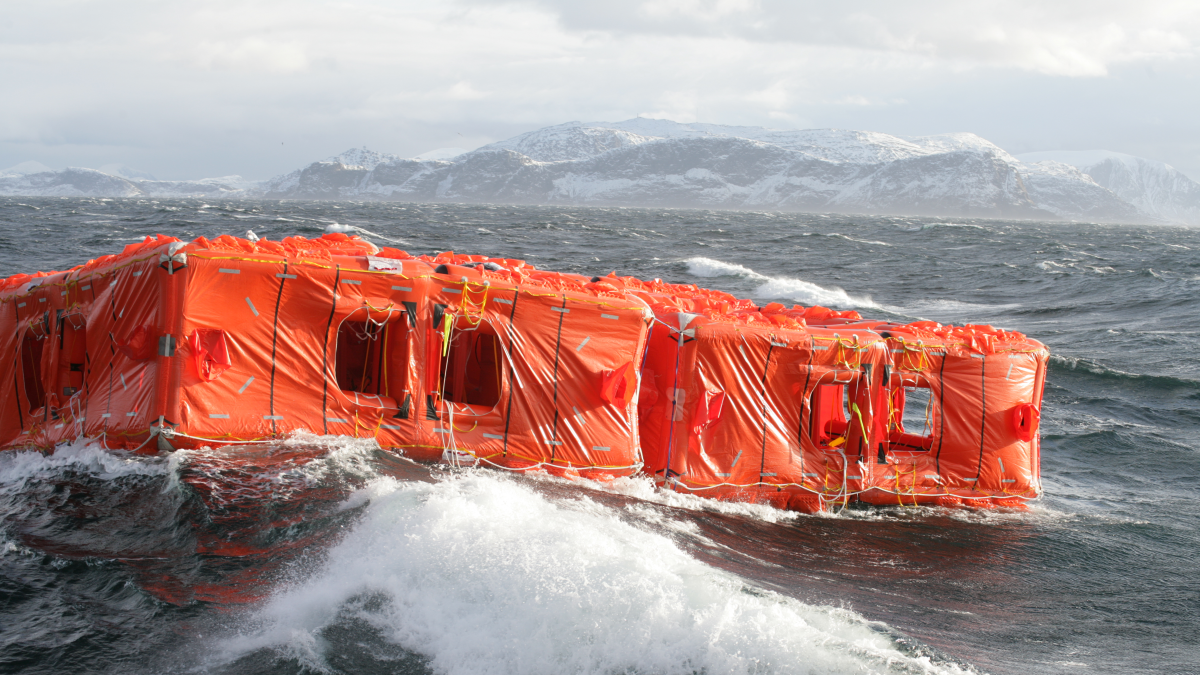
As passenger capacities on cruise ships and ferries have grown over the last 30 years, there has been a fundamental rethinking of how to safely and quickly evacuate large numbers of passengers from these behemoths. This thinking has been promulgated and formalised in global regulations. IMO Safety of Life at Sea (SOLAS) regulations mandate that marine evacuation systems (MES) provide a speedy, controlled means of evacuation from the ship’s embarkation deck for passengers and crew. These systems incorporate an automatically deployed slide or chute that connects to large-capacity floating survival craft. Some of the new-generation systems claim the ability to evacuate more than 700 passengers in 30 minutes.
Global technical standards, manufacturing specifications and testing protocols for MES are defined by IMO’s International Life-Saving Appliance Code (LSA). Under the regulations, MES must accommodate evacuees wearing approved lifejackets and of various ages, sizes and physical capabilities, and have sufficient structural strength to withstand use in heavy weather and harsh marine environments.
UK-based Survitec takes a proactive approach to anticipating and responding to changes in SOLAS and IMO LSA Code requirements. “We actively participate in several industry working groups, providing early visibility of proposed regulatory developments and the opportunity to contribute to discussions that help shape future standards,” a Survitec spokesperson told Passenger Ship Technology.
A key part of this engagement is through Paul Watkins, Survitec’s regulatory and compliance manager. He is Chair of the Technical Committee for the International Life-Saving Appliance Manufacturers’ Association (ILAMA). In this role, Mr Watkins represents ILAMA as an NGO observer at IMO, helping to review, discuss and influence the development of global maritime safety regulations.
Internally, Survitec has a dedicated Regulatory Board that continually reviews forthcoming legislative changes and assesses their impact on products, technologies and design practices. This ensures the engineering and design teams can evaluate emerging requirements at an early stage, enabling them to develop compliant solutions for the maritime industry.
“A key trend in MES design is increased automation,” observed a Survitec spokesman, with the goal of enabling the system’s launch and deployment “with minimal crew intervention, helping to simplify emergency procedures and support faster, more reliable evacuations.”
One of the latest innovations for the UK-based manufacturer is Marin Ark 2, which is one of the largest dry-shod MESs in the world, designed for the carriage of 158 passengers, with the potential to be scaled up for 948 passengers if required. “Our Marin Ark 2 solution has been designed with minimum crew actions in mind, reducing the potential for human error and improving reliability. All primary liferafts inflate, and both helical slide paths deploy together in a single action, helping to streamline the evacuation process in high-pressure situations,” said the Survitec spokesperson.
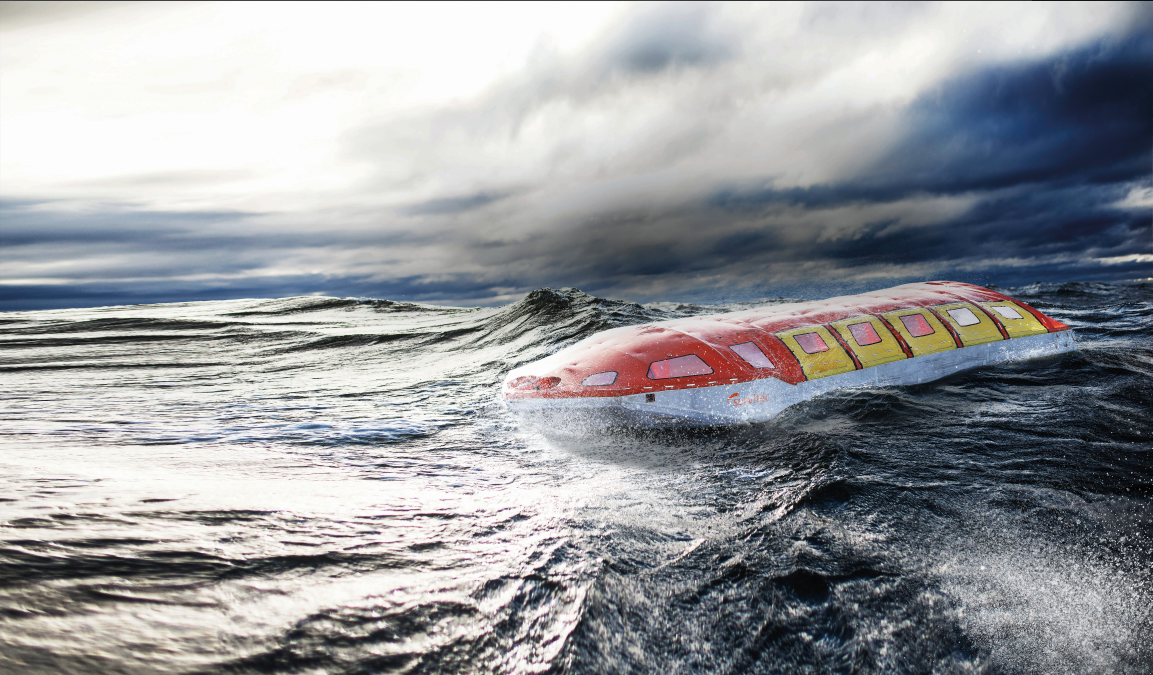
Similarly, a study conducted by the company with naval architectural and marine engineering firm Foreship detailed the benefits of using the newly developed Seahaven, described as the “world’s largest inflatable lifeboat,” in new cruise ship designs. A study highlights space utilisation, weight and cost efficiency as key benefits, making the system favourable for both new designs and as a retrofit for existing vessels.
Seahaven has fully automated deployment, allowing the system to be launched at “the push of a button”. It fully deploys in under four minutes, evacuating 1,060 passengers, and it travels independently for up to 24 hours at a speed of 6 knots, according to the spokesperson.
Safety videos created by the company familiarise passengers with the evacuation process before an emergency occurs, helping to support crew, improve passenger understanding and facilitate a safer, more efficient evacuation.
“A key trend in MES design is increased automation”
“Seahaven represents a significant evolution in passenger evacuation technology,” observed the spokesperson. The system comprises two self-propelled inflatable survival craft with a combined evacuation capacity of up to 1,060 passengers, embarked via four vertical helical slides to enable rapid and efficient evacuation. Designed to replace conventional lifeboats and davits, Seahaven combines enhanced passenger safety with reduced crew workload, fully automated deployment and improved vessel design flexibility.
The system recently received a formal Technology Qualification Statement from DNV, following a rigorous independent assessment which confirmed its ability to operate reliably within defined emergency conditions. This builds on assessments conducted by Lloyd’s Register, RINA and Bureau Veritas.
Training
Training is a critical part of ensuring the safe and effective operation of MES. During vessel commissioning, regulations typically require a deployment of the MES, providing an ideal opportunity for the company’s engineers to deliver hands-on training while reviewing the system’s operating and training manuals with the crew.
Survitec has also introduced a dedicated e-learning programme, initially launched in Norway and now being rolled out more widely. Crew members complete online training modules and assessments to validate their understanding of the system. This forms the first stage of the competency process, with practical proficiency subsequently confirmed through deployment exercises and testing, ensuring both theoretical knowledge and operational readiness.
Survitec continues to invest in next-generation life-saving solutions for the ferry and cruise markets. Besides Seahaven, it has released the ESS R302 Twin Pack, a new-generation evacuation slide system, which is designed specifically for ferry operators seeking greater automation and reduced manning requirements. The system combines two 151-person liferafts in a single deployment package, enabling evacuation of up to 302 passengers using a single slide system. Designed for fully automatic launch, either locally or remotely, it supports single-crew operation while reducing deck footprint, simplifying evacuation procedures and improving operational efficiency.
World’s largest electric ship
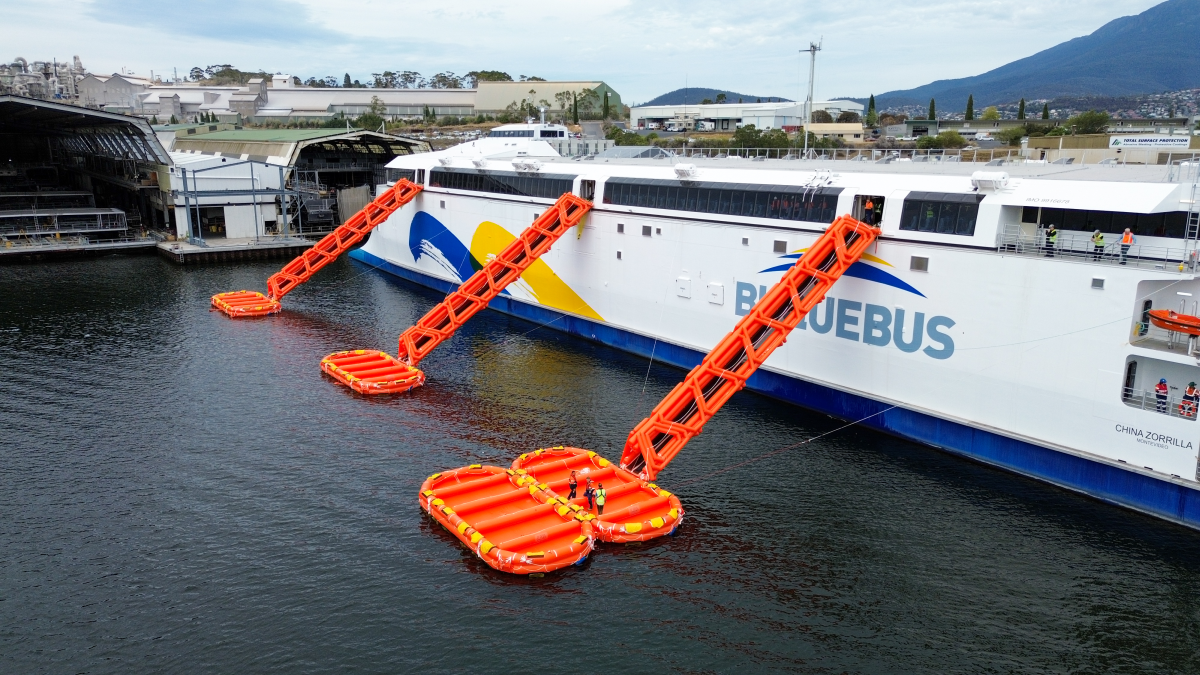
Based in Hobart, Tasmania, Australia, Liferaft Systems Australia (LSA) was a critical supplier for China Zorrilla, the world’s largest battery-electric ship. Built for Buquebus by fellow Tasmanian firm Incat Tasmania, the 130-m vessel will be capable of carrying 2,100 passengers and more than 220 vehicles.
LSA manufactured and supplied the passenger evacuation systems for the high-speed ferry, which includes six MES units and 13 linked liferafts, providing a total liferaft capacity of 2,432 people.
During deployment of the MES in Tasmania, Incat chairman, Robert Clifford, highlighted the importance of passenger evacuation systems. “Safety is fundamental to every vessel we build at Incat. The successful deployment of the marine evacuation system on [China Zorrilla] demonstrates the depth of engineering, planning and collaboration required to deliver vessels of this scale,” Mr Clifford said.
“We are proud to continue our partnership with another industry-leading Tasmanian company in Liferaft Systems Australia to deliver world-class safety capability, showcasing the expertise that exists right here in our state.”
LSA managing director, Mike Grainger, said the milestone reflected a strong and enduring partnership between the two companies.
“Seeing these systems successfully deployed on a vessel of this size is a proud moment for our team and a testament to what Tasmanian industry can achieve together on the global stage,” said Mr Grainger.
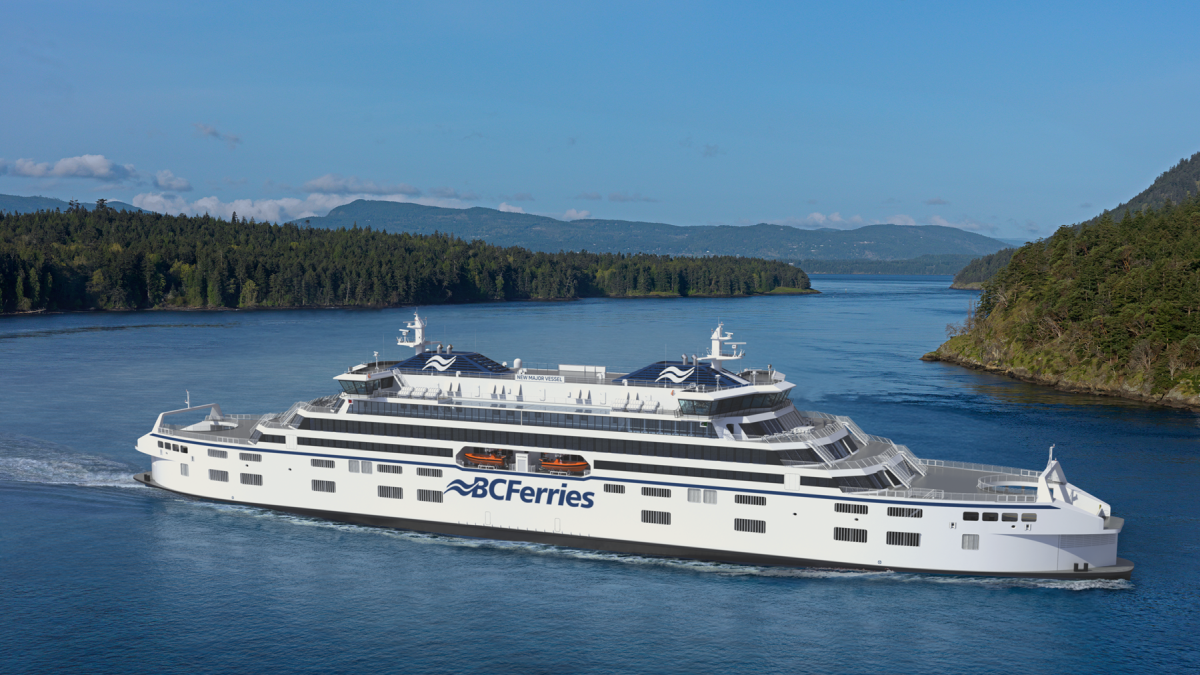
Earlier this year, LSA secured a contract with China Merchants Industry Weihai for BC Ferries’ Major Class under construction at the Chinese shipyard. Each of the four newbuilds will have four 22 m MES consisting of a 22 m inflatable slide with a 100-person SOLAS liferaft attached. Additional 22 x 100-person SOLAS liferafts will be linked to the MES, providing a total liferaft capacity per vessel of 2,600.
BC Ferries has been a loyal customer of LSA, noted the company’s North American manager, Vlad Prato. “BC Ferries is a highly respected ferry operator globally and is one of our long-term customers, having installed their very first LSA MES 21 years ago,” he said. All four Major Class vessels will enter service between 2029 and 2031.
Outside the passenger vessel sector, LSA has been a major supplier in the defence sector, with MES installed on naval vessels operated by New Zealand, the UK, the Netherlands and the US.
For the last 15 years, every Spearhead-class Expeditionary Fast Transport (EPF) vessel built by Austal USA in Mobile, Alabama, has been supplied by LSA. In June, the installation of the MES on USNS Lansing marked the end of an era for LSA installations on the Spearhead-class ships constructed by Austal USA. Each vessel is fitted with two 17 m LSA MES and four 100-person LSA SOLAS A Link Liferafts.




Related to this Story
Events

Maritime Regulations Webinar Week
 16 Dec 2025
 GMT - ONLINE

Floating energy: successfully unlocking stranded gas using FLNGs and FSRUs
24 Feb 2026GMT - ONLINE
© 2026 Riviera Maritime Media Ltd.


