


Business Sectors
Business Sectors
Events
Contents

Register to read more articles.
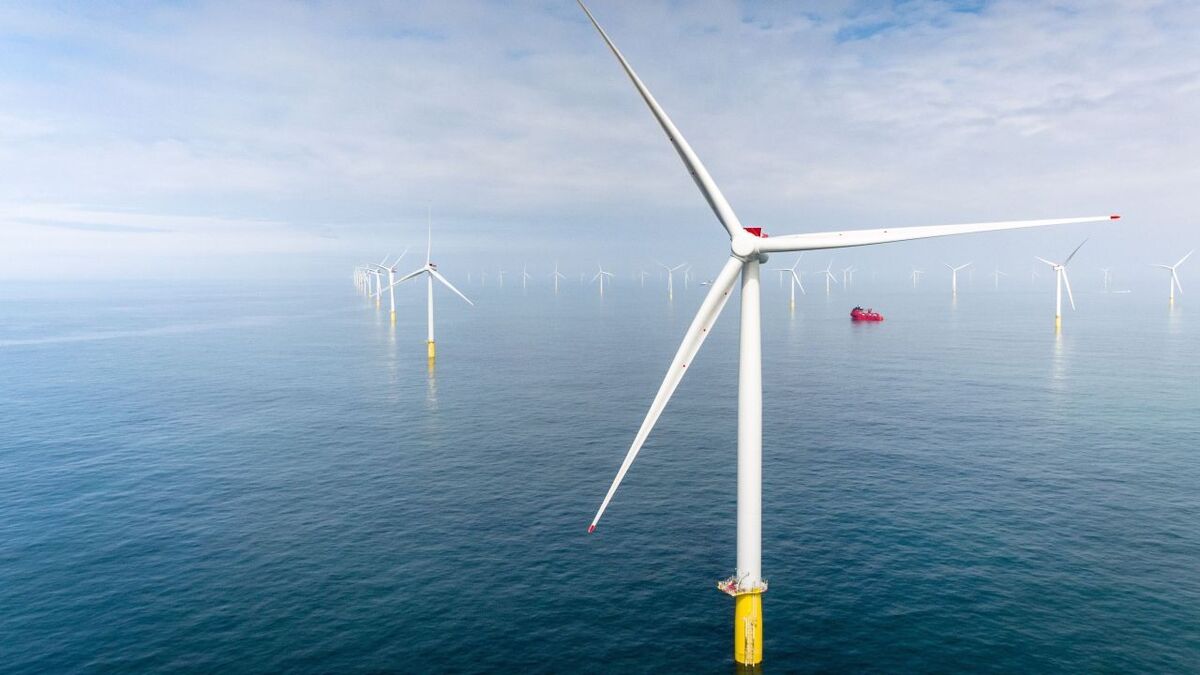
Roadmap outlines pathway to 7 GW of offshore wind in Turkish waters
The World Bank Group and Turkey’s Ministry of Energy and Natural Resources have launched a roadmap outlining how to establish an offshore wind industry in the country


The Offshore Wind Roadmap for Turkey provides strategic analysis of the opportunities and challenges to deliver viable offshore wind projects, based on local insight and global experience.
The government of Turkey has set a target of 5 GW of installed capacity for offshore wind power by 2035. The roadmap provides a comprehensive set of recommendations to help realise these ambitions to build a new industry that can meet the country’s future energy demands and sustainability goals.
The roadmap was created and funded as part of a series of offshore wind roadmap studies under the joint Energy Sector Management Assistance Program-International Finance Corp (ESMAP-IFC) Offshore Wind Development Programme, and with support from PROBLUE. The publication was launched at the Turkey Offshore Wind Conference: Roadmap and Next Steps event hosted in Istanbul by the World Bank in partnership with the Ministry of Energy and Natural Resources.
The roadmap highlights Turkey’s geographical advantages, natural resources and industrial strengths as key enablers for a competitive offshore wind power industry. Favourable offshore wind resources are located near high-demand power centres, offering a large-scale, domestic power generation source which can increase Turkey’s energy independence and complement other renewable technologies.
The analysis identifies Turkey’s strategic location, close to European and Asian markets, as an opportunity to become a regional clean energy hub. It notes that it also has a strong industrial base and skilled workforce, and its successful onshore wind, shipbuilding and maritime industries are well-positioned to thrive in the offshore wind supply chain with sufficient project volume and pipeline.
Turkey’s waters have areas with a total technical potential offshore wind resource estimated at 75 GW. The roadmap outlines the potential for up to 7 GW of offshore wind capacity to be installed by 2040. It also examines the challenges of realising these prospects.
Most areas with good offshore wind resources are suited to floating foundation solutions, given water depths exceed 50 m. These areas also have significant environmental and social sensitivities, requiring offshore wind projects to carefully plan and mitigate impacts on protected areas, biodiversity, critical habitats and local communities.
The scenarios in the report illustrate two hypothetical development paths for offshore wind in Turkey. The first, ‘Low growth,’ assumes 3.5 GW of offshore wind installed by the end of 2040. In this scenario, it is estimated that by 2030, supply chain activities could create 32,000 full time equivalent (FTE) jobs years and contribute US$4Bn to Turkey’s economy. The low growth scenario could be achieved with moderate action by the government, focusing on the first few small-scale projects.
The second scenario, ‘High growth,’ assumes 7 GW of offshore wind power is installed by the end of 2040. In this scenario, it is estimated that supply chain activities could create 110,000 FTE years and US$16Bn gross value added to the country’s economy.
To achieve these scenarios, the roadmap highlights 21 recommended actions for the government of Turkey to consider. This includes setting the country’s vision beyond 2035 as part of long-term energy system planning; implementing regulatory and policy frameworks which proactively derisk projects; establishing a bankable power purchase agreement; introducing best-practice health and safety standards; upgrading grid and port infrastructure; and developing domestic supply chains.
As part of the next steps forward, the World Bank is supporting the Ministry of Energy and Natural Resources to implement the ‘Turkey – European Union Instrument for PreAccession (IPA) Energy Sector Programme Phase IV Project - Offshore Wind Support.’
The objective of the project through to 2027 is to help Turkey improve the investment potential for offshore wind energy generation by derisking selected sites and reinforcing institutional capacities via measurement campaigns as well as providing technical, environmental and social analysis.
World Bank country director for Turkey Humberto Lopez said, “Offshore wind, as an important renewable energy resource, holds the potential to accelerate Turkey’s transition to net zero by complementing ongoing onshore wind and solar investment plans, drive supply chain growth and job creation, and strengthen the country’s position as a green energy hub in the region.”
World Bank co-lead offshore wind development Sean Whittaker said Turkey has many areas with good natural conditions for offshore wind. “This roadmap provides detailed analysis of the opportunities and challenges involved in advancing this new source of domestic renewable energy,” he explained. “The roadmap provides key recommendations to fully realise this new source of domestic renewable energy, including policy development and planning for a pipeline of bankable projects which carefully mitigate environmental and social impacts.”
Sign up for Riviera’s series of technical and operational webinars and conferences:
- Register to attend by visiting our events page.
- Watch recordings from all of our webinars in the webinar library.

Related to this Story

Events

Maritime Regulations Webinar Week
 16 Dec 2025
 GMT - ONLINE
Floating energy: successfully unlocking stranded gas using FLNGs and FSRUs
24 Feb 2026GMT - ONLINE
© 2026 Riviera Maritime Media Ltd.


