


Business Sectors
Business Sectors
Events
Contents

Register to read more articles.
Stealth Maritime deploys safety analytics across tanker fleets
Crews on Stealth tankers and gas carriers will use insights from AI-powered information analysis to improve safety and address risks early, before they can become incidents


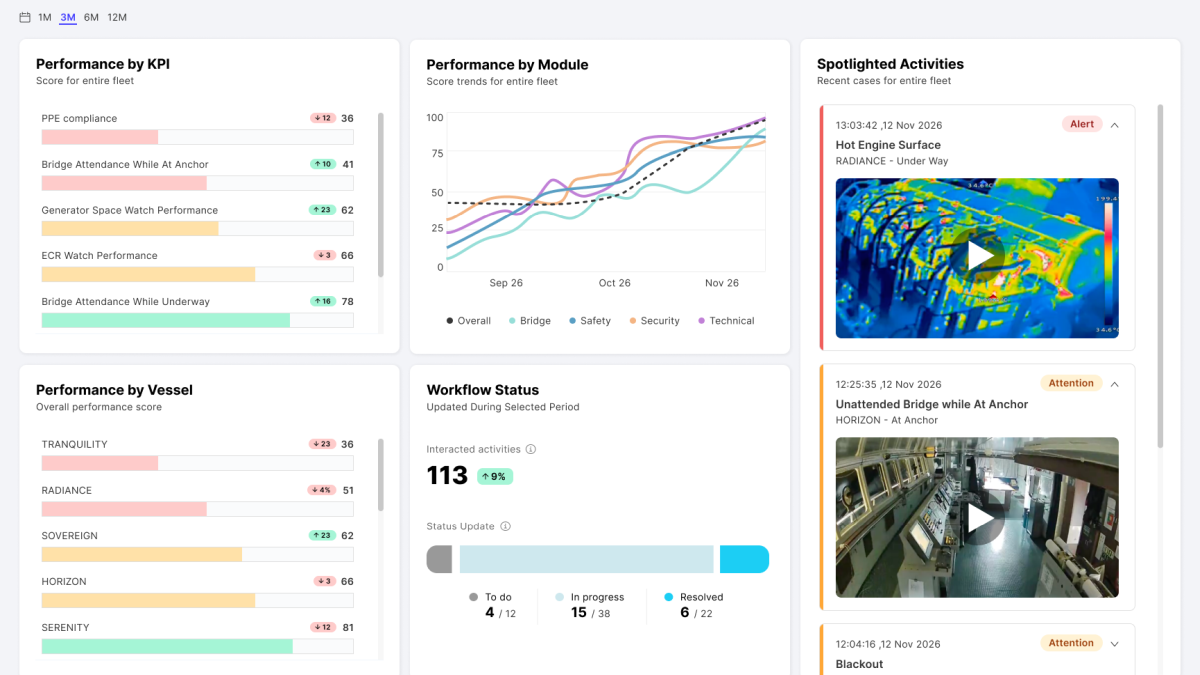
Stealth Maritime will invest in artificial intelligence (AI)-powered software on its tankers and gas carriers to raise safety levels and readiness for energy company vetting of its ships.
Its decision to deploy this software across a fleet of nearly 50 ships follows a 12-vessel pilot in the past year with this program to test its ability to provide information and analytics for identifying risks.
As the pilot progressed, crews began using the software as part of their daily safety awareness, identifying and address risks early, before they can become incidents.
Seafarers used data insights to review flagged events, validate detections, and reinforce onboard standards.
Stealth Maritime found that safety benchmarks and compliance improved across the vessels using the software versus the ships that were not.
“Our goal is to keep improving the safety culture on board, to keep a near miss from becoming an incident, an accident, or a fatality,” said Stealth Maritime chief executive Diamantis Andriotis.
“What we value most is that the first to be informed is the ship, and then the office,” he said.
“We are moving the focus of safety to where it belongs, on board, so the crew can go home safely.”
Stealth Maritime is deploying ShipIn’s FleetVision fleet-wide on nearly its entire fleet of over 50 tankers and gas carriers to support proactive safety management and provide clearer operational evidence for company vettings and inspections under the tanker management and self assessment (TMSA) scheme managed by OCIMF.
FleetVision delivers continuous AI-powered visual analytics that help crews and shore teams raise safety, address issues and prepare for inspections.
Stealth said it worked with its seafarers on the technology deployment decision, ensuring more than 85% of its officers said they would welcome the system and use it to improve safety.
Results from the pilot program reshaped how Stealth demonstrates its safety performance to external stakeholders.
During TMSA audits, it can present a transparent, continuous stream of operational evidence rather than relying solely on procedures and reports, giving energy companies a more representative view of onboard operations.
Over the 12 months, Stealth’s use of FleetVision has been noted positively in vettings and TMSA-related reviews, helping the company to demonstrate a proactive, evidence-based approach to safety and operational oversight.
“Expanding FleetVision across our fleet supports how we manage safety and performance on a day-to-day basis,” said Stealth Maritime manager for sustainability and projects, Antonis Despotakis.
“Objective operational data from onboard activities helps our ship and shore teams identify trends, refine procedures, and reinforce safe practices across all vessels under our management.”
Stealth worked with ShipIn to tailor the software to its own safety management system, adding new detection capabilities across the fleet within weeks of requesting them.
It expanded FleetVision in two stages, citing crew response, stakeholder reactions, and the level of support provided by ShipIn’s team during installation, commissioning, onboarding, and daily operations.





Related to this Story


Events

Maritime Regulations Webinar Week
 16 Dec 2025
 GMT - ONLINE

Floating energy: successfully unlocking stranded gas using FLNGs and FSRUs
24 Feb 2026GMT - ONLINE
© 2026 Riviera Maritime Media Ltd.


