


Business Sectors
Business Sectors
Events
Contents
Register to read more articles.
The Ritz-Carlton Yacht Collection’s newbuild: an evolution of its sister ships
How Luminara is shaped by guest feedback and LNG lessons from sister ship Ilma


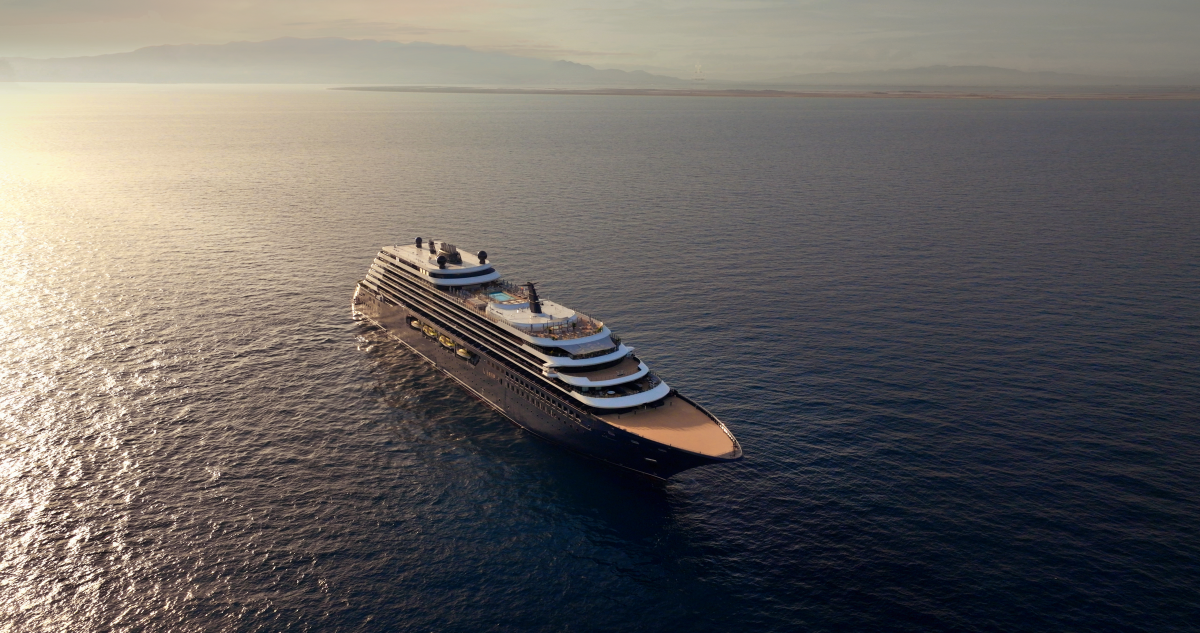
The Ritz-Carlton Yacht Collection’s latest ship, Luminara, has been delivered and reveals several enhancements compared with previously delivered sister ships Ilma and Evrima.
The new vessel delivered by Chantiers de l’Atlantique is a 242-m, 456-passenger ultra-luxury vessel, powered by LNG dual fuel, as is its sister yacht Ilma.
Explaining how Luminara differs from its predecessors, The Ritz-Carlton Yacht Collection vice president, newbuild Tobias King said, “Luminara builds on the success of our first yachts while introducing several meaningful enhancements shaped by guest and employee feedback. The yacht features new culinary collaborations and restaurant concepts that expand our gastronomic offering. Key interior spaces have been re-imagined by award-winning design studio Chapi Chapo, bringing a fresh architectural vision while staying true to The Ritz-Carlton’s timeless aesthetic.
“We have also elevated our art programme, placing a stronger emphasis on curated works and different experiences throughout the ship. On the open decks, guests will enjoy expanded outdoor spaces, including new and redesigned pools, additional sun loungers, and an upgraded art-bar concept that creates an even more inviting social atmosphere. Perhaps most importantly, Luminara reflects a rigorous lessons-learned process. We have listened closely to our guests and our onboard team, and we have acted on that feedback to refine the experience in ways that are thoughtful, meaningful, and guest-centric.”
Luminara is following in Ilma’s footsteps by deploying LNG. “Ilma’s LNG deployment has generated valuable and very practical lessons, many of which have directly informed Luminara. On the supply side, we gained a much deeper understanding of LNG availability across our itineraries. As a result, we have strengthened our fuel supply chain and contractual arrangements.
“That said, LNG availability remains challenging in certain regions, and this continues to require careful operational planning, and often we are dependent on marine gas oil. From an operational perspective, we significantly enhanced training for our onboard teams, building competence and confidence in LNG bunkering and daily LNG operations.”
The Ritz-Carlton Yacht Collection has a dedicated supply chain resource focused on finding a supply of LNG.
Finally, Mr King explained that both the LNG fuel system and the Wärtsilä 31DF engines on Ilma were effectively first-generation installations. “Being early adopters inevitably came with learning curves, but those learnings have been systematically captured and fed directly into Luminara, resulting in more mature systems, refined procedures, and stable operations.”
The LNG dual-fuel system was developed in collaboration with the shipyard Chantiers de l’Atlantique and the engine maker Wärtsilä. Mr King commented, “The system is novel regarding fuel holding, supply and engine consumption, with the focus on energy efficiency. From an operator’s perspective, we also benefit from a significant holding capacity that gives us a range of up to two weeks of operation on LNG.”
Asked how often Luminara and Ilma run on LNG, Mr King said it depends on the itineraries. “As long as LNG is available for us, eg in ports such as Barcelona, it is our preferred fuel,” he added.
In 2025, the cruise operator expanded its operations to include biodiesel, and it plans to further expand this in 2026. “With our fleet operating on LNG, biodiesel along with conventional marine gas oil, and with ongoing studies for future-fuel options such as methanol, we feel well positioned for the uncertainties ahead when it comes to sustainable fuels,” Mr King said.
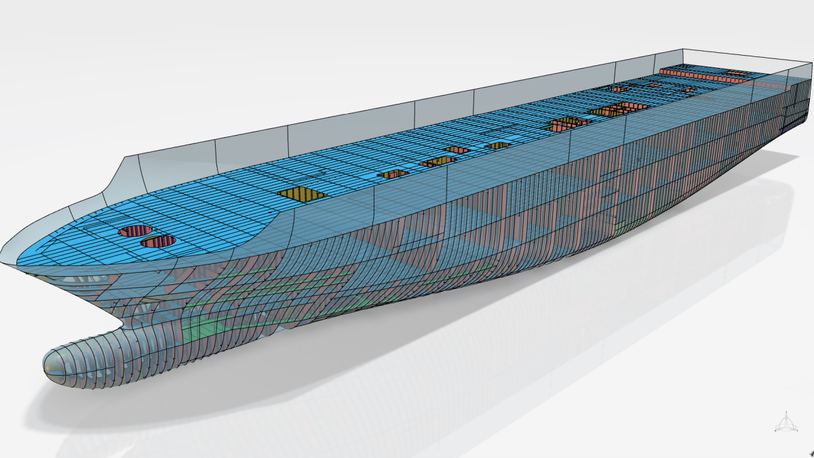
Energy efficiency has been a core priority throughout the ship’s design and construction. “We incorporated a range of state-of-the-art technologies that are already delivering operational benefits in both energy performance and emissions. This includes prototype Wärtsilä engines with improved air-emissions characteristics, as well as next-generation maritime chillers offering exceptional energy efficiency. The hull was also developed through an advanced optimisation process to minimise resistance and improve overall performance. Together, and along with many other measures, these features support a more sustainable operation.”
The ship also benefits from a data pilot test developed in its sister vessel Ilma. The integrated data acquisition system was developed in partnership with Chantiers de l’Atlantique.
Mr King said, “It is a pilot test, both for us and the shipyard, that gives us valuable insight into the ship’s operation, both about live data and indepth analysis. With this system and relevant processes in place, we hope to continuously optimise how we operate our ships, but also be smarter in our design decisions as we expand our fleet in the future. The system also allows us to motivate the shipyard and various makers to innovate and offer us energy-efficiency measures we all can benefit from.”
Asked what the main considerations were when it came to developing the ship, he said, “Our primary focus was understanding what our guests truly value and ensuring we could deliver this through an authentic Ritz-Carlton experience at sea. From the outset, we aimed to differentiate ourselves from traditional cruises by creating a more intimate yacht-like experience. This is reflected in our guest programming, personalised service approach, and distinctive design features such as the Marina, which brings guests closer to the water and reinforces the sense of being on a private yacht rather than a large ship.”
When it came to the interiors of the yacht, the aim was to bring the unique Ritz-Carlton brand identity to life through the ship’s design. “That meant creating space that reflects the brand’s prestige, timeless elegance, and personalised service, while blending it with the relaxed, contemporary spirit of a private yacht. The result is a highly curated environment that feels both luxurious and effortless,” said Mr King.
Public spaces were envisioned by Toronto-based Chapi Design Luxury Division, while suites were appointed by London-based design firm AD Associates, with lighting by consultants DPA. A statement by The Ritz-Carlton Cruise Collection said, “The harmonious interiors will marry warm walnut woods and striking Arabescato Corchia marble, with a palette awash in soft blues, warm greys, and deep ocean hues, accented with bronze and subtle ruby tones. Reflective finishes, sculptural lighting, and curved architecture will evoke the fluidity of the sea, creating a seamless interplay between indoor and outdoor spaces. The yacht’s sleek exterior, expertly crafted by Helsinki-based studio Aivan, draws inspiration from the timeless elegance of private yacht design.”
It features 226 suites, each with a private terrace and exceptional space ratios for guests at sea. The two new upper suite categories will provide 93 m² of uplifting ambience. The suite categories include Owners, Concierge, Residential, Luminara, View, Grand, Signature, and Terrace suites. A hallmark across the fleet, each suite will open onto a private terrace.
The evolution of the Ritz-Carlton Yacht Collection can be seen across its trio of vessels. The first vessel, Evrima, is propelled with marine gas oil, with the movement to dual fuel for its sister vessels. As well as being the first vessel to be propelled by LNG dual fuel, Ilma is a trailblazer in other ways, as The Ritz-Carlton Yacht Collection carried out an evaluation study of ABB’s Dynafin propulsion on Ilma.
ABB’s Dynafin, launched in 2023, is an electric podded propulsion system that takes inspiration from whale movements, which can achieve open water propulsive efficiency of up to 85%, and reduce fuel use and emissions by more than 20% compared with conventional propellers, according to its architects.
Its signature feature is five individually pitch-controlled blades projecting from the ship hull. Sophisticated control of each blade via an electric motor and converter enables the optimal ‘whale tail’ motion during each revolution. This, said ABB, overcomes both the limitations of conventional fixed-pitch propellers and mechanically restricted cycloidal propellers.
The Ritz Carlton Yacht Collection’s contribution to the evaluation study carried out with ABB was to provide input for a case study and to participate in validating results. The cruise operator provided the hull shape and all technical details for Ilma, which was used for the study.
The study has reaped impressive results. From the base case, ABB Dynafin reduced needed propulsion power by 12% based on the estimated operational profile, or 710 tonnes of LNG in a year.
Asked about the company’s plans for its future fleet, Mr King said, “We do not currently have any newbuild projects under construction. Our focus at this stage is on deepening our understanding of our guests and our onboard team, and ensuring we capture every insight from our existing operations. This learning phase allows us to strengthen our product, refine our processes, and position the brand for thoughtful and sustainable growth when the timing is right.”

Related to this Story

Events

Maritime Regulations Webinar Week
 16 Dec 2025
 GMT - ONLINE
Floating energy: successfully unlocking stranded gas using FLNGs and FSRUs
24 Feb 2026GMT - ONLINE
© 2026 Riviera Maritime Media Ltd.


