


Business Sectors
Business Sectors
Events
Contents

Register to read more articles.
Top 20 carriers: movers and shakers
The top 20 largest container shipping lines’ ranking shows substantial movement – with a new number one and movement in the low half of the chart


1 MSC
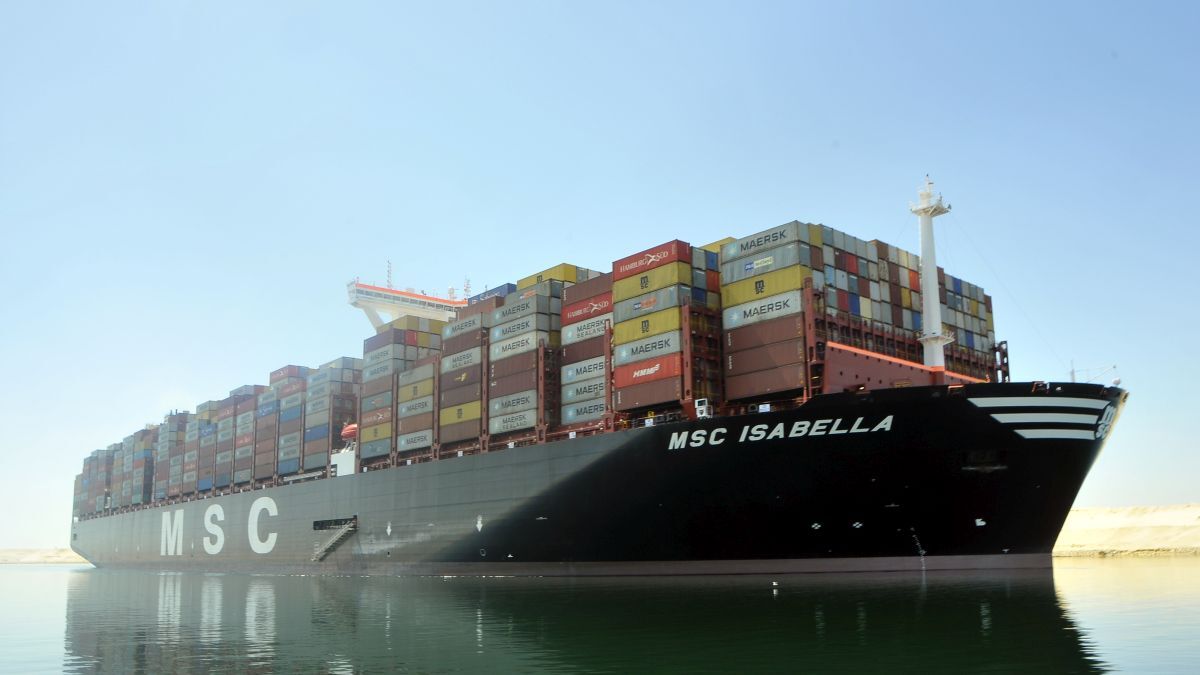
MSC has overtaken Maersk as largest ocean carrier by operated ship capacity. Alphaliner’s global ocean fleet statistics show MSC is now the world’s largest ocean carrier by operated container vessel capacity.
MSC, the long-term number two, overtook Maersk Group as the world’s biggest container line on 5 January 2022.
Alphaliner comments, “Contrary to most other major ocean carriers, which reached their positions in the top 10 through a series of mergers and acquisitions, MSC’s rise to the top was entirely organic.
“In recent years, MSC has shown strong growth, mainly through the phase-in of large newbuild container vessels. Since 2020, the Swiss company has also grown significantly through the rapid acquisition of 128 secondhand container vessels, an unprecedented number in shipping history.”
MSC’s current fleet has a capacity of 4.33M TEU.
2 Maersk
Maersk has been pushed into the number two spot, having been eclipsed by MSC. Its fleet is only slightly smaller than that of MSC at 4.27M TEU and its orderbook is also smaller, at 319,00 TEU versus 1.2M TEU for MSC. Maersk, like all major carriers, is heavily involved in the decarbonisation drive and is leading the way when it comes to methanol. Maersk made headlines in 2021 when it ordered a series of 16,000-TEU methanol dual-fuel container vessels.
AP Møller-Mærsk has made a series of moves in recent months to ensure a supply of ’green’ methanol. In March this year, it agreed a letter of intent with multinational Danish energy company Ørsted to develop a power-to-X-facility on the US Gulf coast to fuel Mærsk’s newly ordered fleet of 12 methanol-powered vessels, alongside an offtake agreement for green fuels in the maritime industry.
3 CMA CGM
CMA CGM’s fleet capacity has increased from 3.05M TEU in Q2 last year to 3.26M TEU this year. Its orderbook consists of 55 ships. This includes six LNG-powered container ships with a capacity of 13,000 TEU, six LNG-powered container ships with a capacity of 15,000 TEU and 10 very low sulphur fuel oil-powered container ships with a capacity of 5,500 TEU.
A forerunner in LNG, the group is also leading the way with other alternative fuels. Last year it announced it is supporting the production of 12,000 tonnes of biomethane. In March 2022, it announced CMA CGM and Electrolux have agreed to ship 40,000 TEU of household appliances through CMA CGM’s cleaner energy LNG solution
4 COSCO
In its second year at number four (in 2020 it was at number three, ahead of CMA CGM), COSCO has pumped up its orderbook – from 12 vessels of 276,000 TEU total capacity in Q2 last year to 586,672 TEU and 34 vessels. This includes ships for its company OOCL, which it acquired in 2018. OOCL has signed newbuilding contracts with shipyards Nantong COSCO KHI Ship Engineering Co and Dalian COSCO KHI Ship Engineering Co for five new container vessels, with a nominal capacity of 23,000 TEU. Delivery of these vessels is expected to start in 2023.
5 Hapag-Lloyd
Hapag-Lloyd is in fifth place with a fleet capacity of 1.74M TEU and 22 vessels on its orderbook. It has, for the first time, invested in ultra large container ships (ULCS) – and combined these with the use of LNG. It has ordered 12 23,500+ TEU ships in total. Chief executive Rolf Habben Jansen says, “We are under-represented in that large segment... we are looking forward to getting ships from 2023.” Furthermore, he adds the ships “will help bring our sustainability target closer.”
6 Ocean Network Express (ONE)
ONE is at number six in the Alphaliner top 100 largest ocean carriers, with a fleet capacity of 1.5M TEU. It has 24 ships on its orderbook, up from 15 in April last year. ONE is boosting decarbonisation efforts in the industry and completed two biofuel trials last year, and in April this year conducted a successful third trial of biofuel.
7 Evergreen
Evergreen is at number seven in Alphaliner’s top 100 carriers – and has a sizeable orderbook of 63 ships. Its new 24,000 TEU Ever A lot container ship is being touted as the world’s largest container ship.
8 Hyundai Merchant Marine
Hyundai Merchant Marine (HMM) jumped up to eighth place from nine – overtaking Yang Ming – last year. Its fleet capacity has swelled from 427,058 TEU in Q2 2020 to 820,520 TEU this year due to an influx of new ships. It orderbook has gone from 396,000 TEU (20 vessels) in Q2 2020 to 141,600 TEU and six vessels in 2021 as tonnage has been delivered. As of April 2022, this is 12 vessels with a total capacity of 161,088 TEU.
9 Yang Ming
Yang Ming slipped down from eight to nine in Alphaliner’s top carriers list last year and remains at nine. It has an orderbook of five vessels with a total capacity of 59,300 TEU. Its eco-type newbuildings with modern designs will gradually replace some of Yang Ming’s high-cost, older ships. Its series of 10 2,800-TEU full container vessels built at CSBC shipyard have almost completed their roll out. The newbuildings’ electronic-controlled fuel injection engine with low-load tuning exhaust gas bypass fuel control system greatly enhances energy efficiency. Since 2020, Yang Ming has taken delivery seven 2,800-TEU owned vessels and four 11,000 TEU chartered-in vessels.
10 Zim
Zim Line’s fleet has increased from 404,261 TEU in Q2 last year to 463,277 TEU this year. Its orderbook has soared from 10 vessels, with a total of 150,000 TEU capacity, to 46 vessels at 393,634 TEU. This includes two eco-design 5,500-TEU container ships being built at South Korean shipyard HJ Shipbuilding and Construction for MPC Container Ships, which will be on seven-year charters to Zim following delivery, scheduled in early 2024. It also includes charters of Seaspan 15,000-TEU newbuilds. The LNG dual-fuel vessels are scheduled for delivery in H1 2023.
11 Wan Hai Lines
Wan Hai Lines is still at number 11 after climbing from 12th place in 2020. It is on an aggressive newbuilding spree – in March this year it ordered five more 13,100-TEU ships, bringing the number of its new-Panamax box ships on order to 18. The current order was placed with Samsung Heavy Industries 25 March 2022, with delivery of the first vessels due in 2024. In a Taiwan Stock Exchange filing, Wan Hai revealed the price of these ships to be between US$132M and US$140M each. These newbuildings will be designed to be energy efficient, meet the latest environmental regulations and sport DNV’s Smart Ship notations.
12 Pacific International Lines (PIL)
PIL has moved from no newbuildings to four with a total of 56,000 TEU. These four 14,000-TEU container ships, being built at the Jiangnan shipyard in China, will feature WinGD X92DF-2.0 dual-fuel engines capable of operating on both gas and liquid fuels.
13 Korea Marine Transport Company (KMTC)
KMTC has jumped from number 14 to 13 in Alphaliner’s top 100 carriers, with a fleet of 156,995 TEU. It has nothing on its orderbook, after five vessels of a total 12,500 TEU on its orderbook were delivered in 2020. It is an intra-Asia regional company, deploying regular container liner services to China, southeast Asia, southwest Asia, the Russian Federation and the Middle East. This carrier joined the top 20 in 2018 due to the consolidation that has taken place within container shipping lines.
14 IRISL
Iran’s national shipping line IRISL Group has moved from number 15 in the rankings of the top carriers to 14. It arrived in the top 20 in 2018 from a previous position of 24. The consolidation of several carriers, such as NYK Line, MOL and K Line into Ocean Network Express, allowed IRISL to move into the top 20. The company has a current fleet capacity of 149,042 TEU and 32 vessels. It does not have anything on its orderbook.
15 Unifeeder
DP-World owned Unifeeder is back into the top 20, after falling to 21 last year. It is leading the way when it comes to using alternative fuels. In March this year, the logistics firm bunkered its first biofuel from VARO Energy in the Port of Rotterdam. This is the first biofuel collaboration between the DP World subsidiary and VARO.
In September 2021, its feeder vessel Elbsummer was bunkered with biofuel B50 (50% biofuel/50% MGO). It then underwent a scheduled main engine overhaul, which allowed biofuel B100 (100% biofuel) to be trialled. Unifeeder director, fuel supply Hans Staal says, “Being able to operate our vessels on 100% biofuel is a true game-changer and a major stepping stone on Unifeeder’s journey towards net-zero emissions… we look forward to implementing biofuels on many other vessels in our fleet during 2022.”
16 X-Press Feeders Group
X-Press Feeders Group has jumped from 18 in 2020 to 17 last year and has now moved up to number 16. It has a fleet capacity of 142,939 TEU. Its orderbook has received a huge boost – going from 56,000 TEU and eight ships in Q2 last year, to 102,834 TEU and 23 ships.
17 SITC
SITC has fallen one place to number 17 and has a fleet capacity of 142, 650 TEU, up from 140,963 TEU last year. Its orderbook swelled considerably from 5,564 TEU to 60,428 TEU and 27 vessels between 2020 and last year and has increased again – up to 61,314 TEU and 33 vessels.
18 TS Lines
TS Lines has shot up the rankings. After falling out of the top 20 in 2020, in 2021 it was number 20 and is now up to 18, taking over this place from Antong Holdings, which has now fallen out of the top 20.
The Hong Kong-based carrier has a current fleet capacity of 108,860 TEU and an orderbook of 78,857 TEU, consisting of 25 vessels. This includes two Bangkokmax container ships of 1,900 TEU at the CSSC-controlled Guangzhou Huangpu Shipyard, China, in 2020, with options for a further two ships. The first two ships are planned for delivery in Q3 and Q4 of this year.
19 Zhongghu Logistics Group
Zhongghu Logistics Group has had a big fall from number 13 last year, tumbling down to number 19. 2019 marked its entry into the top 20; it was at number 33 in April 2018. Its fleet decreased from 161,293 TEU to 108,844 TEU in April this year versus the same period last year. Nevertheless, the intra-Asia carrier has boosted its newbuild orderbook. In 2020, it had 4,964 TEU, totalling three newbuilds. Last year it has soared to 16 vessels and a capacity of 73,600 TEU, hitting 83,052 TEU and 18 vessels in April this year.
20 Sinokor Merchant Marine
Sinokor is back at number 20, after jumping one spot from 20 to number 19 last year. 2020 marked its arrival into the top 20 for the first time. It has a fleet of 74 ships with a total capacity of 107,003 TEU. Its orderbook has hugely increased compared with last year, soaring from 12 ships totalling 18,240 TEU to 103,696 TEU and 32 vessels.
Riviera Maritime Media will provide free technical and operational webinars in 2022. Sign up to attend on our events page





Related to this Story
Events

Maritime Regulations Webinar Week
 16 Dec 2025
 GMT - ONLINE

Floating energy: successfully unlocking stranded gas using FLNGs and FSRUs
24 Feb 2026GMT - ONLINE
© 2026 Riviera Maritime Media Ltd.


