


Business Sectors
Events

Floating energy: successfully unlocking stranded gas using FLNGs and FSRUs
 24 Feb 2026
 GMT - ONLINE
Contents
Register to read more articles.
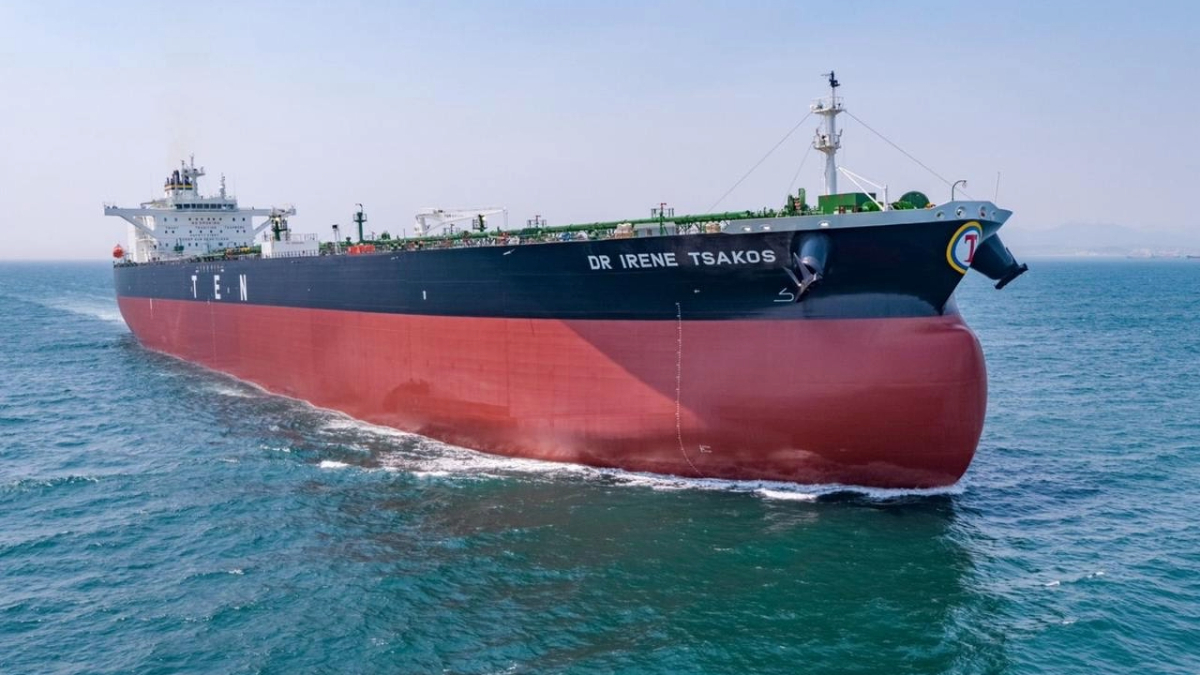
Tsakos considers spinning off shuttle tanker and LNG carrier business
Nikos P Tsakos-led Tsakos Energy Navigation (TEN) is considering spinning off its shuttle tanker and LNG carrier business to capitalise on the robust long-term revenues generated by both markets


Speaking on the company’s Q1 earnings call, Dr Tsakos acknowledged internal discussions around a potential spin-off, though no decision has been made.
When asked about the gap between net asset value and the company’s current share price, and possible steps to close it, Dr Tsakos explained the public float remains small – excluding shares held by management and the Tsakos family – and a share buyback would further reduce the free float.
Instead, a spin-off is being considered as a strategic move to unlock value from what he described as “huge cash flow,” ultimately benefiting the parent company.
However, he emphasised TEN is under no pressure to act immediately, “The company has a lot of liquidity; there is no need to raise capital,” he said.
TEN has grown into one of the world’s largest shuttle tanker operators following its US$2.0Bn agreement with Transpetro/Petrobras for the construction of nine DP2 vessels under long-term charters. The company currently manages 16 shuttle tankers (11 of which are newbuildings) and two LNG carriers.
In April, TEN took delivery of DP2 Suezmax shuttle tanker Athens 04 from Samsung Heavy Industries. The vessel is secured on a minimum seven-year charter. Another vessel of the same class, Paris 24, is scheduled for delivery in August, also under long-term employment.
The combined gross revenues from these recent additions bring TEN’s minimum fixed future revenues to US$3.7Bn.
VLCC expansion on the radar
Dr Tsakos also revealed that TEN is evaluating opportunities in the VLCC market. With just three VLCCs in its pro-forma fleet of 82 vessels (including newbuildings), the company is considering ways to grow its presence in this segment.
“We’re always looking at newbuilds aligned with client demand, when the opportunity arises,” said Dr Tsakos. “Our focus is on building high-quality Korean or Japanese ships,” he added.
He noted this strategy aligns with a recent decline in shipbuilding prices at major Asian yards – an opportunity TEN is looking to seize.
Shipbroking sources have recently linked TEN to discussions with South Korea’s HD Hyundai for VLCC construction slots, although no contracts have been confirmed yet.
Long-term charter appetite
Despite ongoing geopolitical uncertainty, Dr Tsakos described the market as exhibiting unprecedented demand for long-term charters.
“It’s difficult to keep any vessel in the spot market,” he noted. “The appetite of oil majors for long-term employment is robust and growing.”
Even older tonnage is attracting attention. “In my 30 years in the business, I haven’t seen this,” he said, citing the recent six-month charter extension of a 23-year-old tanker.
Age matters less than asset quality – charterers are drawn to well-managed ships, he added.
Financial performance
For Q1 2025, TEN reported voyage revenues of US$197M, slightly down from US$201M in the same period last year. Net income declined to US$39M, compared to US$54M in Q1 2024. The company’s time charter equivalent earnings averaged US$30,741 per ship per day, down from US$33,403 in the previous year’s first quarter.
In addition, TEN announced it will distribute a semi-annual dividend of US$0.60 per share to common shareholders, with payment scheduled for 18 July.
TEN’s diversified fleet consists of 82 vessels, including 21 under construction, spanning crude oil, product tankers and LNG carriers, with a total dwt of 10.1M.
Riviera’s Tanker Shipping & Trade Webinar Week will be held from 30 June 2025. Click here to register for this free-to-attend event.
Related to this Story

Events

Maritime Regulations Webinar Week
16 Dec 2025GMT - ONLINEFloating energy: successfully unlocking stranded gas using FLNGs and FSRUs
24 Feb 2026GMT - ONLINE
© 2024 Riviera Maritime Media Ltd.


