


Business Sectors
Business Sectors
Events
Contents

Register to read more articles.
UAE NOC executive demands industry reset on fleet renewal and operations
A senior UAE national oil company (NOC) executive has issued an unprecedented challenge to the offshore support vessel industry, criticising its approach to fleet renewal and operational solutions, while revealing significant opportunities in the Middle East shallow water market


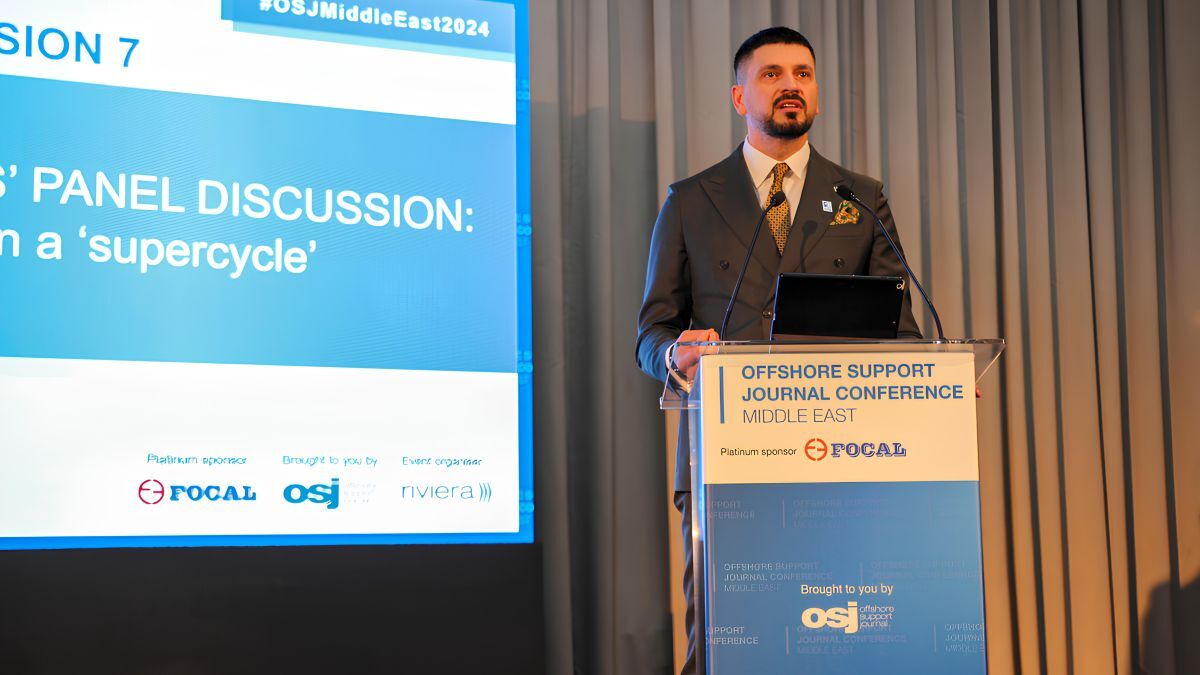
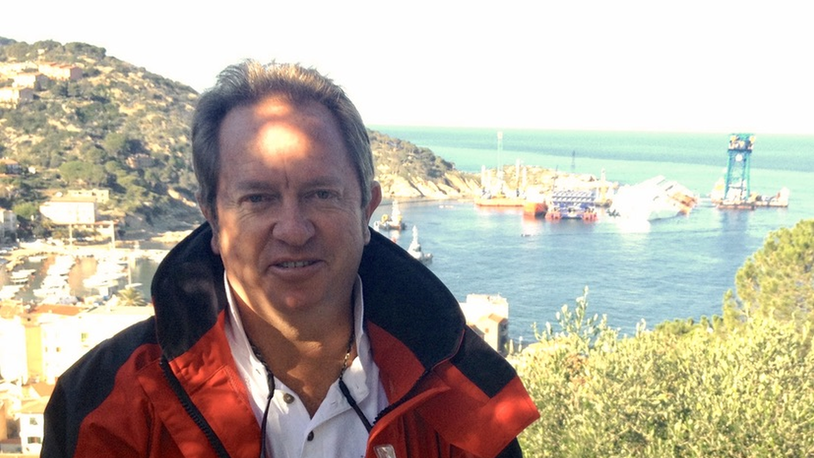
In a candid address at Riviera’s Offshore Support Journal Conference Middle East in Dubai, ADNOC Logistics & Services’ Captain Alex Brykalov, commercial vice president responsible for commercial and operational utilisation of over 200,000 vessel days per annum, delivered a stark assessment of current market dynamics and industry responses to charterer requirements.
Capt Brykalov challenged prevailing industry narratives about a ‘super-cycle,’ instead highlighting a lack of action from vessel operators and service providers regarding investing in new tonnage and innovative technologies.
He revealed recent market intelligence from China in a direct challenge to widely cited newbuild costs, "I just arrived from China. I have seen PSVs and AHTS vessels with 80 tonnes bollard pull, which are perfect for the market at US$22-25M, significantly below the US$50-60M figures commonly quoted by industry participants."
Capt Brykalov highlighted a critical misalignment between vessel offerings and regional requirements, "We are in the UAE. It’s a shallow water market. I would like to receive offers and proposals for services related to shallow water operations and addressing geographical complexities, such as limited water depths, high sedimentation rates, strong tidal flows, fragile ecosystems [such as mangroves] and other environmental or operational challenges specific to the region. I appreciate hearing about 80-m AHTS vessels and 90-m deepwater PSVs. But it does not address the requirements of the UAE itself."
In a pointed criticism of the industry’s preoccupation with early termination clauses, Capt Brykalov questioned, "You are focusing on termination clauses? Seriously? This termination clause has been there for over a decade. Why are we in 2024 and 2025 talking about termination conditions? Instead, why don’t we focus on the frequency of when the 30-day termination notice clause has actually been applied? The market is heavily focused on this clause, but we have almost never enforced it to terminate long-term contracts." He challenged financiers to examine termination probability data instead.
He went on to highlight Strategic Marine’s recent success in introducing new vessel designs as an example of what is possible, "They built three new vessels with unique technical specs and performance, and all of them sold out in a single day... that’s the kind of technical solution we are pointing to."
Capt Brykalov identified crew availability as a critical industry constraint, "All these efforts are useless if we don’t have sufficient manpower," noting vessel deployments face delays "not because of technicality, but because of manpower. We have a considerable shortage of ship’s crew to manage our ships."
He also challenged current market practices regarding rate increases, "Several players offer me the same old tonnage at higher rates, referring to the prevailing market conditions. What is the added value here? What are we actually getting? The only excuse for coming and offering us higher rates is market conditions."
He concluded his speech by outlining several strategic priorities for the future.
First, he emphasised the importance of developing vessel designs specifically tailored for shallow water operations. This focus aims to enhance operational efficiency and meet the unique challenges of this environment.
Second, he highlighted the need for the creation of efficient crew pools. By optimising crew management, companies can improve operational effectiveness and reduce costs.
Additionally, he stressed the significance of more effective use of seafarer resources. This involves ensuring personnel are utilised in a manner that maximises their skills and contributions to the organisation.
Innovation in technical and operational solutions was another key priority he mentioned. Embracing new technologies and methods can lead to improved performance and competitiveness in the industry.
Finally, he called for a focus on value creation beyond simply increasing rates. This approach encourages companies to explore various avenues for enhancing value, ensuring long-term sustainability and growth.
The speech sparked intense debate over newbuild economics, with some arguing current day rates cannot support fresh investment. "The implied payback period extends to 20 years," one participant noted. "With US$60-70M investment requirements, daily rates of US$25,000 for US$20-25M vessels simply don’t generate viable returns."
Countering, Capt Brykalov revealed significant policy shifts designed to support fleet renewal. A key modification is the potential extension of a vessel’s operational lifespan to 27 years, evaluated on a vessel-by-vessel basis. This strategy aims to prolong the service life of suitable vessels under specific circumstances.
Additionally, the introduction of 7-10 year contracts linked to newbuild commitments represents a strategic move to secure long-term operational stability. This initiative encourages investment in new vessels by providing assured contract durations.
Another notable shift involves direct engagement with shipyards for bareboat arrangements. This strategy allows for more control over vessel operations and financial planning.
Lastly, there is increased flexibility on contract structures, enabling more tailored agreements that can adapt to varying market conditions and client needs. These policy shifts collectively aim to enhance fleet renewal efforts and operational efficiency.
"We’ve substantially modified our approach through 2023-2024," he explained. "We’re now taking vessels on bareboat terms directly from shipyards whose primary business was previously build-and-sell."
Delegates challenged this perspective, citing fundamental shifts in vessel technology requirements. "The complexity of specifying newbuilds today far exceeds 2014 levels," said one delegate from the floor. "Software, connectivity and operational technology demands create new risks for yards and financing packages."
The debate highlighted divergent views on current market dynamics. While some participants characterised present conditions as a super cycle with record profits, others emphasised structural challenges in asset financing.
"Sale and purchase activity has declined 50% this year," noted another executive, though he clarified this reflected reduced trading of high-value assets rather than overall transaction volumes. "The US$50-100M vessels with term employment have traded, but broader market liquidity remains constrained."
Capt Brykalov countered that regional S&P activity had actually doubled in 2024, reflecting active portfolio management by operators seeking to maintain critical mass.
Concerns about asset obsolescence risks were also raised. "Building today for delivery in 2026-2027 carries significant uncertainty around future regulatory compliance and technical specifications," said another delegate.
The session concluded with a pointed challenge from Capt Brykalov regarding market focus. "We’re fixated on platform supply vessels and anchor handlers while ignoring critical demand for utility vessels and SSRVs," he observed. "The industry remains reluctant to engage on specifications and rates for these essential assets."
Riviera’s Annual Offshore Support Journal Conference, Awards & Exhibition will be held in London 4-5 February 2025. Click here to register for this industry-leading event.
Related to this Story
Events

Maritime Regulations Webinar Week
 16 Dec 2025
 GMT - ONLINE
Floating energy: successfully unlocking stranded gas using FLNGs and FSRUs
24 Feb 2026GMT - ONLINE
© 2026 Riviera Maritime Media Ltd.


