


Business Sectors
Business Sectors
Events
Contents

Register to read more articles.
US-India trade deal set to challenge Russian oil exports, shifting demand to mainstream fleet
India’s role as a major importer of Russian oil has been called into question after a trade deal with the US that includes significant tariff reductions


Analysts do not expect imports to stop outright but note that a steep decline could impact tanker tonne-miles and shift demand toward the mainstream fleet.
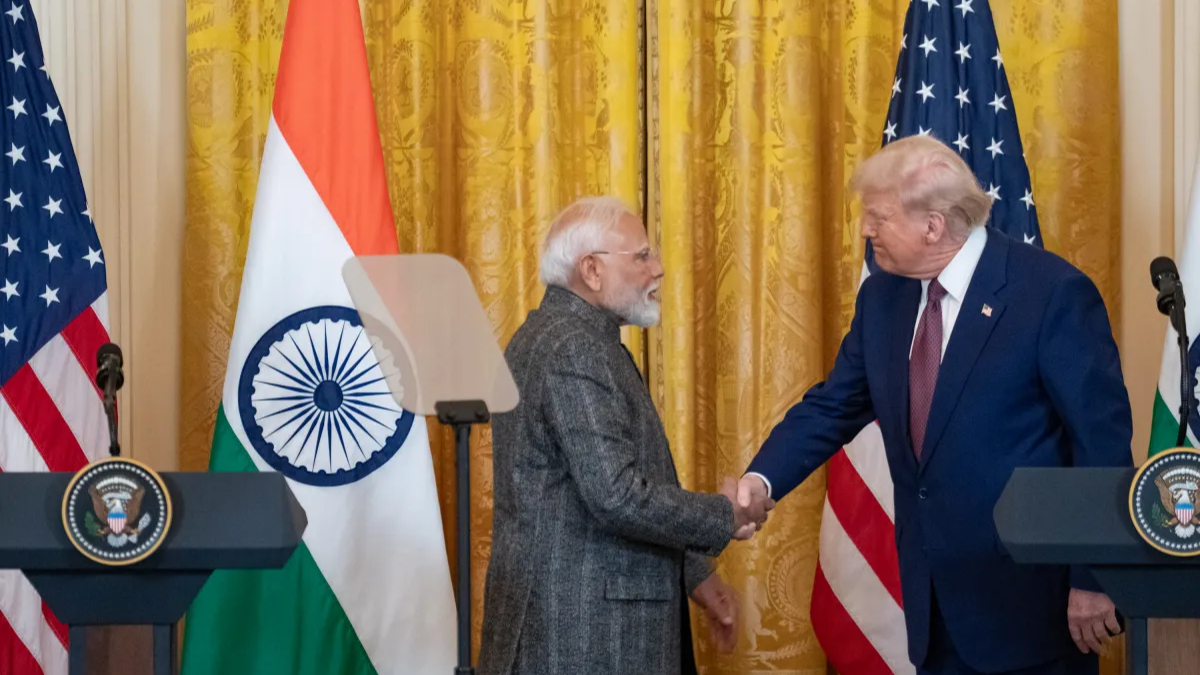
US President Donald Trump said on 2 February, via social media, that a new trade agreement had been reached with India following discussions with Indian Prime Minister Narendra Modi. Under the agreement, tariffs on Indian goods entering the US are expected to fall from 50% to 18%, including secondary tariff measures.
“He agreed to stop buying Russian oil, and to buy much more from the United States and, potentially, Venezuela,” President Trump stated.
In a post on X, Prime Minister Modi confirmed that Indian products would now be subject to a reduced tariff rate of 18%, though he did not refer to any commitments regarding Russian oil.
“When two large economies and the world’s largest democracies work together, it benefits our people and unlocks immense opportunities for mutually beneficial co-operation,” he said.
India-Russia trade
In terms of shipping impact, BIMCO data shows that last year the Russia-India trade accounted for 0.5% and 4.7% of tonne miles in the clean and dirty tanker markets, respectively.
BIMCO expects that a reduction or end to Russia-India volumes could have a significant impact on the dirty tanker segment in particular, as demand could shift from the parallel fleet back to the mainstream fleet.
However, how this develops remains uncertain. Banchero Costa, head of research, Ralph Leszczynski told Riviera that India has been promising to stop, or at least reduce, its imports of Russian oil for more than a year, but in practice, little has changed.
“The only reason India is importing Russian oil is that it is cheap, sold at a deep discount as Russian sellers have very few options left,” he explained.
Mr Leszczynski noted that India’s purchases of Russian oil are a relatively recent development, beginning only in 2022 after Europe started boycotting Russian exporters. Before that, oil flows from Russia to India were negligible.
“With overall Indian oil demand increasing only marginally, imports from Russia largely replaced supplies from Iraq, Saudi Arabia, West Africa, the US and Mexico,” he said.
BIMCO also highlighted that before Russia invaded Ukraine, up to two-thirds of India’s crude oil and oil product imports came from the Arabian Gulf. By 2025, that share had fallen to 45%.
According to Signal Ocean data, since February 2023, India has accounted for around one-third of all Russian crude flows, equivalent to approximately 1.8Bn barrels.
India imported 2.1Bn barrels of oil in 2025, with just 6% coming from the US and around 30% from Russia.
Early signs of a decline
However, with the start of the new year, India has begun importing less Russian oil. BIMCO chief shipping analyst Niels Rasmussen noted in a report that during the first five weeks of 2026, Russian oil exports to India were down 34% year-on-year.
“The reduction could be due to EU restrictions on the purchase, import and transfer of oil products refined from Russian crude oil,” he explained.
Signal Ocean data also showed that by late January, the seven-day moving average pointed to lower Russian crude shipments to India compared with previous years. Flows were around 20% below 2022 levels and more than 50% below early-2024 benchmarks, based on rolling estimates that continue to be revised.
Citing publicly available tender data, Signal Ocean added that some Indian refiners are increasingly turning to Middle Eastern crude suppliers.
“It appears likely that Indian importers could turn to imports from the Arabian Gulf to replace any potential reductions in imports from Russia,” BIMCO said.
Steep decline rather than abrupt halt
Indian refiners have not yet confirmed they will completely halt Russian oil imports.
“This supports our view that imports will see a steep decline rather than an abrupt stop,” Signal Ocean said, noting that cargoes have already been booked for February and March, with Reliance Industries confirming it is doing so in sanction-compliant deals.
“While Trump said in October last year that India had committed to significantly reducing its Russian oil purchases, we find this much more likely to happen now,” Mr Rasmussen commented.
“We do not expect Russian oil exports to fall by the same amount, however, as Russia will likely seek new buyers, even if that requires offering higher rebates,” he added.
“Maybe this time will be different, and they will really stop buying Russian oil – but I will believe it when I see it,” Mr Leszczynski said. He added, however, that from a technical standpoint, there is no reason why India could not “turn back the clock to 2021” and increase imports from its prewar suppliers.
Potential boost for container shipping
Beyond tankers, analysts are also assessing potential implications for other shipping sectors.
Mr Leszczynski said the deal could offer opportunities for container shipping, as it fits into the broader narrative of diversifying supply chains away from China. The market has already been hearing scenarios of companies such as Apple shifting parts of their manufacturing from China to India, he noted.
Commenting on the tariff reductions, Signal Ocean said the development offers “significant upside for India if it can manage the replacement of Russian crude”.
“The 50% tariff on Indian goods has been a major barrier to finished goods entering the US market. Reducing tariffs to 18% improves the price competitiveness of Indian-origin goods and opens access to the world’s largest consumer market,” the platform said.
Limited dry bulk upside
President Trump also stated that India would purchase US agricultural products and coal under the agreement.
Mr Leszczynski sees potential opportunities for bulk carriers if India opens its market further to US agricultural exports. Beyond that, however, he does not expect major impacts.
India is already a major coal importer and is well served by suppliers in Indonesia, Australia and South Africa, he said. The country also exports iron ore and salt, though these volumes are primarily shipped to China.
Sign up for Riviera’s series of technical and operational webinars and conferences:
- Register to attend by visiting our events page.
- Watch recordings from all of our webinars in the webinar library.





Related to this Story

Events

Maritime Regulations Webinar Week
 16 Dec 2025
 GMT - ONLINE

Floating energy: successfully unlocking stranded gas using FLNGs and FSRUs
24 Feb 2026GMT - ONLINE
© 2026 Riviera Maritime Media Ltd.


