


Business Sectors
Events
Contents

Register to read more articles.
Biden targets box shipping alliances with antitrust task force
White House reiterates intent to blunt industry power, as container shipping practices come under increased scrutiny in US


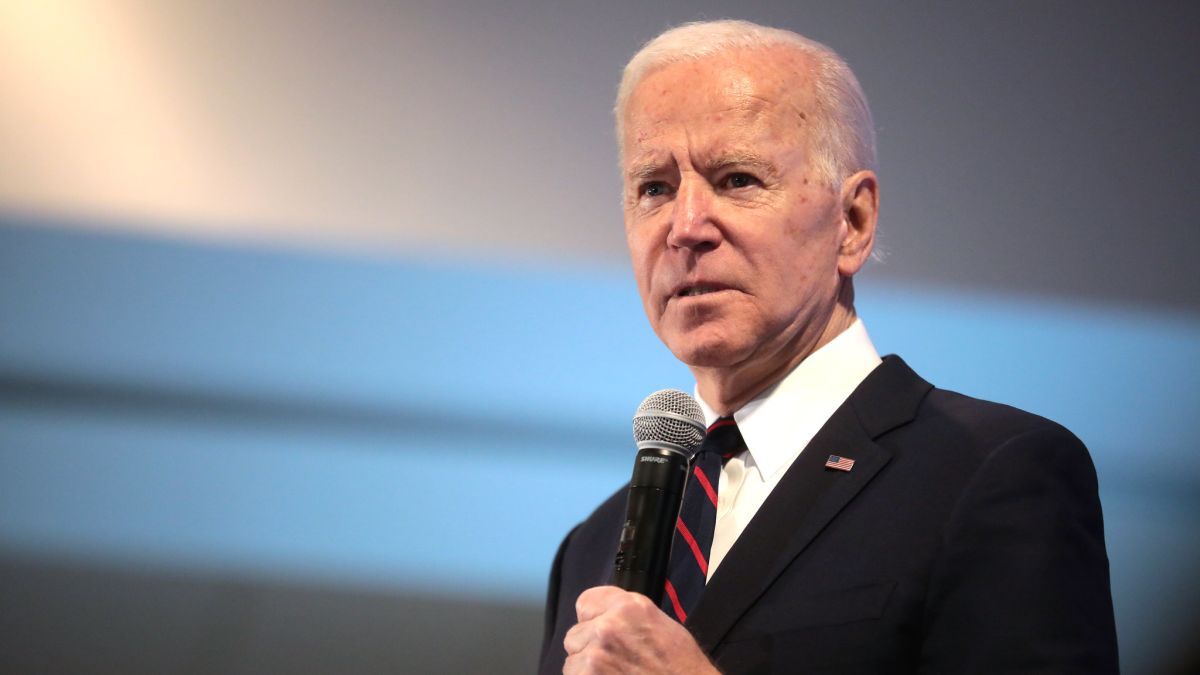
During his annual State of the Union speech, Joe Biden announced initiatives, including a new task force, designed to increase regulatory oversight of the container shipping industry.
The Biden administration is also urging lawmakers to pass a bill to remove antitrust immunity for container shipping alliances.
Many in the US Government, including those at the White House, are concerned that power within the container shipping industry is too concentrated in the hands of too few large carriers and alliances – all foreign companies – to the detriment of domestic consumers.
Representative Jim Costa has introduced a bill, the Ocean Shipping Antitrust Enforcement Act, in the US House of Representatives, that would amend shipping regulations by repealing section 40307 of Title 46 of the United States Code, which protects freight carriers from certain antitrust laws.
The bill has the support of the Biden administration, and the White House is expanding efforts between the Department of Justice and the maritime regulator the Federal Maritime Commission (FMC) to promote competition and enforce antitrust laws while calling on lawmakers to reform the Ocean Shipping Act.
A statement from White House read, “Right now, three global alliances, made up entirely of foreign companies, control almost all of ocean freight shipping, giving them power to raise prices for American businesses and consumers, while threatening our national security and economic competitiveness.”
Some 80% of the world’s container capacity is controlled by three large container shipping alliances (2M, Ocean Alliance, THE Alliance) and 95% of the East-West trade lines, with most of the consolidation having taken place in the 2010s.
The original Shipping Act of 1916 granted carriers a certain exemption to engage in rate discussions and price-fixing agreements. While outlawing monopoly practices, it encouraged agreements on shipping rates, pooling arrangements, and shipping route allocations, under the supervision of the US Shipping Board (the body that became the FMC).
Over time, as liner shipping was steadily deregulated, the industry’s antitrust immunity was also expanded. Similar exemptions to the US’ block exemptions for liner shipping exist in Europe. The deregulation and exemptions from antitrust laws eventually led to broad-based market consolidation in the 2010s.
The Biden Administration specifically alleged the new alliances had engaged in cartelisation, noting that ocean carrier companies have increased spot rates for freight shipping between Asia and the US by 100% since January 2020, and increased rates for freight shipping between the US and Asia by over 1,000% over the same period.
“Oftentimes cargo owners are charged fees – known as “detention and demurrage” fees – even when they can’t get access to their containers to move them. The FMC estimates that from July to September of 2021, eight of the largest carriers charged customers fees totalling US$2.2Bn – a 50% increase on the previous three-month period” the White House statement said.
Carriers have seen record profits over the course of the pandemic. For instance, 2M partner Maersk posted profits for 2021 showing revenue was up 55% to US$61.8Bn. As the pandemic has quickened supply chain trends and increased the shift towards e-commerce, especially for bulk cargo, liners have followed and invested heavily in air freight and logistics firms.
Several business practices of many large ocean carrier companies were also called into question as “hurting American businesses and farmers”; these include blank sailings, fee charges without notice and ’box rules’ that require truckers to use only certain trailers to haul their containers – causing delays and generating higher detention and demurrage fees.
Prompted by complaints from shippers, and trade bodies, lawmakers in the US Senate introduced the Ocean Shipping Reform Act 2022 which proposes vesting the FMC with more oversight powers including setting rules on what fees carriers can charge shippers.
The FMC has established a new audit programme to address carrier complaints related to unfair fees, and has sought comments on reforms to how carriers may charge shippers fees.
In response to the White House’s statements, liner industry representative the World Shipping Council (WSC) said, “It is unfortunate that the [US] President is demonising ocean carriers,” adding that the industry remains competitive. The body cited data from industry analyst Drewry showing that a larger pool of competitors operated ships in the trans-Pacific in 2021.
WSC reiterated its opposition to the Ocean Shipping Reform Act stating, “The bottom line is that container shipping is a very competitive industry – this is what the numbers show. Regulators in the US and Europe have repeatedly and recently confirmed that this is the case.”
Complaints are not limited to the United States. Charges of collusion have been made around the world, leading to the establishment of a working group between the US Justice Department, Canadian Competition Bureau, the Australian Competition and Consumer Commission, the New Zealand Commerce Commission and the UK Competition and Markets Authority to exchange intelligence and coordinate investigations into antitrust violations.
Riviera Maritime Media will provide free technical and operational webinars in 2022. Sign up to attend on our events page
Related to this Story

Events

Maritime Regulations Webinar Week
 16 Dec 2025
 GMT - ONLINE
Floating energy: successfully unlocking stranded gas using FLNGs and FSRUs
24 Feb 2026GMT - ONLINE
© 2024 Riviera Maritime Media Ltd.


