


Business Sectors
Events
Contents

Register to read more articles.
US Senate proposal to increase ocean carrier regulation draws criticism from WSC
Industry body the World Shipping Council (WSC) has commented on proposed United States legislation that would modify the US Shipping Act


WSC is the primary industry body representing the liner industry, accounting for over 90% of global liner shipping capacity including AP Møller-Maersk, HMM, COSCO, MSC and Evergreen.
Prompted by complaints from shippers, the liner industry’s increasing consolidation and the supply chain crisis which sent the price of freight skyrocketing, the US Senate has now introduced its own version of legislation to amend the Shipping Act (which was last updated in 1998), which has prompted a response from the WSC.
An earlier bill sponsored by California Democrat John Garamendi and South Dakota Republican Dusty Johnson proposed legislation towards longer-term reform to shipping laws and passed overwhelmingly through the US House of Representatives.
The new bipartisan legislation was introduced last week by Senators Amy Kloubachar and John Thune and proposes giving the Federal Maritime Commission (FMC) greater regulatory powers and set rules on what fees carriers can charge shippers.
Among its many recommendations, the Ocean Shipping Reform Act 2022 gives the FMC authority to press ahead with investigations of the business practices of ocean carriers and apply enforcement measures.
Futher, carriers will be obliged to provide the FMC with quarterly reports on total import and export tonnage and 20-ft equivalent units (TEU) per vessel that make it to a US port.
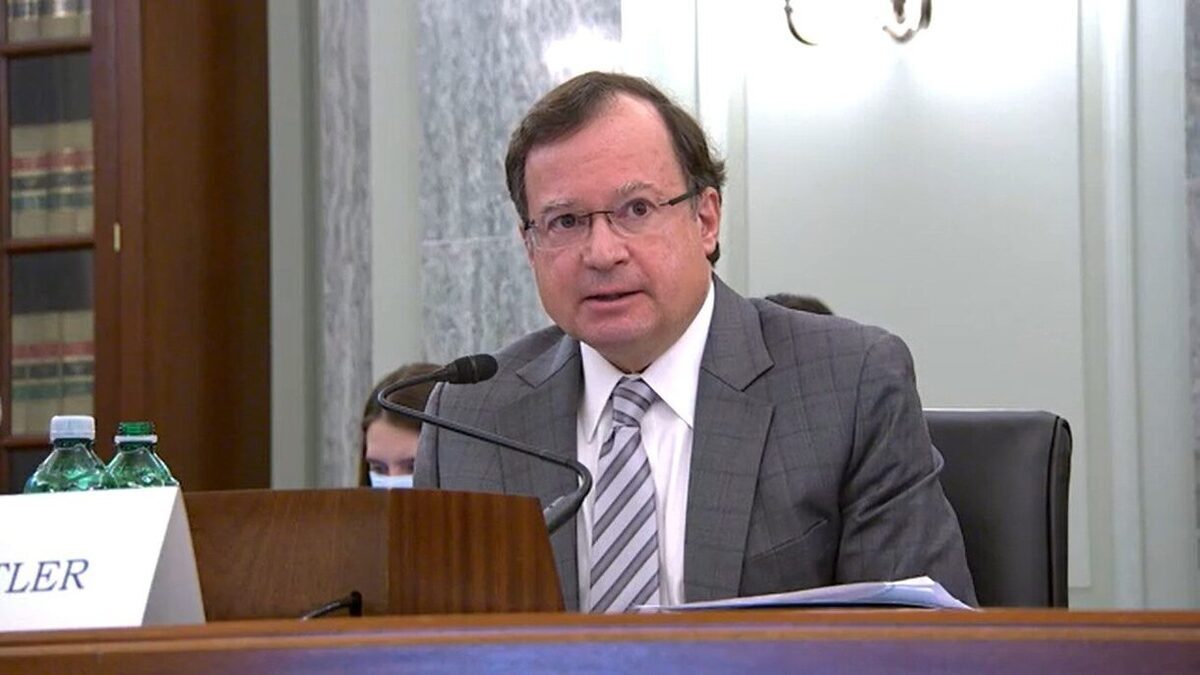
Commenting on the legislation, WSC president and chief executive John Butler disapproved, stating, “The deeply flawed bill passed by the House at the end of last year would place government officials in the role of second-guessing commercially negotiated service contracts and dictating how carriers operate ship networks – an approach that would make the existing congestion worse and stifle innovation.”
“We look forward to the opportunity to work with the Senate to craft a final bill that – in contrast to the House bill – takes a comprehensive, forward-looking view of the real root causes of supply chain congestion – and that does not make that congestion worse.”
Mr Butler added, “Ocean carriers have deployed every available ship and container to move the continuing record levels of cargo resulting from pandemic-driven US demand for imports – but when ships cannot get into port to discharge and load cargo because of landside logistics breakdowns, it is clear that further regulating ocean carriers will not solve the deeper challenges in US supply chains.”
Late last year, the Biden administration admitted that years of underfunding in port infrastructure had contributed to supply chain woes and announced an allocation of US$17Bn to improve port infrastructure in the United States as part of the overall Infrastructure Investment and Jobs Act 2021.
The newly proposed bill can be accessed here.
Riviera Maritime Media will provide free technical and operational webinars in 2022. Sign up to attend on our events page
Related to this Story


Events

Maritime Regulations Webinar Week
 16 Dec 2025
 GMT - ONLINE
Floating energy: successfully unlocking stranded gas using FLNGs and FSRUs
24 Feb 2026GMT - ONLINE
© 2024 Riviera Maritime Media Ltd.


