


Business Sectors
Events
Contents
Salvage and P&I cross paths in marine casualties
In a marine casualty situation where there is real and present danger, the prompt deployment of suitable emergency response providers is of utmost importance to minimise the risks to life, environment and property


Often, the nature of a maritime incident requires professional salvors with experience, specialised equipment and vessels to be appointed to salvage the asset and prevent environmental damage.
Where there is real and present danger, the prompt deployment of suitable emergency response providers is of utmost importance to minimise the risks to life, environment and property.
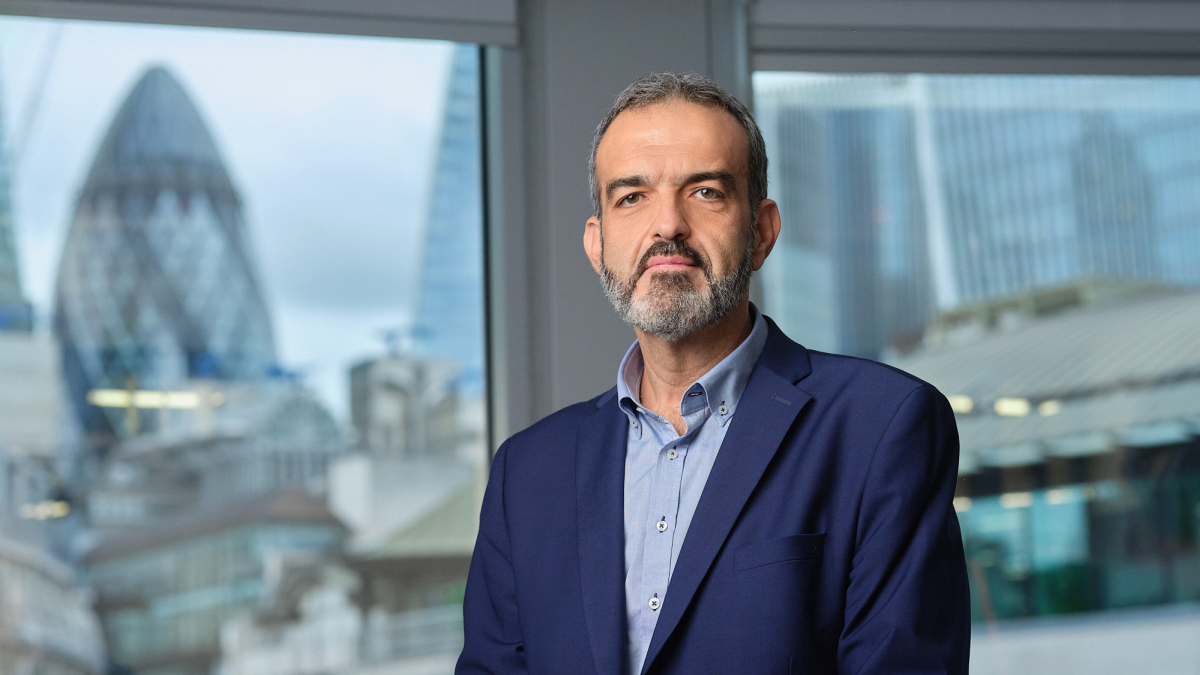
Salvage is an “act whereby a volunteer preserves or contributes to the preserving at sea of any cargo, freight or other property in peril,” said Britannia P&I divisional director of claims and head of its Greek office, Konstantinos Samaritis.
The use of the Lloyd’s Open Form (LOF) contract enables the salvor and shipowner to agree to immediately provide salvage services to a ship in distress on a ‘no cure, no pay’ basis to avoid the situation deteriorating while terms are negotiated, he explained.
“Liability for salvage costs is usually covered under an owner’s hull and machinery (H&M) insurance,” said Mr Samaritis.
“If the salvage services are performed under an LOF contract, P&I may be directly involved via the Special Compensation P&I Clause (SCOPIC), which is often incorporated into the standard LOF contract.”
SCOPIC provides a safety net for salvors in circumstances where there is ultimately no salvage fund, or it is insufficient to cover their expenses.
“Under SCOPIC, P&I insurers are potentially responsible for compensating salvors if the value of salved property is insufficient to reward them adequately,” Mr Samaritis explained.
“SCOPIC tariff rates are pre-agreed daily and hourly rates for tugs, equipment and personnel, plus a 25% uplift on the total tariff amount.”
If SCOPIC is invoked, it will be payable to the extent that SCOPIC remuneration exceeds any award made under Article 13 of the Salvage Convention 1989.
Article 13 sets criteria for payment to salvors “based on factors like salved values, skill and effort, measure of success, nature and degree of danger, time used and expenses incurred, to encourage maritime rescue operations,” said Mr Samaritis.
If the Article 13 award is greater than SCOPIC, the award will be discounted by 25% to avoid the special compensation mechanism being misused.
Outside of SCOPIC, Article 14 of the Salvage Convention covers special compensation and “provides that the salvor will, subject to certain conditions, recover its expenses whenever there is a threat of damage to the environment,” he explained.
“That said, the salvors decide whether to invoke SCOPIC, but cannot claim under Article 14 in that case. As regards who is responsible for what, an Article 13 award would be paid by H&M insurers, whereas SCOPIC or Article 14 special compensation would be covered under an owners’ P&I insurance.”
Once invoked, SCOPIC allows owners to appoint a special casualty representative (SCR) to monitor the salvage operations and associated costs.The SCR is typically appointed by the P&I Club on behalf of shipowners.
“The SCR will determine whether the expenses generated are reasonable under the circumstances and ensures that the remediation measures are appropriately implemented,” said Mr Samaritis.
“In many marine casualties, the competent authorities will issue an order requiring bunker removal. If this is ordered for environmental protection rather than as a necessary part of salvage operations, the relevant cost would generally be covered under P&I.”
If the salvage efforts are abandoned because the asset in peril becomes a constructive total loss, salvage may well develop into a wreck-removal situation. “In that case, P&I insurance comes into play,” he said.
“Handling a marine casualty can be extremely challenging and complex”
The Nairobi Wreck Removal Convention 2007, which entered into force in 2015, provides a legal framework for states to remove shipwrecks that may adversely affect the safety of lives, goods and property at sea and the marine environment, and introduces the concept of reasonableness into wreck removal requirements and efforts.
“Other claims and liabilities dealt with by P&I in a marine casualty incident would often include pollution clean-up costs and environmental damage, death, personal injury and repatriation of crew, loss or damage to cargo, damage to another vessel, fixed floating object or other property,” said Mr Samaritis.
“Handling a marine casualty can be extremely challenging and complex. Effective co-operation between shipowners and their property and liability insurers throughout the casualty response is essential with a view to increasing the likelihood of the operation being successful.”
The 28th International Tug & Salvage Convention, Exhibition & Awards will be held in Gothenburg, Sweden, in association with Caterpillar, 19-21 May 2026. Use this link for more details of this industry event and the associated social and networking opportunities.
Related to this Story
Events
Maritime Regulations Webinar Week
 16 Dec 2025
 GMT - ONLINE
Floating energy: successfully unlocking stranded gas using FLNGs and FSRUs
24 Feb 2026GMT - ONLINE
© 2024 Riviera Maritime Media Ltd.


