


Business Sectors
Business Sectors
Events
Contents
Register to read more articles.
DP World, Svitzer partner to bunker tugboats with biofuel
The terminal operator and tug owner are collaborating to cut emissions from ship handling and towage


DP World and Svitzer are working together to use biofuel on tugs to reduce emissions at a major container port in the UK.
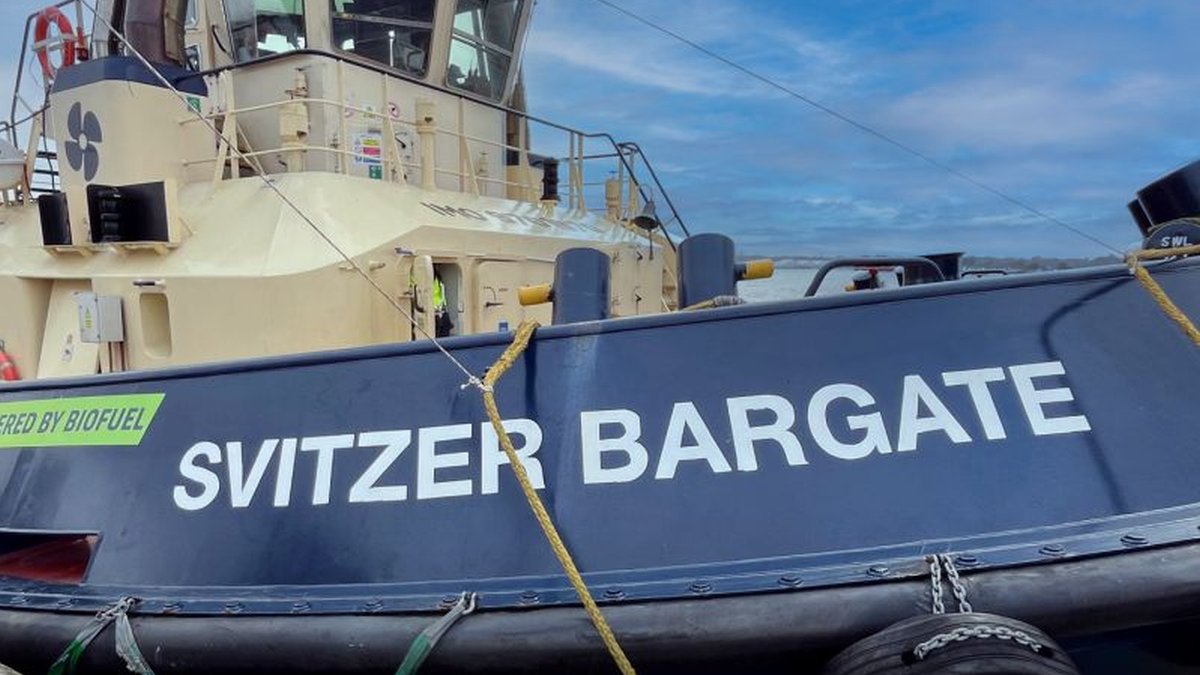
In the Port of Southampton, DP World supported the bunkering of 2014-built tugboat, Svitzer Bargate, with 100% hydrogenated vegetable oil (HVO) as part of its sustainability drive. HVO has replaced diesel as fuel on this 231-gt, 24-m tug as it handles container ships at DP’s terminal on the English south coast.
“The emissions savings contribute to DP World’s carbon inset programme, helping customers reduce emissions at the source and support their Scope 3 ambitions,” said Svitzer. “This is a great example of how collaboration can deliver measurable emissions reductions.”
DP World said bunkering HVO on Svitzer Bargate “marked a meaningful step forward in reducing emissions from harbour towage operations.”
The Dubai, UAE-headquartered group added that the emissions savings from this activity form part of the last nautical mile carbon inset credits under its carbon inset programme.
“It enables cargo owners to actively reduce supply chain emissions at the source,” said DP World.
It hopes to expand its partnership with Svitzer to include more vessels and cut greenhouse gas emissions further.
“Our collaboration with Svitzer to expand the use of lower-carbon fuels could avoid more than 900 tonnes of CO2e annually, creating measurable emissions savings and helping customers to meet their Scope 3 goals.”
DP World’s carbon insets address emissions at the source within its own supply chain, such as with marine services in ports, targeting reductions through using cleaner fuels or enabling more efficient transport.
It aligns with the sustainability goals of cargo owners, vessel operators, ports and the maritime industry’s decarbonisation initiatives.
DP World started its carbon inset programme in the UK in 2025, initially as a six-month trial, rewarding importers with 50 kg CO2e of carbon credits for every loaded import container they move through its UK terminals.
“The trial has been an undeniable success so far, and its extension to the end of 2026 is a testament to the confidence we have that more cargo owners stand to benefit from the programme’s incentives,” said DP World.
Importers moving cargo through DP World UK ports who have registered for the programme will now qualify for 250 kg CO2e carbon inset credits for every import-laden container, which is five times the amount offered at the launch.
“The carbon inset credits are designed to help our customers demonstrate measurable improvements in the carbon intensity of marine fuel consumption within their supply chains,” said DP World.
“These additional carbon credits address the emissions associated with the entire port call of container ships when manoeuvring into London Gateway or Southampton over their last nautical mile, specifically now also accounting for emissions of the tug and pilot boats.”
The 28th International Tug & Salvage Convention, Exhibition & Awards will be held in Gothenburg, Sweden, in association with Caterpillar, 19-21 May 2026. Use this link for more details of this industry event and the associated social and networking opportunities.
Related to this Story


Events

Maritime Regulations Webinar Week
 16 Dec 2025
 GMT - ONLINE
Floating energy: successfully unlocking stranded gas using FLNGs and FSRUs
24 Feb 2026GMT - ONLINE
© 2026 Riviera Maritime Media Ltd.


