


Business Sectors
Events
Contents

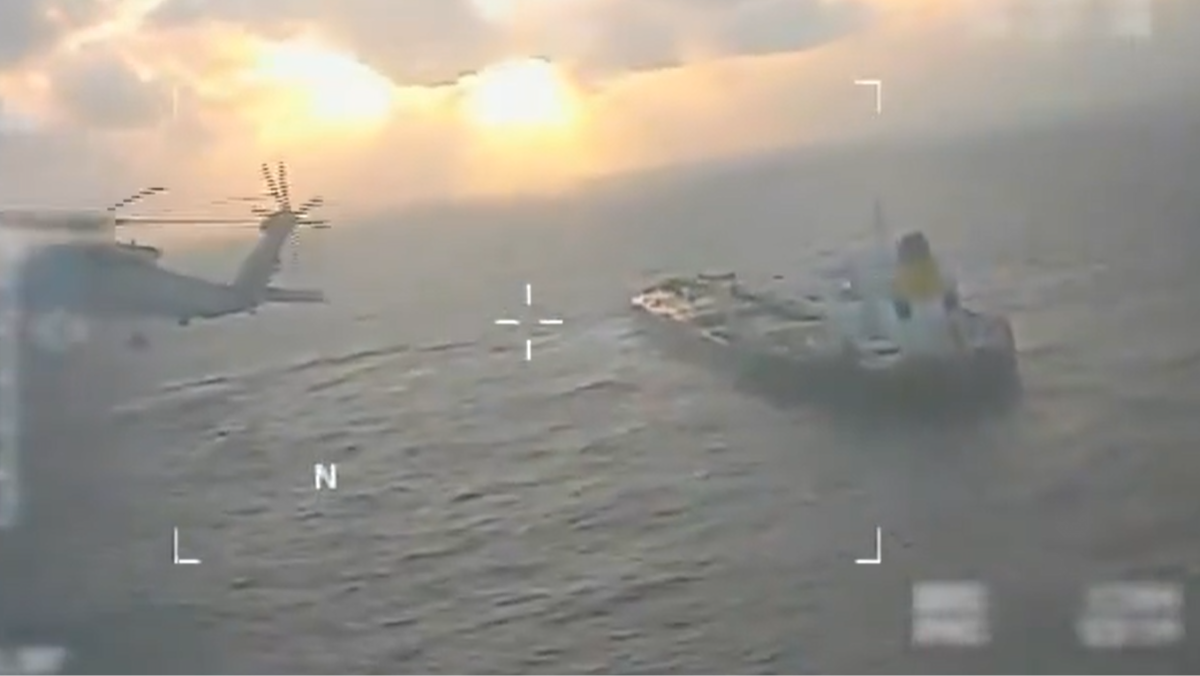
Shadow fleet VLCCs left 'virtually useless' as US again targets Venezuela-linked tankers
US action against Venezuela-linked tankers could hit the shadow fleet while benefiting the mainstream tanker market, following the interception of two more vessels over the weekend


VLCCs Centuries and Bella 1 have become the latest targets of US enforcement, following the seizure of Skipper and US President Donald Trump’s order for a “complete blockade” of tankers calling at Venezuela.
Banchero Costa head of research Ralph Leszczynski told Riviera that if the situation escalates and Venezuelan trades are blocked – either partially or completely – it would primarily affect the shadow fleet and could be positive for mainstream tanker shipping.
“At least part of the demand from Chinese importers would be redirected to non-sanctioned exporters such as Saudi Arabia and Iraq,” he explained.
More importantly, Mr Leszczynski noted that most of the shadow fleet servicing Venezuelan crude exports cannot be redeployed to Russian trades, as Venezuelan exports are predominantly carried on VLCCs.
By contrast, Russian crude exports are largely limited to Suezmaxes and Aframaxes due to draft restrictions. This leaves many VLCCs “virtually useless” at present, as they cannot be re-integrated into mainstream trading, he added.
Seizure of VLCC Centuries
In the first of the two latest incidents, on 20 December, the US seized 2001-built VLCC Centuries, sailing under the Panamanian flag. Equasis lists the vessel as owned by a Hong Kong-based company.
The tanker was reportedly intercepted east of Barbados in the Caribbean Sea.
Global real-time data and analytics provider Kpler said in a report that Centuries was carrying Venezuelan crude, having loaded at the Jose Oil Terminal just days before the seizure.
“Spoofed AIS positions indicated that the vessel had been sailing toward the Caribbean since early December, reaching the northern coast of Curaçao on 12 December and remaining ostensibly stationary thereafter,” Kpler said.
“Imagery analysis, however, showed that the vessel had in fact been off the coast of Venezuela since at least 4 December, with additional imagery indicating it was in ballast during that period,” the firm added.
TankerTrackers.com said on X that the latest loading marked the vessel’s seventh export of Venezuelan oil – sometimes crude, sometimes fuel oil – since 2020. The same source added that on 18 December the tanker was sighted east of Venezuela, accompanied by three Venezuelan navy vessels to the edge of the country’s exclusive economic zone.
US Homeland Security Secretary Kristi Noem said Centuries was “operating as part of the Venezuelan shadow fleet to traffic stolen oil and fund the narcoterrorist Maduro regime.”
What distinguishes Centuries from the other vessels targeted is that it was not listed on any sanctions register at the time it was intercepted.
“This suggests a shift in enforcement, with greater focus on how vessels operate and the nature of their cargo, rather than solely on whether they are formally sanctioned,” said Kpler senior risk and compliance analyst Dimitris Ampatzidis.
US pursues VLCC Bella 1
In a separate incident, media cited US Coast Guard officials as saying they were in “active pursuit” of a vessel in international waters near Venezuela as of 21 December.
The vessel was identified as 2002-built VLCC Bella 1, listed under an unknown flag and operated by an Istanbul-based shipping company.
Kpler said the tanker was in ballast at the time and was most likely heading toward Venezuela. AIS data showed the vessel signaling Curaçao as its destination, with its last recorded position offshore Antigua and Barbuda four days earlier.
AIS tracks also indicate that Bella 1 reversed course on 15 December – likely as a precaution following the seizure of Skipper – before turning again on 16 December and resuming its voyage toward Venezuela, according to Kpler data.
Bella 1 was sanctioned by the US Treasury’s Office of Foreign Assets Control (OFAC) in June 2024 for its involvement in Iranian oil transportation.
According to TankerTrackers.com, between October 2021 and September 2025 the vessel directly exported 7.3M barrels of Iranian crude and 3.7M barrels of Venezuelan crude, both to China. The tanker also received, via ship-to-ship transfers, 7.4M barrels of Iranian crude and 1.9M barrels of Venezuelan oil prior to delivery to China.
Venezuelan exports continue despite sanctions
Mr Leszczynski said Venezuela has been exporting around 0.9M barrels per day in recent months – just under 2% of global crude exports. More than 80% of these volumes were reportedly destined for China, either directly or via transhipment in Southeast Asia.
“Tracking volumes and routes remains difficult, as shipments are primarily carried on shadow fleet tankers, often with AIS switched off and with no fixtures reported in the market,” he said.
Kpler estimates that since December, nearly 9M barrels of crude have been loaded, based on imagery analysis and port operation reports. These data confirm that three VLCCs loaded at the Jose Oil Terminal during this period.
Mr Ampatzidis added that 174 oil tankers loaded Venezuelan crude in 2025, according to Kpler tracking data. Excluding vessels operating under US waivers for Chevron, 143 showed higher-risk indicators. However, only 57 were formally sanctioned by Western authorities, and just 50 by OFAC.
“Most Venezuelan oil subject to sanctions is still being transported by vessels that are not officially designated,” he said.
“This gap suggests that future US enforcement may increasingly focus on vessels involved in high-risk trades, even if they are not formally sanctioned,” Mr Ampatzidis concluded.
Sign up for Riviera’s series of technical and operational webinars and conferences:
- Register to attend by visiting our events page.
- Watch recordings from all of our webinars in the webinar library.

Related to this Story



Events

Maritime Regulations Webinar Week
 16 Dec 2025
 GMT - ONLINE
Floating energy: successfully unlocking stranded gas using FLNGs and FSRUs
24 Feb 2026GMT - ONLINE
© 2024 Riviera Maritime Media Ltd.


