


Business Sectors
Business Sectors
Events
Contents

Register to read more articles.
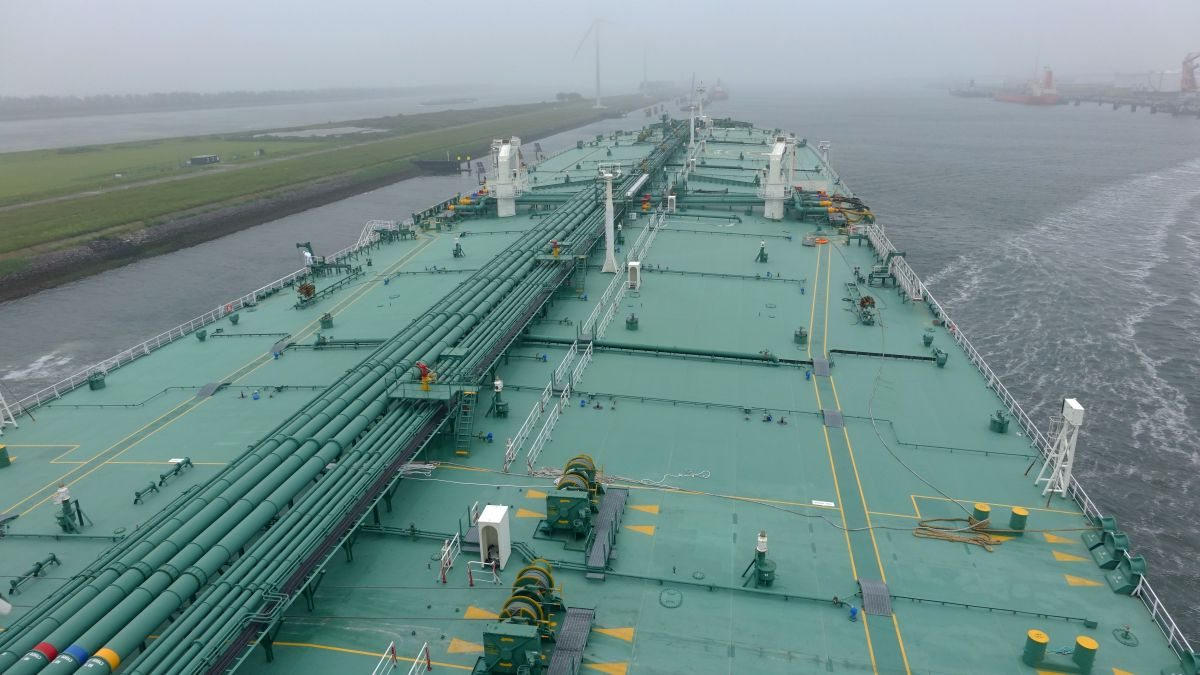
VLCC supercycle set to stay as charter and secondhand markets reach 'stratospheric' levels
With VLCC spot charter rates at US$1.25M per day and asset values approaching stratospheric levels, a new shipbroking analysis suggests that the current tanker supercycle is different from those of the past, supporting the prospect of a prolonged period of strong market conditions


BRS Shipbrokers reported in its latest weekly report that VLCC earnings on the benchmark Middle East Gulf-China route (TD3C) exceeded US$1M per day for the first time and recently stood at “a scarcely believable US$1.25M per day”.
“Although TD3C now incorporates a significant risk premium and thus outperforms other VLCC benchmarks, these other trades have not been left completely behind, as their earnings are also at record levels, supported by tight tonnage lists across the world,” BRS said.
Xclusiv Shipbrokers said the Baltic VLCC time charter average rose from around US$198,000 per day in July to approximately US$272,000 per day in August, before averaging close to US$449,000 per day during the first half of September.
By 18 September, the index had reached approximately US$722,946/day, compared with around US$79,700/day in mid-September 2025.
Geopolitics have undoubtedly been the main driver behind the rally.
“Escalation around Iran and disruption surrounding the Strait of Hormuz have increased war-risk exposure, affected vessel availability and created greater uncertainty around normal trading patterns,” Xclusiv said.
“At the same time, diversions, longer voyage requirements and stronger demand for alternative crude sources have increased tonne-mile demand, tightening effective supply and placing further upward pressure on earnings,” the analysts added.
Why this rally is different
BRS said the current frenzy is reminiscent of the tanker supercycle of 2007-2008, when VLCC rates soared towards US$200,000 per day.
However, analysts noted that this was followed by the Great Recession, which saw global oil demand plunge by more than 2%.
“Eventually this fed into significantly lower clean and dirty tanker demand, which collided with a period of increased tanker deliveries,” BRS said.
Consequently, tanker earnings entered a prolonged downcycle, with earnings across many tanker segments persistently remaining below break-even levels between 2009 and 2012.
These memories, combined with accelerating tanker deliveries over the coming years, have prompted some bearish commentators to question whether history will repeat itself.
BRS disagrees.
The brokerage firm noted that, in contrast to the 2007-2008 period, when expanding Chinese oil demand was the key driver, today’s rally is being supported by a plethora of oil supply-chain inefficiencies, most of which are linked to the Middle East.
Shuttling networks are a key component of this dynamic. Whether ferrying crude from inside the Gulf to the Gulf of Oman or from the Red Sea to the Mediterranean, around 15% of the mainstream VLCC fleet is currently estimated to be involved to some extent in these trades, BRS explained.
“These networks are anticipated to remain even after a sustainable solution is found to return traffic in Hormuz to its pre-war level,” the analysts said.
Meanwhile, there are 200 VLCCs in the grey fleet, of which 170 are sanctioned, with these vessels being primarily employed to transport Iranian oil, BRS said.
“It appears logical that as part of any settlement to end the Middle East conflict, US restrictions on Iran’s oil industry will be eased, thereby destroying the demand for a large tranche of this fleet,” the report continued.
Excluding grey-fleet vessels and those involved in shuttling operations, the effective mainstream VLCC fleet drops significantly below 650 units, a level last seen in 2014.
“Stratospheric secondhand prices”
It is not only spot and time charter rates that are in a supercycle. Secondhand tanker prices are also at stratospheric levels and continue to strengthen, BRS said.
The market is being driven by strong demand for VLCCs from Middle Eastern oil companies, which require tonnage for their shuttling networks to evacuate crude from the Middle East Gulf to the Gulf of Oman, the analysts explained.
According to Xclusiv Shipbrokers data, between 10 July and 18 September, the value of a five-year-old VLCC increased from around US$145M to US$172M, a rise of approximately 18.5%. Values for 10-year-old and 15-year-old tonnage increased by 32% and 61%, respectively.
A total of 103 VLCC sales were recorded between January and 14 September, according to Xclusiv data. Of these, 43 were aged 11-15 years, while another 32 were 16-20 years old. A further 14 were aged six to 10 years, nine were more than 20 years old and only five were in the 0-5-year age bracket.




Related to this Story

Events
Maritime Regulations Webinar Week
 16 Dec 2025
 GMT - ONLINE
Floating energy: successfully unlocking stranded gas using FLNGs and FSRUs
24 Feb 2026GMT - ONLINE
© 2026 Riviera Maritime Media Ltd.


