


Business Sectors
Business Sectors
Events
Contents
Yangtze study links antifouling paint particles to sediment copper risk
Yangtze estuary sediments contain widespread antifouling paint particles, with the study linking higher concentrations and copper risk to areas of intense shipping activity


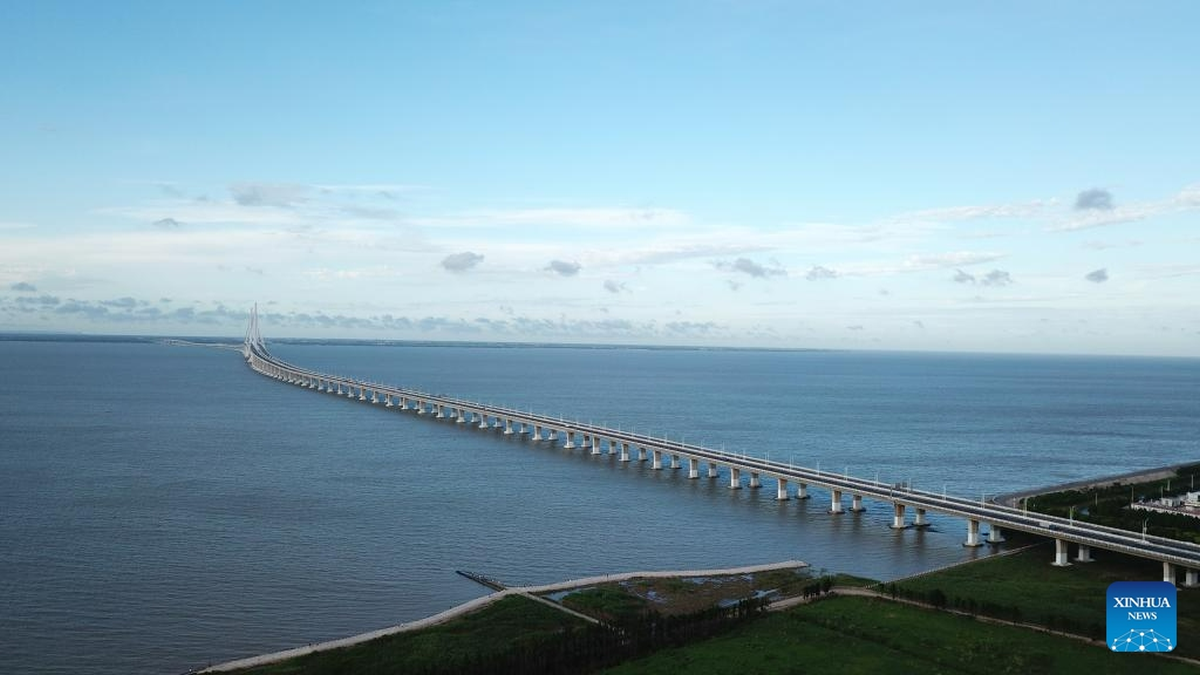
A scientific paper on the Yangtze River Estuary has identified widespread contamination from acrylate-based self-polishing copolymer antifouling paint particles, with the authors linking the highest concentrations to heavy shipping activity and warning that associated copper levels in one branch of the estuary are nearing a level at which harmful effects on benthic organisms become more likely.
The paper said the issue has been understudied in estuarine environments despite the particles acting as persistent micropollutants and carriers for biocidal metals.
The study, titled Occurrence and Characterization of Acrylate-Based Self-Polishing Copolymer Anti-Fouling Paint Particles (SPC-APPs) in the Sediments of the Yangtze River Estuary, investigated 12 sampling sites across the South Branch, North Branch and offshore shoal.
According to the paper, samples were taken from surface sediments and analysed using a combined protocol of density separation, scanning electron microscopy-energy-dispersive spectroscopy, inductively coupled plasma mass spectrometry and pyrolysis-gas chromatography mass spectrometry.
The authors said the work was intended both to establish baseline occurrence data and to refine an analytical method suitable for complex, organic-rich estuarine sediments.
SPC-APPs were detected at all sampling points, with abundances ranging from (0.82 ± 0.15) × 10³ to (3.65 ± 0.42) × 10³ particles per gram of dry sediment.
The paper reported a clear spatial pattern, with the South Branch showing the highest abundance, followed by the North Branch and then the offshore shoal.
Stepwise regression in the study attributed 68% of the variation in particle abundance to shipping density and 25% to flow velocity, with the combined model explaining 93% of total variation.
The authors therefore framed shipping intensity as the dominant driver, while hydrodynamics regulated transport and settlement.
In compositional terms, the particles showed what the paper described as a diagnostic high-copper, high-zinc signature. EDS analysis identified Cu and Zn as major metallic components, while Py-GC/MS identified mass fragments m/z 41, 69 and 87 as diagnostic markers for the acrylate-based particles.
Morphologically, the particles were described as irregular, abraded and aged, with lower metal content than fresh reference particles, which the study attributed to physical abrasion and chemical oxidation over time.
The paper also linked particle abundance strongly with copper and zinc in sediments.
Pearson correlation showed significant positive relationships with sediment Cu (r = 0.82, p < 0.01) and Zn (r = 0.76, p < 0.01), while no significant correlations were found for Pb, Cd, Cr or Ni.
On that basis, the authors noted that SPC-APPs were an important source of Cu and Zn contamination in the study area.
Implications for shipowners
For shipowners and operators, the paper’s relevance lies less in vessel performance than in the pollution control implications attached to coating wear in high-traffic estuaries.
The study said high-shipping-intensity regions face medium ecological risks from SPC-APP-derived Cu and Zn contamination, with Cu in the South Branch reaching 82-91% of the probable effect concentration and a Cu risk quotient of 0.56.
However, the authors also noted limits: the work covered only 12 sites, one sampling period in June 2023, and one antifouling paint type, while migration at the sediment-water interface and toxicological effects on aquatic organisms were not directly tested.
Attribution: The paper, Occurrence and Characterization of Acrylate-Based Self-Polishing Copolymer Anti-Fouling Paint Particles (SPC-APPs) in the Sediments of the Yangtze River Estuary, was authored by Can Zhang, Jianhua Zhou and Deli Wu, and published in Toxics on 17 February 2026 (DOI 10.3390/toxics14020177).
Sign up for Riviera’s April 2026 International Chemical and Product Tanker Conference:
- Register to attend here: The International Chemical and Product Tanker Conference 2026, London.
- View the latest issue of Tanker Shipping & Trade here: Tanker Shipping & Trade.

Related to this Story

Events

Maritime Regulations Webinar Week
 16 Dec 2025
 GMT - ONLINE
Floating energy: successfully unlocking stranded gas using FLNGs and FSRUs
24 Feb 2026GMT - ONLINE
© 2026 Riviera Maritime Media Ltd.


