


Business Sectors
Business Sectors
Events
Contents
Oil companies highlight DP vessel assurance issues


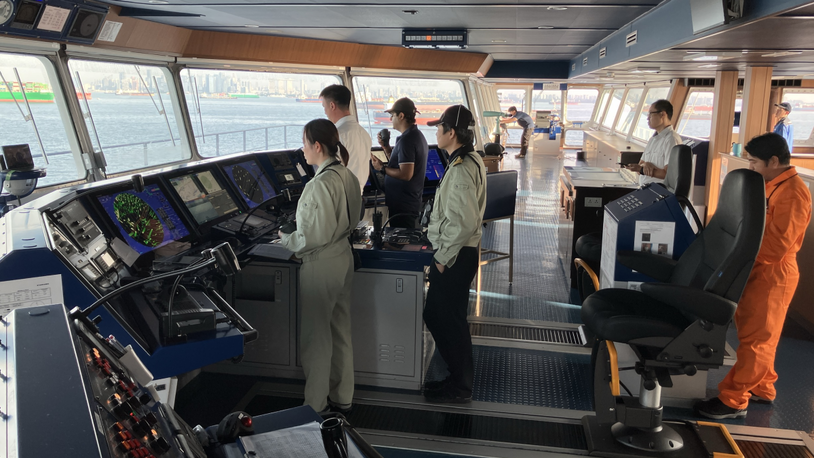
Assurance of dynamic positioning (DP) vessels, and the software that runs the onboard systems, are key challenges for the offshore industry. The issues were highlighted at Riviera Maritime Media’s latest European Dynamic Positioning Conference*. Major oil companies BP and Nexen Petroleum, as well as multiple vessel operators and suppliers of DP systems, outlined the need for vessel assurance processes.
BP Shipping offshore assurance superintendent John Flynn highlighted the importance of quality assurance of DP vessels, along with the need to improve DP operator competences. The company tightened its vessel and contractor assessments following the Deepwater Horizon accident in 2010. “It is our reputation that is on the line, so we need to set high standards and have strong vessel assurance programmes. For this, we use the industry rules and then have our own standards. We assess all companies and vessels that work with us,” he said.
In the North Sea, Nexen Petroleum has improved its vessel assurance procedures by standardising the documentation and inspection processes. In an interview at the conference, Nexen marine technical authority Brian Beattie said the Canadian company had developed standards for vessel assurance inspectors and auditor check lists to standardise the procedures. “We do assessments to describe the risk of operating vessels and use matrices that are specific to the vessels, covering what our expectations are of the auditor,” he said.
Zakum Development Co (Zadco) in the Middle East, which operates in Abu Dhabi, has seen improvements in vessel uptime because of the use of DP. Zadco marine specialist Hussam Suyyagh said: “There is a lot of fog and bad weather in the Arabian Gulf, but there is less waiting on weather with DP vessels. We have gained 97 days of operating time with DP vessels, compared with using conventional vessels.”
He called on the DP industry to develop technology to improve the environmental footprint of DP vessels without affecting safety or operational efficiencies.
From the vessel operators’ perspective, Maersk Supply Service general manager of marine operations Nick Trier Madsen said charter requirements were increasingly complex. “There are more requirements from charterers for more DP vessel assurance. DP systems are becoming more complex, and there is a bottleneck because there are not enough technical officers on board,” he said.
Drillship operator Transocean’s head of marine operations and regulatory compliance, Peter Griffiths, said authorities and classification societies are taking a more active role in overseeing DP operations. “The evolving regulatory landscape presents numerous challenges for vessel operators, designers and charterers,” he said.
ABS has changed its survey rules for DP vessels to include demonstrations of the system redundancies in the operational testing. As part of the annual survey, inspectors should ensure that the level of system redundancy is consistent with what is described in the vessel’s failure mode and effects analysis (FMEA) documentation. Surveyors should also verify that any changes to the FMEA are incorporated in the operations manual. The US Coast Guard is considering ABS’s changes to make it a mandatory requirement for offshore vessels operating in the US.
DNV GL has introduced new class notations Dynpos-E and Dynpos-ER covering enhanced reliability of DP systems. Vessels meeting these class standards should include redundant main DP control systems, an independent alternative control unit and more flexibility in the availability of power and thrust. This can be achieved through the use of connected power systems, standbys and changeovers.
At the conference, ABS control systems engineer Naveen Selvam unveiled the society’s new Integrated Software Quality Management (ISQM) notation for software on board vessels. The first vessel to be subjected to the ISQM standard was drillship Rowan Renaissance, which was built by Hyundai Heavy Industries (HHI) and is now drilling offshore West Africa (Marine Electronics & Communications, April/May 2014).
Mr Selvam said ISQM was developed to reduce the environmental and safety risks that originate from software issues. The notation should indicate that engineers have minimised fielded errors due to software and ensure that any faults are corrected before the vessel is delivered to the owner. “During more encompassing testing of the onboard systems, inspectors detected and corrected software bugs that would otherwise have gone undetected,” he said.
The benefits to Rowan include cost reductions when software is upgraded, decreases in defects in the existing code and during upgrades, and the potential savings in the commissioning of the drillship. “The benefits include the owner being able to charge higher day rates and being more confident in the onboard software,” Mr Selvam said. “Equipment suppliers were able to find software issues before installation; then, during verification and validation, we discovered software issues that had gone unnoticed.”
The vendors on the Rowan Renaissance project included ABB, Kongsberg Maritime, National Oilwell Varco, Rolls-Royce and Nautronix. “ISQM gave the vendors a common language to communicate within their organisation and with others involved in the process. Some of the vendors have implemented attributes of ISQM in their internal quality processes,” he said. The benefit to HHI included a smoother run commissioning process because software issues had already been identified and fixed, and better tracking of these processes.
The verification of vessel software is important for newbuildings, but the ISQM notation does not cover software updates during the lifetime of the ship. This means that vessel systems could fail if there is a problem following a software update.
Another method to validate ship automation and DP systems is to use hardware-in-the-loop (HIL) testing. This is where a laptop is linked to the ship systems and runs simulations of faults to test the critical areas of the vessel. Marine Cybernetics is a leading provider of HIL testing of individual control systems and integrated ship systems.
However, HIL testing during vessel commissioning and sea trials does not also cover future software updates. Marine Cybernetics and Marine Technologies (MT) have teamed up to provide onboard and automatic HIL testing of vessel systems, including DP. “This is the way forward for mitigating the risks connected to software updating,” Marine Cybernetics research and development manager Luca Pivano said. “When the software is updated, operators should go back to testing vessel systems again to evaluate the risks. We evolved HIL testing to verify systems after upgrades.”
Marine Cybernetics’ automatic regression testing is called CyberSea Signature. “This is the future of onboard and remote HIL testing. It tests that networks work properly after software upgrades,” Mr Pivano said. The benefits of HIL testing and software change management include:
• reduced downtime related to software or network problems
• reduced time for onboard testing
• it is non-destructive testing of onboard networks
• operators can meet auditor requirements
• reduced risk of incidents and accidents due to software failures during operations.
MT will use this testing on its bridge and DP systems to mitigate the risk of failures following software updates, MT president Jan Mikalsen said. “We have developed remote diagnostics and will use Marine Cybernetics HIL testing,” he said. “The technology on the vessels can monitor everything, including DP systems.
“The benefits of combining third-party verification and remote diagnostics are we can fix vessel systems remotely, and when the repair is completed we can do the HIL onboard test, so our clients are happy. It is quicker and more reliable than manual testing. Automatic testing also brings more consistency and can generate reports. Operators can then learn more about vessel systems.”
A continuation of these discussions, and more, is expected at Riviera’s Asian Dynamic Positioning Conference scheduled for 10 October in Singapore.
*Riviera’s European Dynamic Positioning Conference was held in association with C-Mar’s Dynamic Positioning Centre in London on 18-19 June 2014. For copies of the presentations go to: www.rivieramm.com
Offshore vessels and drillships should operate in open bus tie mode during critical operations
In other sessions at Riviera Maritime Media’s European Dynamic Positioning Conference, there were discussions on the advantages and disadvantages of using open and closed switchboard bus ties for different offshore vessel operations. There was input from Nexen Petroleum marine technical authority Brian Beattie and DNV GL senior principal marine engineer Richard Purser, as well as conference delegates.
The bus tie breaker joins generator systems on the vessel and offers a primary point of disconnect during a short circuit or power overload. Vessels can operate in either an open bus configuration or a closed bus profile. The closed bus tie mode is more energy efficient, but power systems are then considered to be more prone to severe faults, which can lead to blackouts.
“With the bus tie breaker closed, the availability of the vessels’ power grid is greater than with it open,” Mr Beattie said. “The bus tie mode should depend on the risks and criticality of the operation. Shipowners should choose the mode of operation by following the industry guidelines.”
The International Marine Contractors’ Association guidance states that vessels should operate in the open bus configuration during critical activity mode of operation, when station-keeping integrity must be the highest priority, as the consequences of a loss of position can include risk to life or damage to the environment. Vessels can be in a closed bus configuration for task-appropriate modes, when the consequences of loss of position are purely commercial.
Mr Purser said it should depend on whether ships can recover quickly from blackouts, or if there is the risk to life. “Vessel operators should check the failure mode and effects analysis, check the annual trials documentation and operations manual,” he said. “Live short circuit tests should be carried out during sea trials, when it is also important to have vendors on board. During critical operations, vessels should operate in open tie mode, but for task-appropriate modes they can have closed bus ties.” MEC

Related to this Story
Events

© 2026 Riviera Maritime Media Ltd.


