


Business Sectors
Business Sectors
Events
Contents
Register to read more articles.
Vessel grounding demonstrates importance of wheelhouse alarms
MAIB report: the grounding and total loss of a fishing vessel in Scotland could have been avoided if the skipper had used an electronic chart plotter and a bridge-watch alarm


Fishing vessels should be equipped with, and always use, electronic chart plotters and bridge-watch alarms to alert crew of dangers, including the watchkeeper falling asleep at the wheel.
A report by the UK Government’s Marine Accident Investigation Branch (MAIB) into the grounding and constructive total loss of Crystal Stream on 6 June 2025 highlighted the dangers of watchkeeper fatigue, lack of safety management systems, and the need for alert systems.
The 1984-built, 18-m prawn trawler was sailing to Tarbert, Argyll, after completing a day of fishing, when it struck a rock causing water ingress into the cargo hold.
This collision shuddered the vessel and awoke the watchkeeping skipper, who decided to ground Crystal Stream on Barmore Island, Loch Fyne, to support emergency evacuation by the four crew members.
Crew safely evacuated onto the island on a liferaft and were rescued by the Tighnabruaich Royal National Lifeboat Institution inshore lifeboat.
During its investigation, the MAIB discovered the skipper did not use the vessel’s chart plotter, and there was no working bridge watch alarm unit in the wheelhouse to alert the crew if the watchkeeper failed to respond.
“The skipper, who was the lone watchkeeper at the time of the grounding, was highly likely fatigued due to the schedule in the week before the accident,” said the MAIB in its report.
“The vessel’s safety management was inadequate, failing to address key operational areas including navigational practices, risk assessments, and crew medical fitness.”
There was a lack of induction training for seafarers joining Crystal Stream, and a lack of regular drills, resulting in crew being unfamiliar with the vessels’ lifesaving equipment and emergency procedures.
“Operating alone for extended periods increased the risk of reduced alertness and micro-sleeping,” said the MAIB.
“Combined with the absence of a functioning watch alarm, these conditions resulted in an ineffective watch being maintained and placed the crew at risk,” said the MAIB.
The investigation branch recommended M & I MacKinnon, which managed Crystal Stream, to adopt safety management systems on vessels that are aligned with the Fishing Safety Management Code.
M & I MacKinnon was also recommended to implement watchkeeping procedures aligned with guidance of the UK’s Maritime and Coastguard Agency and to instigate a fleetwide fatigue management system to ensure that crew on board its vessels are provided with adequate rest.
The deficiencies identified during the MAIB’s investigation were systemic rather than isolated, reflecting failures within the fishing vessel sector to follow regulatory requirements and established guidance.
“This significantly increases the risk of collisions or groundings,” said the MAIB.
In its report, the MAIB found parallels with groundings of other fishing vessels, where there were an absence of regular drills and safety awareness, including the grounding of Weston Bay off the UK’s east coast, in May 2024, resulting in one fatality.
Another example identified was the grounding of scallop dredger Golden Promise in September 2011 when the skipper was the lone watchkeeper and fell asleep, missing a course alteration.
The MAIB also found fishing vessel Sustain grounded in November 2023 when the skipper fell asleep while on watch, and no one else was alerted.
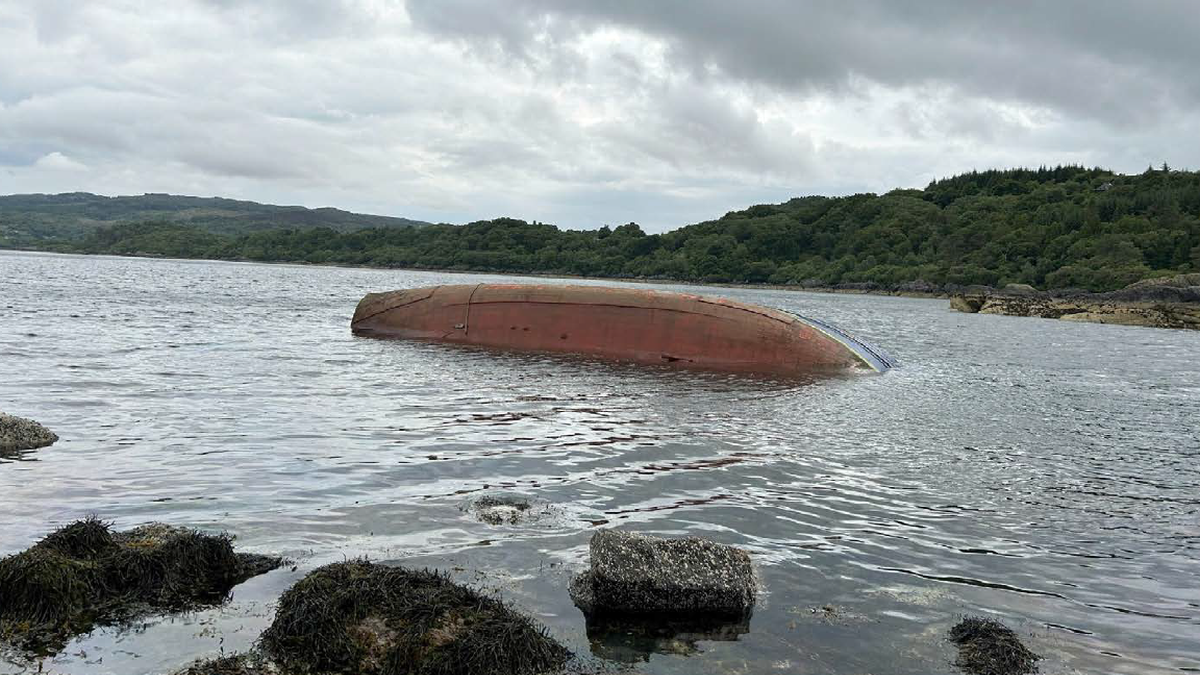
Following the accident, Crystal Stream was observed lying on its port side, partially submerged among the rocks. It was declared a constructive total loss, then broken up and removed as a wreck.
Riviera and Metis will host the AI in Fleet Performance Management: From Data to Decisions webinar at 09:30 – 10:30 GMT+1 on 12 May 2026. Use this link to join the webinar and for more details.

Related to this Story
Events

Maritime Regulations Webinar Week
 16 Dec 2025
 GMT - ONLINE
Floating energy: successfully unlocking stranded gas using FLNGs and FSRUs
24 Feb 2026GMT - ONLINE
© 2026 Riviera Maritime Media Ltd.


