


Business Sectors
Events

Floating energy: successfully unlocking stranded gas using FLNGs and FSRUs
 24 Feb 2026
 GMT - ONLINE
Contents

Poten: 'no easy way out' in oil market balancing act
Oil markets are facing challenges replacing production shortfalls linked to sanctions against Russia triggered by its attacks on Ukraine, according to Poten & Partners latest analysis


Oil supply and prices have been front and center since the Russian invasion of Ukraine, even though Brent prices were already approaching $100/barrel, their highest level since the summer of 2014, prior to hostilities breaking out.
The oil markets were already tightening as rapidly recovering oil demand was facing a slow return of production. This, in combination with ever-tightening sanctions against Russia, which is a major crude oil producer and exporter, has turned the situation into a full-blown crisis.
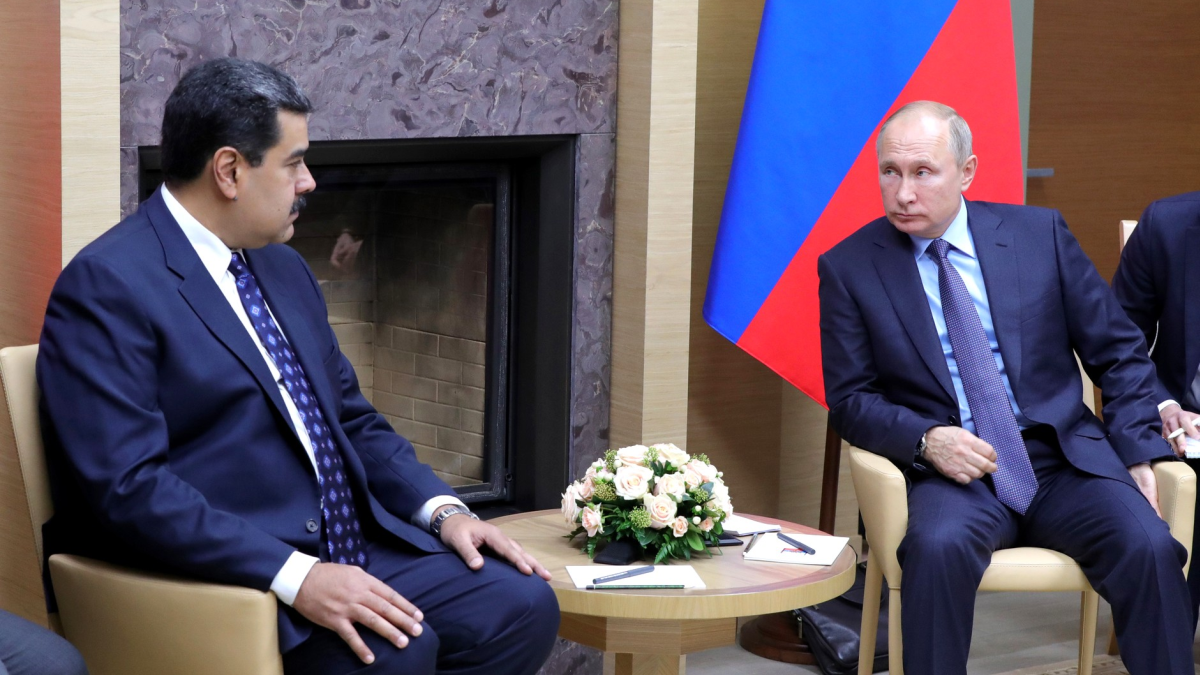
In the Western world, there is widespread support for the tough sanctions on Russia, but they have contributed to further oil price increases. Faced with record-high gasoline prices, the US’s Biden administration is trying to bring more supply on the market. The US has committed to unprecedented releases from the Strategic Petroleum Reserves, it is trying to convince American shale producers to step up output, and it is in discussions with Iran and (more recently) Venezuela to lift or loosen sanctions in exchange for more output. The Biden administration is also trying, so far without success, to persuade OPEC to use their spare capacity to produce more oil. Relations between the current US administration and the Saudi government have been strained, but this may be changing. Recent reports suggest that there could even be an in-person meeting between President Biden and Saudi Crown Prince Mohammed Bin Salman. If this meeting happens and is successful, will OPEC raise production and bring prices down?
Let’s take a look at the OPEC developments in recent years. A lot has changed in the oil markets since the depths of the Covid pandemic. After implementing an unprecedented 9.7 million barrel per day (Mb/d) production cut in May/June 2020, the OPEC countries and its non-OPEC allies have been working to bring back production. By the summer of 2021, OPEC+ production was still 5.8 Mb/d below pre-pandemic levels and the OPEC ministers agreed to increase production by 400,000 b/d each month, starting in August 2021. Based on this plan, all production cutbacks were expected to be removed by October 2022. However, despite largely sticking to their plan, the reality is that OPEC’s output is increasingly falling behind because several OPEC members are unable to meet their production targets. For the purpose of this analysis, we will split OPEC into two groups: Middle East OPEC and Other OPEC. We will not include the non-OPEC allies that are part of OPEC+.
Most of the Middle East OPEC countries have been able to restore their crude oil production and exports to pre-Covid levels. Saudi Arabia for example, exported around 8.0 Mb/d in March 2020 and almost reached this level again in April 2022.
The problems are clearly in the Other OPEC camp, the countries not located in the Middle East. Nigeria exported about 2.0 Mb/d in Q1 2020. In the same quarter of this year, the volume is down to 1.4 Mb/d (-600,000 b/d or 30%). The story with Angola is similar, albeit less dramatic, a decline of 210,000 b/d (15%). Venezuela’s output also reduced, from close to 800,000 b/d to 250,000 b/d in 2022. One country, Libya, dramatically increased production compared to two years ago (+940,000 b/d), but it was not enough to compensate for the declines of the others. In total, the OPEC producers outside of the Middle East are exporting 700,000 b/d less in Q1 2022 compared to the same quarter in 2020.
The situation with Middle East OPEC producers is different. Combined, they are exporting 518,000 b/d more than two years ago. Saudi Arabia and the United Arab Emirate are each producing more, while Iraq and Kuwait are producing slightly less. Iran seems to have increased their exports as well, but since the country is subject to sanctions, and tries to hide its movements, it is difficult to confirm the accuracy of these numbers.
Will OPEC be able to come to the rescue? Higher production is possible in Saudi Arabia, the UAE, Iraq and Kuwait. According to the IEA, they can add about 2.0 Mb/d immediately and another 4.0 Mb/d in 3-6 months. In the short-term, OPEC production increases (possibly also from Iran and Venezuela) would support crude tanker rates.
A longer-term solution (other than demand destruction, which is politically undesirable), is more investment in crude oil production capacity. This will take time but should be positive for future tanker demand.
Riviera Maritime Media will provide free technical and operational webinars in 2022. Sign up to attend on our events page

Related to this Story

Events
Floating energy: successfully unlocking stranded gas using FLNGs and FSRUs
24 Feb 2026GMT - ONLINE
© 2024 Riviera Maritime Media Ltd.


