


Business Sectors
Business Sectors
Events
Contents
Register to read more articles.
Lessons from a life in salvage: Captain Nick Sloane
A legend of the salvage industry, Captain Nick Sloane talks about his 43 years in the vanguard, saving lives and ships in distress


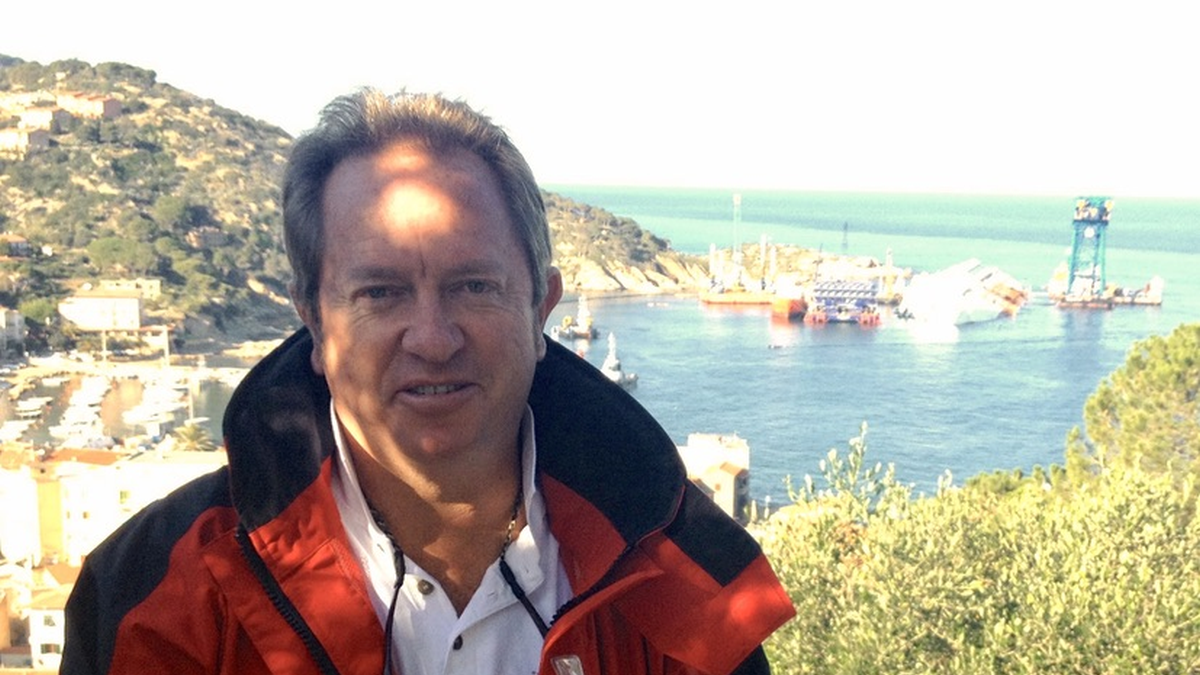
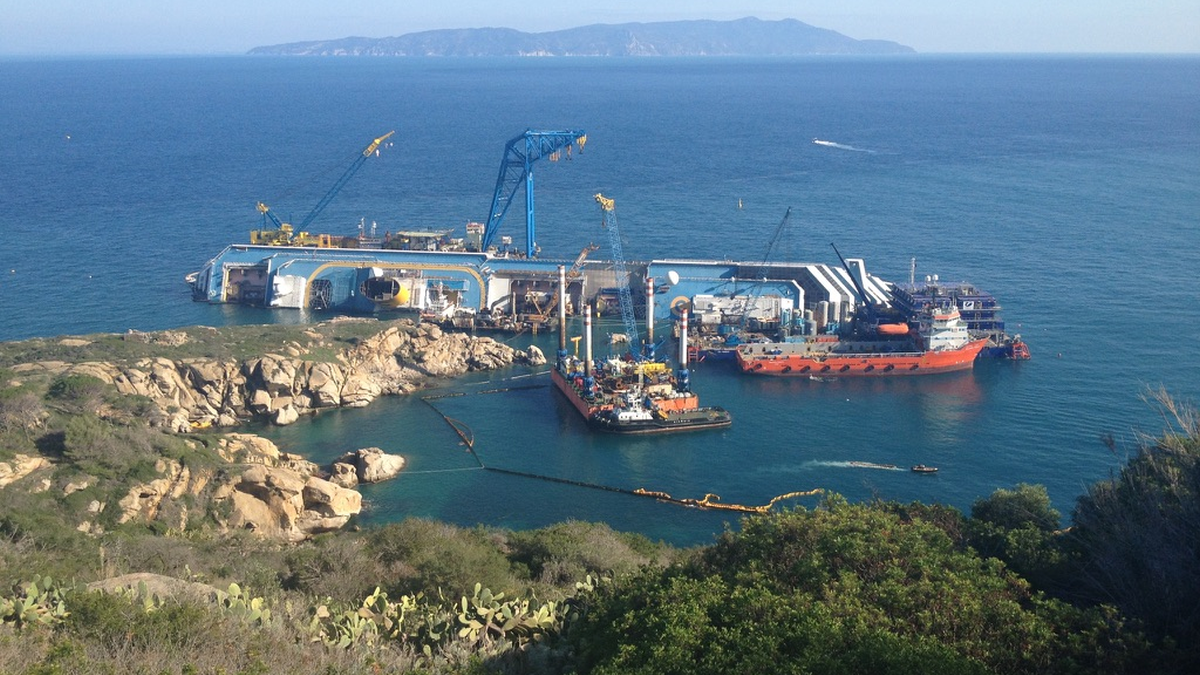
Captain Nick Sloane needs no introduction; he is probably the most well-known and well-regarded salvage master in the world. He has triumphed in some of the most complex salvage and wreck-removal projects, refloating capsized cruise ship Costa Concordia when grounded in Giglio, Italy in 2012, and saving billions of dollars of maritime assets over a 43-year career. Capt Sloane is a fellow of the Nautical Institute, an honorary fellow of the International Institute of Marine Surveyors, sits on the Lloyd’s panel of special casualty representatives (SCR) and is managing director of Sloane Marine. In this exclusive International Tug & Salvage interview, he describes his experiences and the lessons he has learned over the years.
How did you become involved in the salvage industry?
It all started in 1983 when I went into the Cape Town headquarters of Safmarine to enquire about my next ship. Everyone was preoccupied and I was told to wait; after about two hours they asked if I was available to lend a hand supporting a response to a fire on a very large crude carrier (VLCC) around 85 nautical miles off South Africa’s west coast.
I asked my employers how I would get there, and they replied by helicopter. The rest is history!
What was your first salvage project?
I was in the helicopter circling emergency response tug John Ross and the casualty Castillo De Bellver that was intensely burning, with the ocean around it on fire too. This was one of the world’s largest losses of a VLCC and 100% of its 250,000 tonnes of light crude oil from Saudi Arabia.
After a few days of burning along its portside length, the fire slowly spread across the tanker’s midship section, and the ship broke in two at the cargo-manifold.
The aft section sunk, releasing a huge fireball as the stern disappeared below the surface; the bow was now inverted, with the buoyancy in the forepeak section holding it upright.
Divers were placed on the bow by helicopter, and they rigged up a tow bridle through the anchor hawse-pipes. There was then a very slow tow of more than 200 nautical miles off the South African coast.
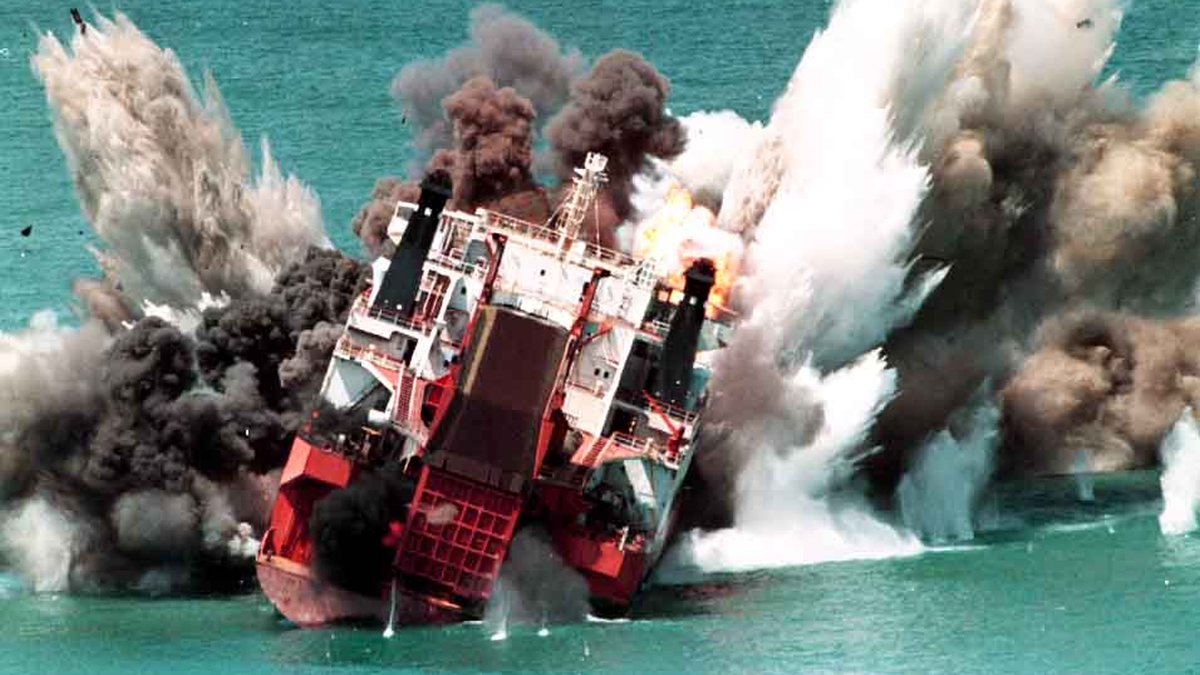
After this, explosives were placed on the bow by helicopter and diver intervention. After the charges were blown, the bow slipped below the surface with almost 70,000 tonnes of oil
trapped in the forward section of the hull.
This operation was undertaken under a Lloyds Open Form (LOF) as a no-cure, no-pay contract, so we returned home after some six weeks without a cent. It was before the International Salvage Convention and long before Article 14 and the special compensation P&I club clause (SCOPIC) were introduced.
I was hooked on salvage and applied to transfer to the salvage tugs division of Safmarine (SAF-Tug) to work on John Ross and Wolraad Woltemade, which were the two biggest, fastest and most powerful tugs in the world at that time.
A year later, I entered the world of tugs, towage and salvage, which is where I have been ever since.
Can you describe your early career experiences?
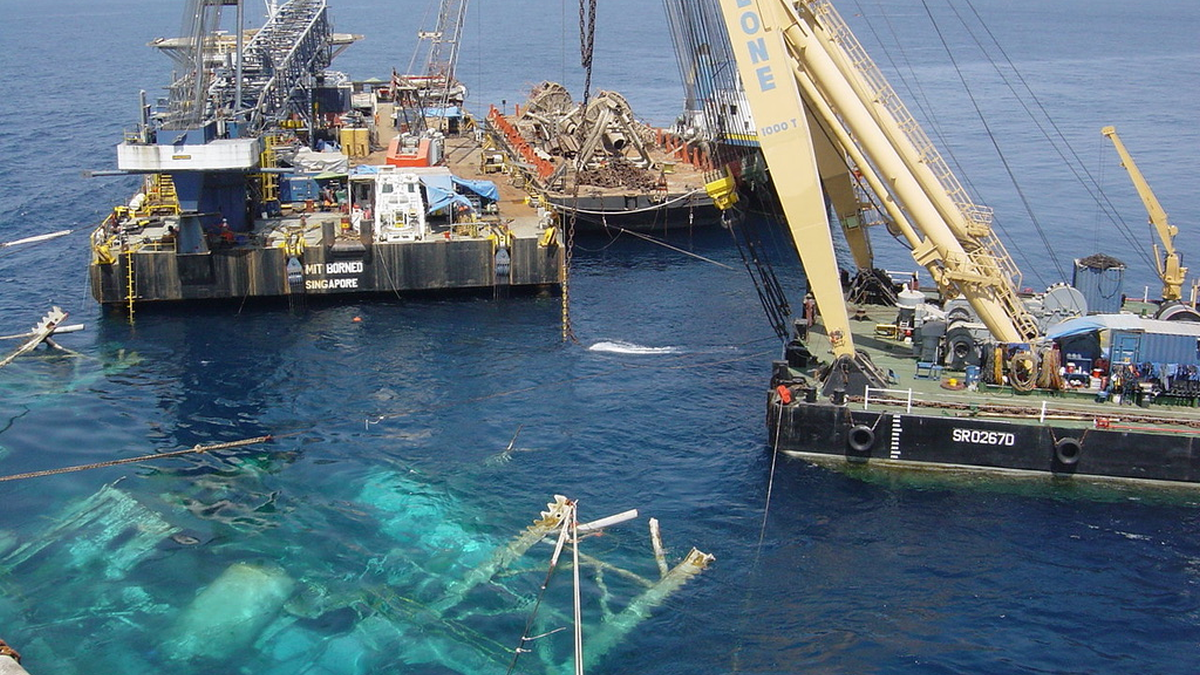
During this time, I learnt all about towing large ships and offshore drilling rigs on ocean deliveries, long-splicing 90-mm tow wires, as well as pipeline and single buoy mooring (SBM) installation projects off Africa, in the Red Sea and the Black Sea.
My experiences included refloating grounded ships off the South Africa coast, off northern Africa, around Indonesia, in the Indian Ocean, Patagonia, across the Pacific islands and in the Americas.
My time as a pipeline and SBM installations marine manager taught me project management skills and the demands of the oil and gas industry.
I brought these skills back into salvage, especially for compliance to the sector’s requirements when refloating mobile drilling rigs in the Persian Gulf, the US Gulf, the North Sea, South China Sea, Gulf of Bengal and off the west coast of Australia.
I achieved my command on product tankers and VLCCs. I was involved in salvaging nine VLCCs under LOF off the South African seaboard and in the Persian Gulf and Red Sea areas. My managing director thought it would be a good skill to have to understand the idiosyncrasies of tanker masters.
SAF-Tug became Pentow Marine in late 1985 and then Smit bought Pentow in the latter part of the 1990s. In 2002, I left the tugs and moved into the mobile salvage teams of Smit, and then Svitzer, Mammoet, Titan and Resolve, before becoming an SCR in 2011.
What has been you best moment in salvage?
I guess the best moments in salvage are when you are successful – especially when others have said you “cannot do it” or “it cannot be done”. [I have also enjoyed] working with some incredibly talented craftsmen around the world – learning from each experience.
We have had this scenario many times, like on the Ikan Tanda casualty off the Cape Peninsula, South Africa, in 2001; the Sealand Express off Cape Town in 2003; the Tasman Spirit in Karachi, Pakistan, in 2003; the CP Valour off the Azores in 2006; the Kota Kado off Hong Kong in 2010 and of course the Costa Concordia off Giglio, Italy, a salvage project that started in 2012 and completed in 2014.
To see the teams work together, overcome their own doubts, become creative and express their own individual craftsmanship to assist in bringing about a success, is pretty amazing.
What has been your worst moment in salvage?
In my 43-year career, I have only had one loss of life on a salvage or wreck-removal project –
and that is one too many.
It is something that you hear about almost every year in the offshore and salvage industry.
But, even though we push the boundaries when ships’ crew have already left the casualty, we carry out risk assessments and look after each other. Salvors are in very close-knit teams, and our aim is to all come back home together in one piece.
What has been your greatest achievement?
Growing and seeing the younger generation of salvors coming through. And, after 15-20 years, they are still in the industry and making their own successes.
Who or what have you learnt most from?
My earlier tug and salvage masters, that I worked with in the 1980s and 1990s, and then my first managing directors, Dai Davies and Okke Grappow. They had no problem throwing me into the deep-end and making me grow up the hard way, while still being there when I needed clarification, or a shoulder to lean on.
Do you have a guilty pleasure?
Red wine and golf, and being at sea on a boat or at a braai in South Africa with friends and family. Watching sunsets and definitely a full moon.
What is your favourite salvage tug/asset?
A good tug is hard to beat, especially if it has a good crew who know salvage and ship-handling. But now, remotely operated vehicles (ROVs) and drones are essential, once they can be operated when the weather allows.
What is your favourite location?
The South African coast in a winters’ storm.
Any regrets?
Missing out on the birth of all three of my kids, and missing family occasions, the kids’ school occasions and achievements.
Do you have any advice for a young person entering the industry?
Stay resilient and patient – salvage is like a marathon. Study new techniques, such as rope access, ROVs and drones; but remember you cannot buy experience, so be prepared to take time to get the expertise.
And keep in touch with family – especially now with Starlink. But [young people] need to understand that this is a special career – for special individuals.
Related to this Story

Events

© 2026 Riviera Maritime Media Ltd.


