


Business Sectors
Business Sectors
Events
Contents
Register to read more articles.
OEMs prepare for owners’ multi-fuel requirements
Engines and generators have been developed to enable vessels to operate on alternative fuels, with the choice of fuel dependent on the region where vessels work, fuel availability and emissions-reduction demands


Original engine manufacturers (OEMs) are developing, testing and building technologies to enable a range of vessels including OSVS, tugboats, emergency response vessels and workboats to run on alternative fuels such as methanol, ethanol, methane and hydrogen.
Fuel selection will depend on the availability of fuels, handling, storage and combustion technologies, the need to lower emissions in ports, and local regulations.
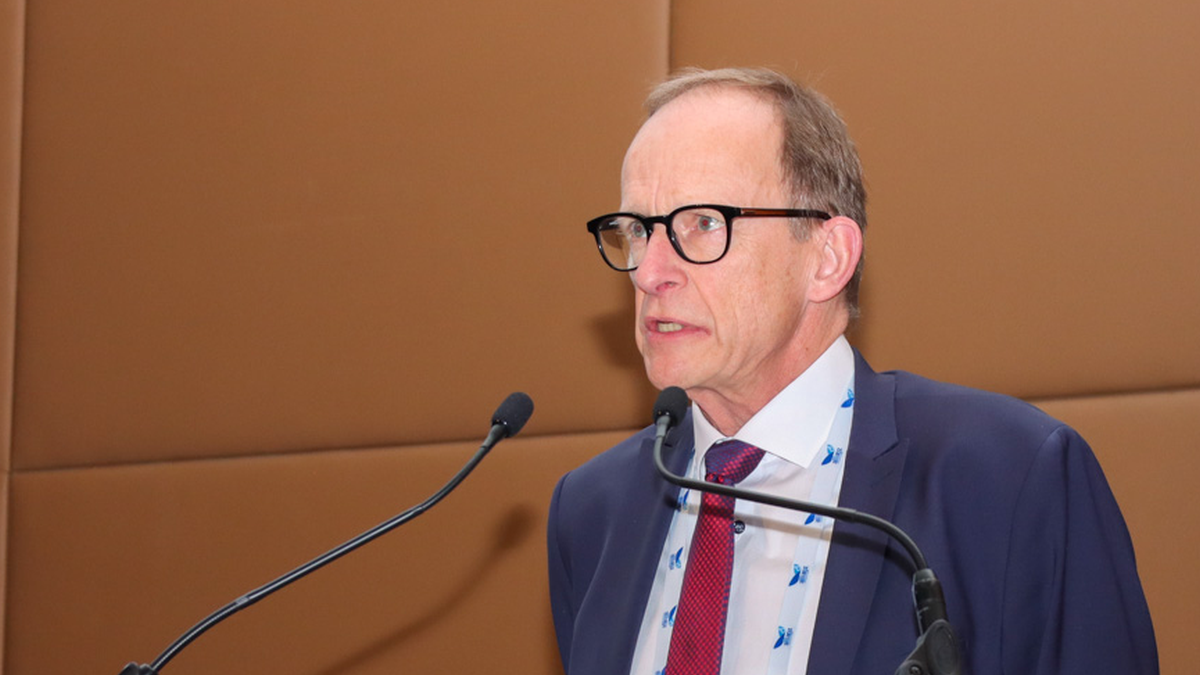
Everllence head of high speed, Florian Keiler, thinks methanol will be a prominent choice for high-speed engines on tugs and workboats. “Based on the requirement to decarbonise, we have looked into all the fuels, and the most promising type for these vessels is methanol,” he said, adding that biomethanol and green e-methanol have the lowest carbon options from a well-to-wake perspective.
Everllence’s 21/31DF-M dual-fuel methanol engine is available for installation on vessels, and a 21/31DE engine is methanol-ready for retrofits in 2026. In 2027, Everllence’s 175DF-M dual-fuel methanol engines will be ready for deliveries and 48/60 engines for retrofits. Everllence’s 32/44CR DF-M engines will be ready for delivery in 2029 and 49/60DF-M in 2030.
“Ethanol systems have the same engines and fuel supply system costs as methanol versions”
Its 175-D engine comes in 12-, 16- or 20-cylinder variants with output ranging from 1,440 kW to 4,400 kW at speeds between 1,500 and 2,000 rpm.
“It is the most powerful high-speed engine in the market, with the lowest fuel consumption and time between overhauls,” said Mr Keiler. “We optimised its efficiency, included waste heat recovery, and it is fully capable of operating on biofuels.” These include hydrogenated vegetable oil (HVO) and fatty acid methyl ester (FAME).
Everllence is developing 175DF for fuel flexibility and to maximise the use of carbon-neutral fuels on newbuilds and for repower projects. To ensure it is available for deliveries in 2027, the OEM needs to test variants to validate its performance and reliability, and gain class type-approval.
When installed on tugs, aftertreatment units will be required for IMO Tier III compliance, including selective catalytic reduction (SCR) for diesel dual-fuel and an oxidation catalyst to prevent co-burning emissions, including methanol, carbon monoxide, hydrogen cyanide and formaldehyde.
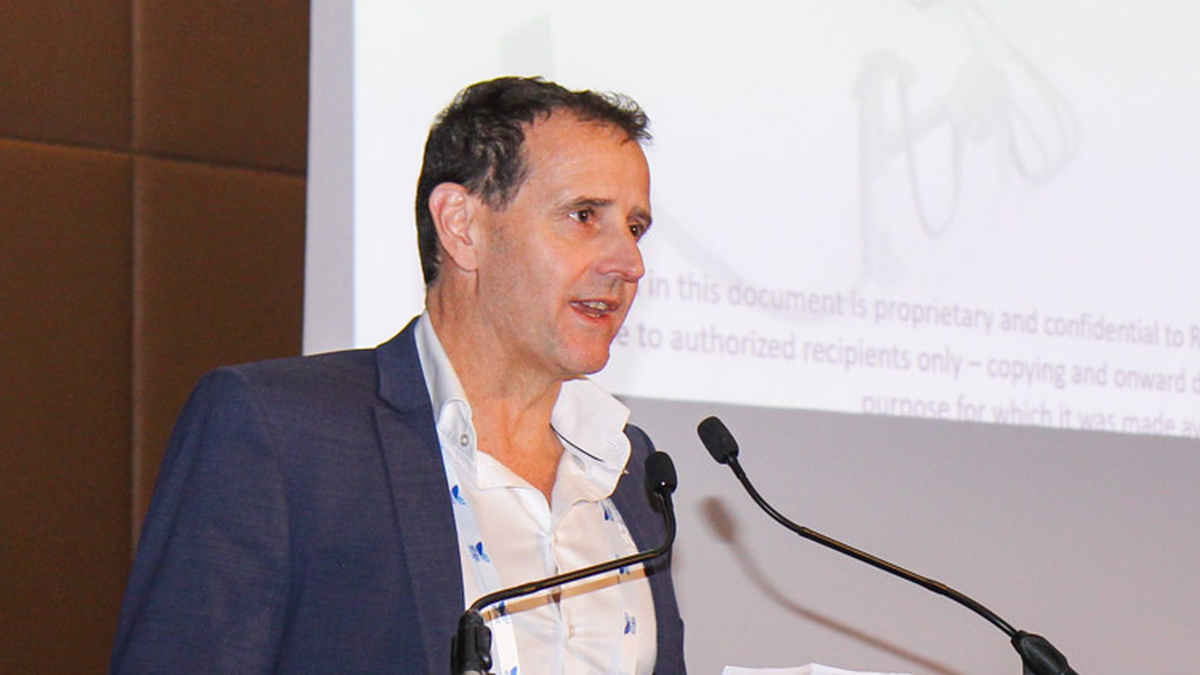
Wärtsilä Marine head of offshore, Jon Inge Buli, expects the choice of alternative fuels to include ethanol in markets where there is high availability and pressure to reduce emissions, particularly in Brazil.
Testing on ethanol dual-fuel and single-fuel engines started in 2024, and an onshore installation is expected to come online in a Brazilian power plant in 2026.
“Ethanol systems have the same engines and fuel supply system costs as methanol versions,” said Mr Buli, adding that an SCR would still be required for IMO Tier III compliance.
Rolls-Royce Solutions has developed and installed single-gas mtu engines and generator sets on vessels and is testing a methanol version for future deployments. The OEM is also installing variable-speed gensets to reduce vessel emissions during dynamic positioning (DP) without impacting safety.
“With vessels on DP, low loads on gensets mean they can operate with less fuel consumption, noise and vibration, and there are longer periods between maintenance,” said Rolls-Royce Solutions senior expert for the commercial marine business unit, Phil Kordic.
He referenced the supply of an auxiliary genset to the 105-m emergency response vessel, Scharhorn, for the German Federal Waterways and Shipping Agency.
“With vessels on DP, low loads on gensets mean they can operate with less fuel consumption, noise and vibration”
A single-fuel, methane-combusting genset, capable of running on biomethane, was required, while the owner did not need a diesel fuel system or SCR.
Rolls-Royce supplied a 16-cylinder mtu 4000 series M55RN variable-speed, single-fuel gas genset, rated at 1,500 kWe at 50 Hz and running up to 1,500 rpm for power requirements during overnight berthing. This vessel already had four 3,000-kWe methane-combusting, single-fuel gensets for main propulsion.
Rolls-Royce is developing its variable-speed gensets, incorporating mtu 2000 series, 12- and 16-cylinder engines, with lower power ranges and less weight than the mtu 4000 series, said Mr Kordic. Its 12V 2000 variable-speed genset, with a mass of 5,400 kg, has an operating speed ranging between 1,200 and 2,450 rpm to generate 1,000 kWe to 1,400 kWe.
An mtu 16V 2000 variable-speed genset at 7,000 kg generates 1,400 to 1,900 kWe at speeds of 1,200 to 2,450 rpm. In comparison, a conventional 12V mtu 4000 series M35S genset delivers 1,840 kWe at 60 Hz and 1,800 rpm, but has a mass of 16,000 kg.
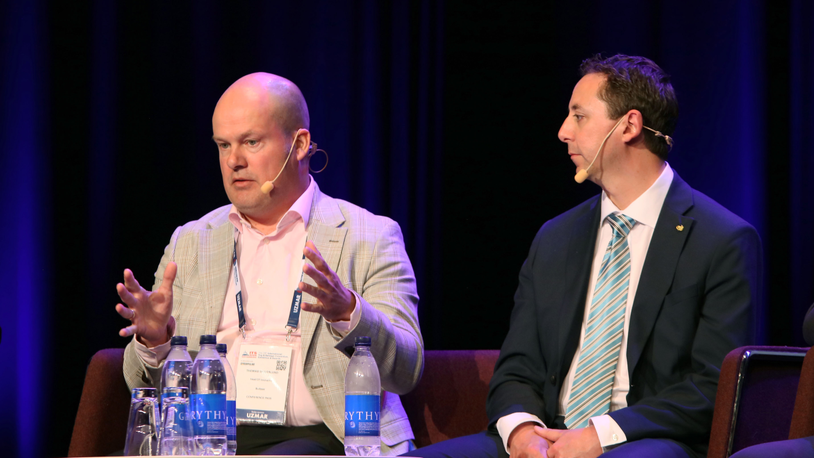
Florian Keiler (Everllence), Jon Inge Buli (Wärtsilä) and Phil Kordic (Rolls-Royce) were speaking at Riviera’s Annual Offshore Support Journal Conference, Awards and Exhibition in London, UK, in February 2026
Related to this Story

Events

© 2026 Riviera Maritime Media Ltd.


