


Business Sectors
Events

Floating energy: successfully unlocking stranded gas using FLNGs and FSRUs
 24 Feb 2026
 GMT - ONLINE
Contents

Register to read more articles.
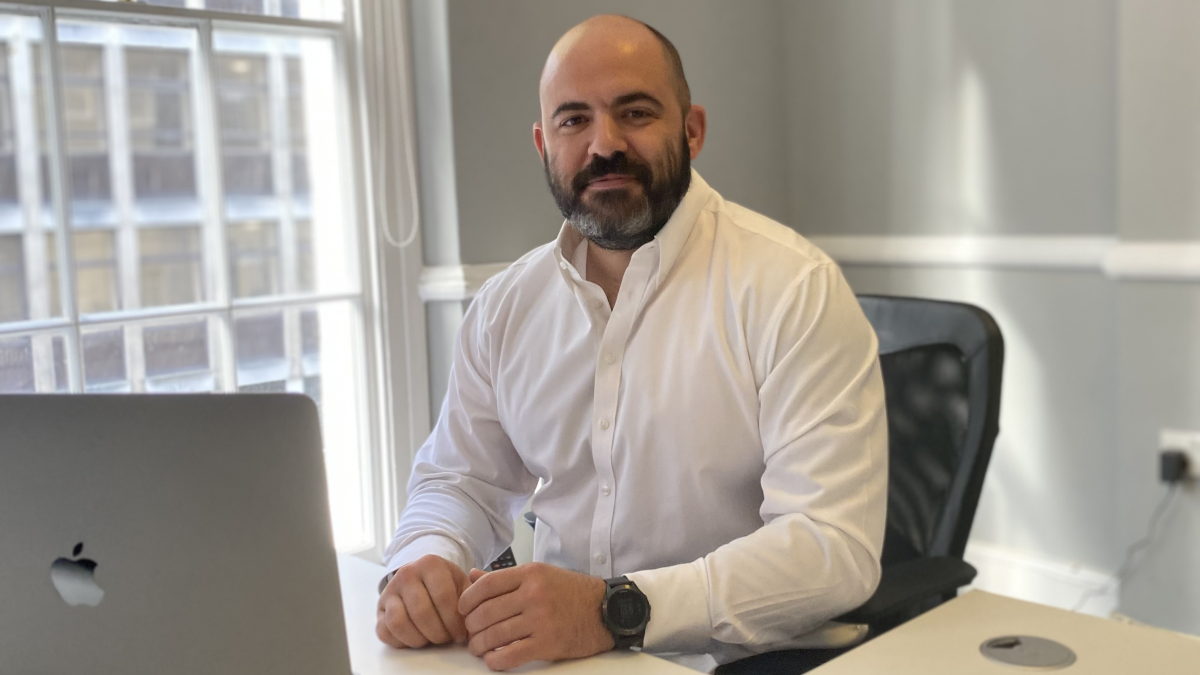
Small but mighty OSV brokerage sees 30% uplift in January
Ten years of bid data, zero ship management conflicts and a 25-year bet on the US offshore wind ’long tail’: why one specialist broker believes the integrated model will outlast consolidation


If you work in offshore brokerage and feel like your desk has been slammed since New Year, you are not alone. Specialist OSV intermediary CSO Marine Group reports tender volumes running 20 to 30% ahead of the same period last year.
Despite the “very, very fast” start, company chief executive, Tony Colebrook, is not getting carried away, saying it is too early to call whether the indicators reflect a genuine January surge, or momentum built in Q4 2025. He is also quick to note that tendering activity does not always convert to revenues, particularly given the non-disclosure agreements that now govern most major transactions.
“The real value is not in the construction gold rush, but in the tail”
The uptick coincides with a wave of new service operation vessels and commissioning support vessels due for delivery by year-end, prompting owners to secure early employment. Compliance deadlines for the EU Emissions Trading System and tightening Carbon Intensity Indicator requirements are also driving operators toward brokers who understand the commercial implications of technical specifications.
The US ‘tail’ strategy
While recent policy signals from the White House have prompted some developers to pause investments in US offshore wind, Mr Colebrook argues the fundamental drivers remain sound. The real value is not in the construction ‘gold rush’, but in the ‘tail’: the 15- to 25-year operational life cycle of repair and maintenance for the turbines expected in US waters over the coming decade. Running away from this market now would, in his words, represent ‘very, very, very short-term thinking’.
The US represents a significant portion of CSO’s revenue, though specific figures remain confidential under client NDAs. What Mr Colebrook will say is that the group has positioned itself not just to broker vessels for construction campaigns, but to provide the crew management and technical advisory services that will be needed throughout the operational phase.
The integrated model
As a veteran of foundational projects like the Greater Gabbard windfarm, Mr Colebrook has overseen the transformation of CSO Marine Group from a small, two-person operation to a multi-disciplinary team of 35 by focusing on what he calls an ‘integrated model’. The group handles vessel lifecycle support through three distinct pillars: commercial (brokerage); operational (crew management); and technical (engineering and project management).
CSO previously provided seed capital to Rockabill Marine Design (RMD), led by Ruairí Grimes, which operated under a philosophy of ‘Design Without Ego’ and designed vessels including the all-electric Envirocat Eco 8.5. RMD performed excellently and hit the milestones CSO had in place, which accelerated a share buyback mechanism agreed from the outset. The naval architecture investment, Mr Colebrook explained candidly, was never about building an in-house design capability but was “a pure investment play”. CSO exited approximately 18 months ago, and the companies now part as ‘good friends’.
“That’s one step too far for us"
The sale underscores a strategic principle: CSO will not pursue ship management, which Mr Colebrook describes as crossing a line. "When you have a vested interest in maintaining a workflow for a vessel, that’s one step too far for us," he said. "Our role, whether it’s crewing, project management or brokerage, is as an intermediary and advisor for both sides of the transaction. If we were to become ship managers, we’re no longer an advisor. We’re essentially assisting a principal."
The distinction matters. CSO provides crew management (placing personnel in specific positions), technical advisory services, and commercial support, but does not provide full technical management that would include stores, spares and the level of control over a physical asset that characterises ship management. "That would immediately negate our position in the market as a ‘fair player’," Mr Colebrook added.
The Rán Offshore case study
This approach, combining crewing reach with brokerage capability and technical advisory, enabled the group to support Norway’s Rán Offshore through a complete vessel acquisition and deployment in 2025. The project illustrates how CSO’s integrated model works in practice.
Rán Offshore approached CSO with a business challenge: it was spending heavily on mobilisations and demobilisations, chartering tugs in and then chartering them out to the same client back-to-back. Mr Colebrook and Rán’s management team broke down the business model and concluded that if Rán owned a tug, it had more than enough work to utilise it.
"They had no route to ownership," Mr Colebrook recalled. "They were spending the money, but because they’re not accumulating capital at any point, their ability to then go and purchase or make a major investment was limited."
CSO introduced Rán to investment houses it had worked with and helped build the business case. The investors provided term sheets, which enabled Rán to enter the market with a defined budget. CSO Shipbrokers then shortlisted and brokered the acquisition of the tug Rán Nova. CSO’s project management team provided technical oversight, including surveys and inspections, and the group’s Offshore Operations division managed full crew deployment, including payroll, rotations and logistics, as the vessel travelled from Vietnam to Norway via South Africa and Mauritius.
"We’ve assisted with the business case, we’ve assisted with the finance or introduction to finance options, we’ve sourced the vessel, run the S&P process, and then once they’ve got the asset, we’re crewing it," Mr Colebrook explained.
The model is self-reinforcing: CSO wants stable, solid owners who take care of their crew, who enjoy working offshore for that owner through CSO. The group wants vessels operated safely, and it wants to be able to charter them at good rates. "That’s the message we portray to charterers as well," said Mr Colebrook. "Is this vessel well run? Here’s the data. Here’s the LTIs. Here’s where the market is."
Where data meets judgement
While AI dominates industry discussions, and CSO uses internal systems to track a decade of bid data to support market forecasting and trend analysis, Mr Colebrook argued this sharpens, rather than replaces, human judgement. "The final 5% of any deal is determined by understanding regional politics and mentalities, like the difference between the Brazilian and North Sea markets, that AI cannot replicate," he said.
CSO’s data-driven approach addresses a fundamental challenge in vessel selection: charterers always look at cost, because that is their job, but the cheapest vessel is typically not technically the best, and the best vessel is never commercially the cheapest. "Where we come in is providing that guidance," Mr Colebrook said. "The midpoint of the market is here. The data shows this is one of the best maintained units. We then take that data to drive the decision-making process, but it’s hard data. It’s not an opinion."
“The final 5% of any deal is determined by understanding regional politics and mentalities”
When CSO is asked for an opinion, that opinion is also data-driven: this vessel worked this many days, with no problems, invoicing was correct, off-hire was straightforward. "It still is data-driven, but it becomes a subjective opinion at that point as well," said Mr Colebrook.
Critically, CSO maintains it has no power to drive a decision toward a specific vessel because it is ‘best friends’ with that owner. "The personal relationship side of things eases the transaction, but it never influences the transaction," Mr Colebrook noted. "We have relationships with all the major shipowners. On a human level, there are people you get on better with and others you get on less well with. But that doesn’t drive the advice we give."
Consolidation: beneficiary, not target
Mr Colebrook expects 2026 to bring significant consolidation in the CTV and SOV sectors, though he believes the oil and gas OSV market faces ‘general apathy’ toward major sale and purchase activity at present. CSO has been retained by several investment firms to carry out due diligence on fleet acquisitions, covering commercial positioning and value via CSO Brokers, technical condition and physical vessel surveys via CSO Engineering, and crew composition and critical operations threat analysis via Offshore Operations.
Yet CSO itself remains resolutely independent. Asked whether larger brokers approach him about acquisition, Mr Colebrook acknowledged they do, but said selling is not the plan. "One of the things for us to be really clear on: in the same way that we wouldn’t want to introduce a new culture by buying someone else, we wouldn’t want to be swallowed into a culture as well."
He is blunt about the strategic mistake he sees competitors making: "Growth by rampant and haphazard acquisition.” He explained: “Culture within any business is critical. I struggle to see the route to success that some within the industry think will come by simply buying up competing entities that have massively differing personalities and ways of working.
"The only real reason why you would follow that business model is if you were trying to go for an eventual IPO," Mr Colebrook said. "So you’re trying to accrue turnover and build a story around something that you cannot currently say is your story."
CSO is not going for an IPO. "For us, our growth has to be within the culture that we’ve got within the group, which is slower, but it’s fair, and it is more conservative, but it builds long-term value." He paused: "It sounds a bit limp now I say that, but it is actually how we look at things. I’d rather build our team with quality and with the guys trained up and working in our way of working and our understanding and our values and our core ethos."
Regional expansion
CSO’s recent opening in Dubai under partner Martin Helweg exemplifies the group’s expansion philosophy. Within three days of establishing the Dubai office, CSO had secured its first two charter fixtures. New building contracts were being signed within weeks. But Mr Colebrook is quick to point out that Helweg’s impact extends beyond the UAE.
"Martin’s reach on the international stage cannot be understated, and his understanding from an owner’s perspective of the deliverables required of our group is fast-tracking a number of our discussions with clients," he said. CSO is already fixing vessels and winning supervision contracts in China based on relationships built through the Dubai office.
The question is whether this speed can be replicated elsewhere. Mr Colebrook’s answer is telling: "The shipping market is fairly small. The global network that we’ve got means that we have access to those people. I don’t think it’s a regional question. I don’t think there is an American version of Martin. I think there are people that we work with now that would be quite good additions to us."
Expansion is opportunity-driven, but it is also culture-driven. CSO trains people in London, then deploys them to new markets. "One of the mistakes that we see with some companies is going into a new market without maintaining the culture of the core business," Mr Colebrook said. The group is assessing West and South Africa, the Middle East, Mediterranean and US markets, but will not move into any market without ensuring existing teams remain focused on delivering value.
"We’re not going to move away from our principles," he said. "There is an argument to say we should be doing that. But one of the very best things about owning the company is that we can set the tone, and this is the tone that we’ve decided to set."
UK limitations and the maritime pipeline
Talk of expansion leads inevitably to discussion of the UK, and Mr Colebrook is blunt about the country’s failure to cultivate its next generation of mariners. There is a lack of ‘overt government support’ and the route into the industry for school leavers remains ‘very, very opaque’. Even his own children’s career guidance never mentions the maritime sector.
Mr Colebrook argues the industry needs to showcase its technological sophistication to attract young talent, recalling how he was inspired early in his career by the ‘floating skyscraper’ heavy-lift vessel Thialf. Without addressing this pipeline, he warns, the UK risks losing ground to maritime clusters in Norway, Denmark and Germany that have invested in training and local content.
"I’m a big believer in local content," he said, criticising the UK government for “absolutely screwing the UK for local content”. CSO’s approach reflects this: if the group enters the US market, it will recruit Americans who know the language, culture, and regional ways of working, but they will be trained in London first.
The ecosystem message
Ultimately, Mr Colebrook wants CSO to be understood not as a brokerage that also does other things, but as an integrated marine services group where brokerage is the entry point. "The brokerage is essentially the tip of the spear," he said. "Our value and our values as an organisation are in the integrated services."
On an individual level, each CSO company provides what he hopes is very good service. "When you work with us, our value proposition is in allowing us to assist you across as many of those fronts as possible, because each individual part is strong, but collectively, it’s bulletproof."
CSO’s fees are in line with industry standards. The premium the group believes it can command is not in pricing but in service quality and the ability to support clients across the entire vessel lifecycle. In an increasingly complex offshore market, that proposition, Mr Colebrook believes, will find its customers.
"We want to remove as many pain points within the process as possible," he said. "Our whole foundation is around information flow and empowering whoever we’re talking with, that they feel comfortable that the decision they’re making is backed up. It’s not just ’go with these guys because they’re nice guys’. That’s not what we do."
CSO Marine Group is sponsoring the John Westwood Deal of the Year Award 2026 which will be presented at the OSJ Annual Dinner on Tuesday 3 February in London.
Riviera’s Annual Offshore Support Journal Conference, Awards & Exhibition 2026 will be held in London on 3-4 February 2026. Use this link for more information and to register for the event.
2026 in marine environmental protection: rules tighten to reduce ship discharges post-2026
2026 in tug and salvage: electric and methanol-fuelled tugs arrive
2026 in maritime optimisation and communications: key digitalisation technologies to transform shipping
The size of the prize
Upcoming Events
© 2024 Riviera Maritime Media Ltd.


