


Business Sectors
Business Sectors
Events
Contents
Aman at Sea’s Amangati: defining sustainable beauty in cruising
The newbuild luxury cruise yacht’s ‘beauty’ is not just skin-deep, but extends to its engineroom and machinery spaces, allowing it to sail on zero emissions


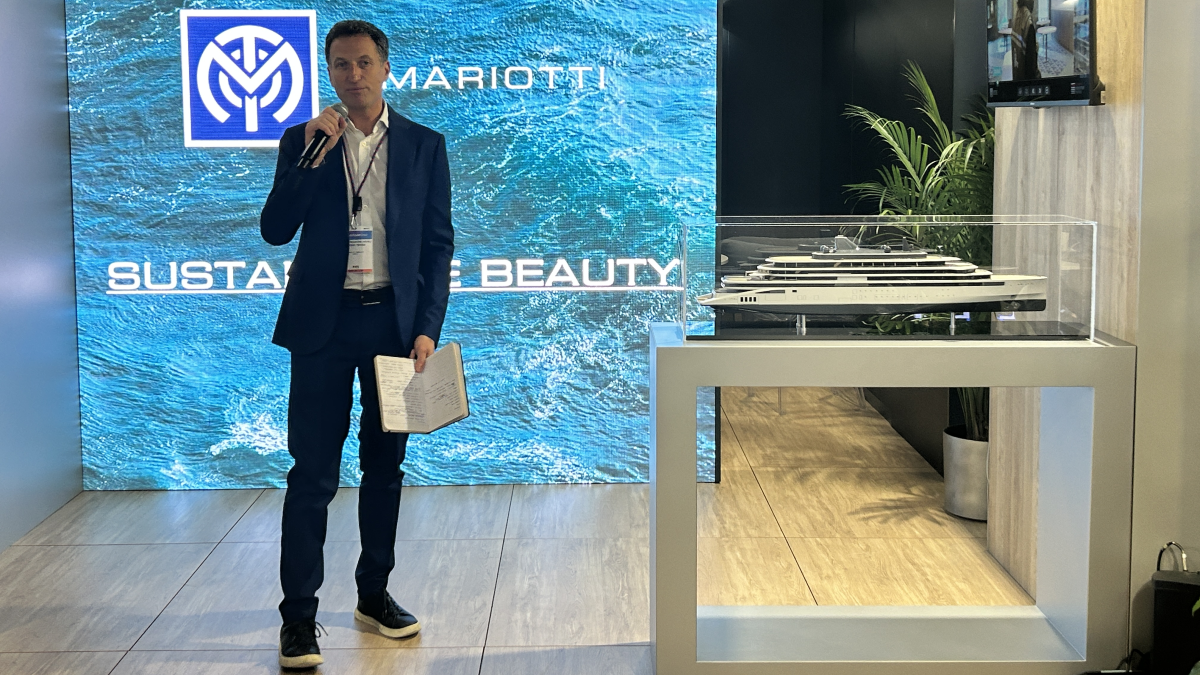
Luxury cruising’s definition has evolved over the last 30 years, said T. Mariotti senior vice president, newbuilds, Fabrizio Timossi. “In the beginning, luxury was more about materials: marble on the floor, wooden panels on the wall, crystal chandeliers, details in brass, and teak on the outside deck.” These fine details were complemented by outstanding service, spacious cabins and outside decks, specialty restaurants, bars, and lounges.
But in recent years, it has become just as important, explained Mr Timossi, for the ship to be able “to reach secluded destinations, unspoiled archipelagos, and polar regions, leaving them untouched, respecting nature and life.”
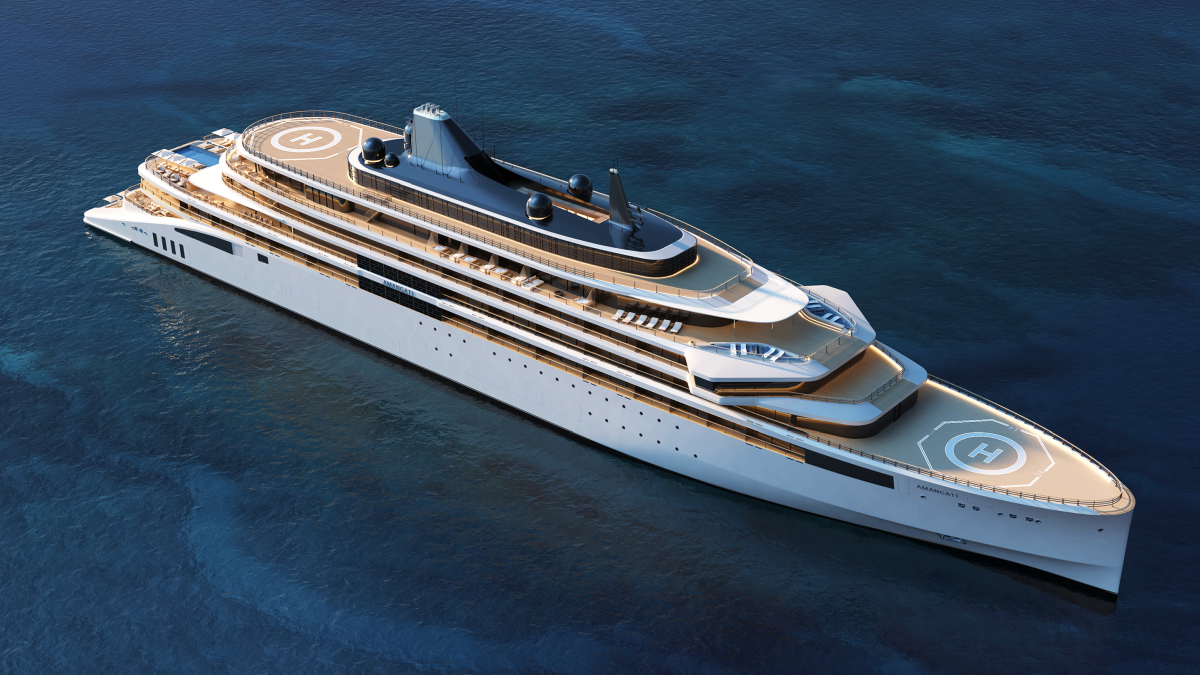
That sustainable design spirit is embodied in the outfitting and the technical details of Amangati, a new ultra-luxury cruise yacht being built by T. Mariotti shipyard in Italy. Part of Genova Industrie Navali, the Italian shipbuilder has been entrusted with constructing the flagship that will extend Aman Group’s ultra-premium hotel, residential, and lifestyle brands to the cruise market. Genoa-based luxury cruise outfitter De Wave Group, propulsion technology firm Kongsberg Maritime, electromechanical specialist Ortec Santamaria, and HVAC technology provider Johnson Controls are supporting the project. The 23,000-gt, nine-deck vessel is designed by Sinot Yacht Architecture & Design and constructed to Lloyd’s Register class.
While there is regulatory uncertainty around the adoption of IMO’s Net-Zero Framework, which would require oceangoing ships to decarbonise by 2050, cruise shipping is fully committed to operating with minimal environmental impact.
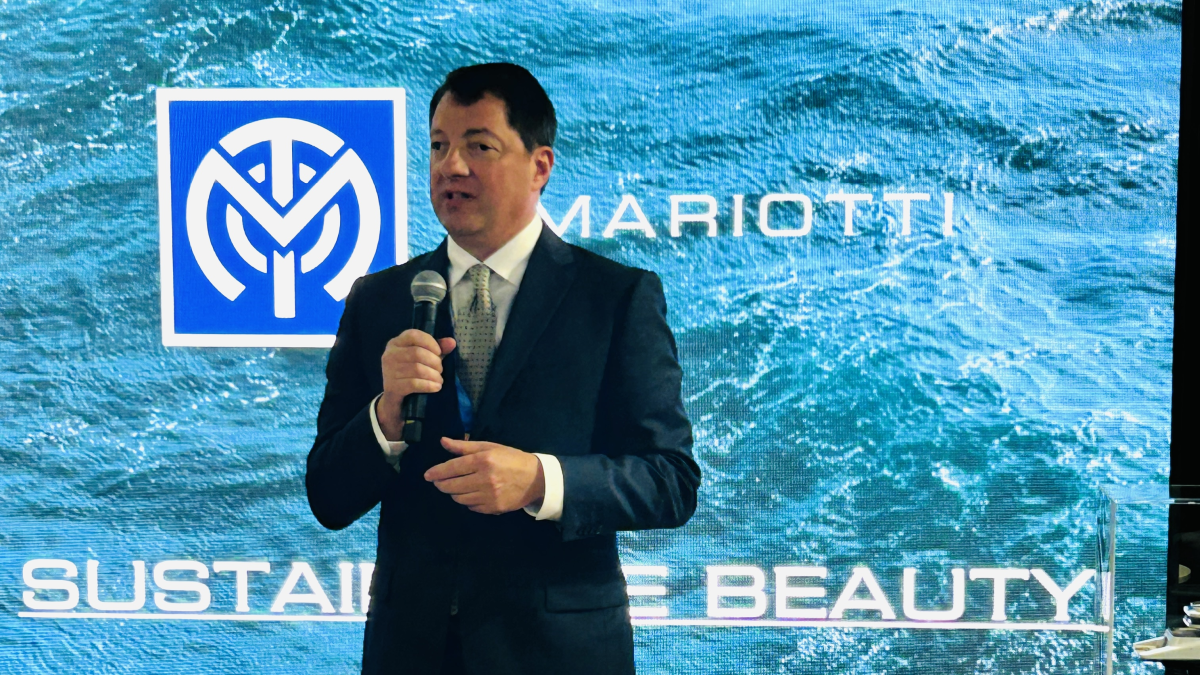
“It has almost become commonplace to say you are sustainable, net zero or zero emissions, or any of the buzzwords you want to put around it,” said Aman at Sea president and CEO, Jonathan Wilson. “But it’s something very different to achieve it and deliver it.” Speaking at Seatrade Cruise Global 2026, Mr Wilson said his firm’s luxury cruise yacht “is built and designed in a way that we truly believe can be innovative and not just say so.”
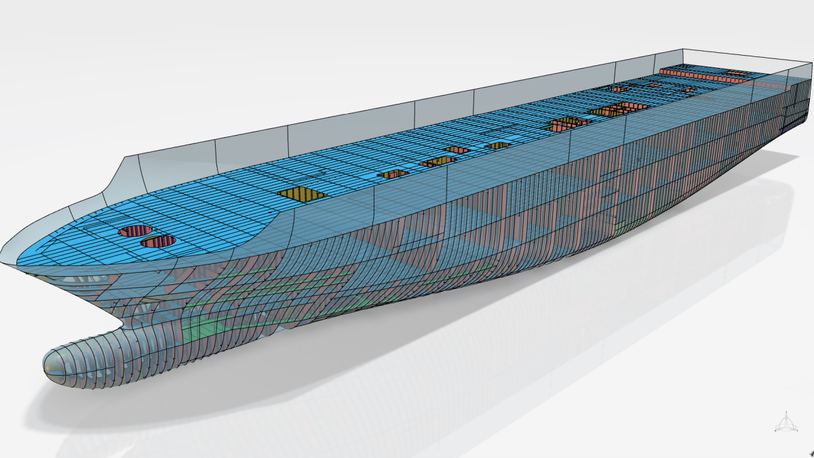
In mid-December, the hull of Amangati arrived from San Giorgio di Nogaro for outfitting at the T. Mariotti shipyard in the Port of Genoa. Delivery to Aman at Sea, a joint venture between Aman Group and Cruise Saudi, will be in the spring of 2027.
The vessel will have accommodation for 94 passengers in 47 cabins, described as ‘airy and expansive suites’, each with its own private terrace.
The ship’s Selora Marina and Lounge has shaded decks and alfresco spaces, while the Aman Spa is a two-storey wellness facility with a Japanese serenity garden and ocean-facing treatment rooms.
Achieving zero emissions
To achieve zero emissions, minimise environmental impact, and reduce energy consumption, the vessel will have hybrid-battery electric propulsion with methanol dual-fuel engines and energy storage, electric propulsion pods, a shore-power connection system, and exhaust gas economisers.
Working with the owner’s team and technology partners, Mr Timossi made the point that the goal was to design a ship that is “built, tested, commissioned, and certified before the delivery.”
“Built and designed in a way that we truly believe can be innovative”
One of the “cruel realities” that limited the technical solutions that could be deployed in the 183-m Amangati was space. “A vessel this size, which is designed to provide unrivalled experiences to guests and reach pristine destinations, simply does not allow enough space for all the items we put in the list. More than that, some initiatives that can provide a sensible impact on a vessel designed for 5,000 guests do not provide enough benefit in a vessel with 47 cabins,” noted Mr Timossi.
He said this required narrowing the list of technical solutions and choosing “real winners” that would provide the greatest environmental and energy-efficiency impact within the vessel’s space constraints.
For example, exhaust gas economisers will recover waste heat from the engines to produce steam and heat boiler feed water. This enhances energy efficiency, reduces fuel consumption by minimising the need for fired boilers, and lowers CO2 emissions.
Mr Timossi said special attention was paid to designing an automation system to control the air conditioning systems in public spaces. HVAC systems are the largest consumers of hotel power on a cruise ship. The system is designed to regulate the cooling of public rooms based on guest occupancy, CO2 levels, and pre-set temperature ranges, keeping passengers comfortable while minimising energy usage. This smart energy conservation approach extends to guest cabins, which are outfitted with large floor-to-ceiling windows. Additionally, curtains and shades lower automatically when the guest leaves the room, reducing excess heat from the sun.
The ship is fitted with 5 MWh of batteries, which can be used for spinning reserve, blackout prevention, and peak shaving, optimising the load on the engines to lower fuel consumption and ship emissions. The batteries can also be used to operate on zero emissions for a limited time.
Amangati will be one of the first cruise ships to operate on methanol. Several cruise ships have been built and trialled the alcohol-based fuel, including Disney Adventure and Celebrity Xcel.
In the case of Amangati, its IMO Tier III Wartsilä dual-fuel engines are fitted with selective catalytic reduction technology. This allows for “carbon-neutral operation” when using green methanol, according to Mr Timossi. Methanol was chosen based on the technical readiness of the engine technology, and engineering was supported by the IGF code and IMO guidelines.
Still, he described significant challenges for the project: “There’s no history of methanol application on a cruise vessel.” He said procurement of methanol for sea trials will be challenging, too. “The supply chain is not yet developed,” and the port authority does not have “a procedure to manage the bunkering of methanol,” he said.
Related to this Story

Events

Maritime Regulations Webinar Week
 16 Dec 2025
 GMT - ONLINE
Floating energy: successfully unlocking stranded gas using FLNGs and FSRUs
24 Feb 2026GMT - ONLINE
© 2026 Riviera Maritime Media Ltd.


