


Business Sectors
Business Sectors
Events
Contents
Register to read more articles.
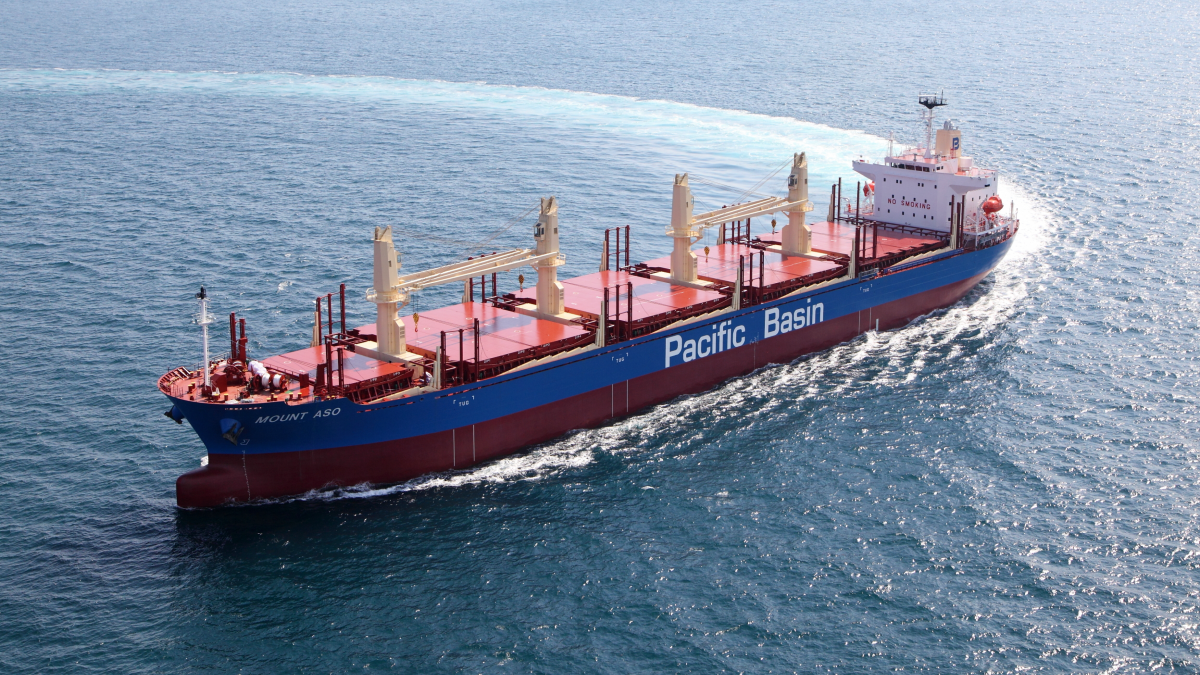
Pacific Basin scraps near-term methanol bulker order amid regulatory fog


Pacific Basin Shipping has terminated its 2024 shipbuilding contracts for four dual-fuel methanol Ultramax bulkers, opting instead for conventionally fuelled vessels from two Japanese yards.
Replacing the terminated agreements, the company has simultaneously signed new contracts with Nihon Shipyard and Mitsui & Co to purchase four 64,000-dwt Ultramax newbuilds for a total cost of US$156.8M. The fuel-efficient vessels are due for delivery between 2028 and H1 2029.
While scaling back immediate commitments, Pacific Basin has retained a foothold in the green transition by securing an option for two 64,000-dwt dual-fuel methanol Ultramaxes. The US$91M deal with Mitsui & Co, exercisable until February 2027, allows the company to defer capital expenditure while locking in delivery slots between 2030 and 2031.
Furthering its commitment to conventional tonnage, Pacific Basin has also tapped China’s Jiangmen Nanyang Ship Engineering for two 40,000-dwt Handysize units. Under the US$59.6M deal, signed on 16 April, the bulker pair is slated for delivery in H2 2028. According to the shipowner, the vessels will share the same fuel-efficient, open-hatch and logs-fitted design as the four Handysize newbuilds ordered in late 2025.
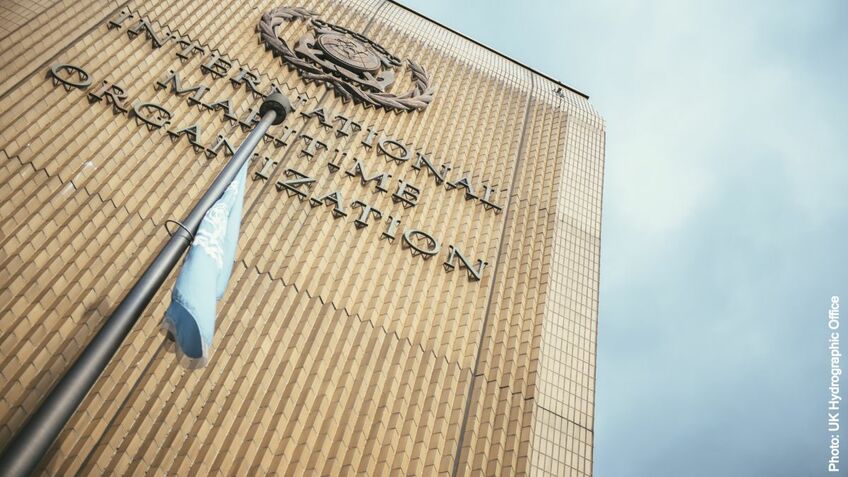
“Converting our order for four dual-fuel Ultramax newbuildings to conventionally fuelled vessels reduces unnecessary near-term capital expenditure and is a financially prudent response to renewed uncertainty around the timing and final shape of a global regulatory framework to drive the maritime green fuel transition following the failure to adopt IMO’s previously agreed Net-Zero Framework (NZF) in October 2025 amid political divisions between member states,” said Pacific Basin chief executive Martin Fruergaard.
“While we expect a NZF-type global mechanism to be adopted in some form in due course and we remain committed to our decarbonisation journey, we believe it is in our shareholders’ best interests to avoid near‑term investment in higher‑cost dual-fuel vessels until clearer regulatory support emerges,” Mr Fruergaard added.
Following the latest transactions, Pacific Basin’s orderbook comprises six Handysize and four Ultramax newbuilds, with an option to acquire the two dual-fuel Ultramaxes. It also holds purchase options on 15 long-term chartered vessels.
Pacific Basin’s pivot proves that regulatory uncertainty is cooling the industry’s appetite for green investment. In the absence of a global mechanism such as the NZF, the economics of investing in more expensive low-emission vessels and fuels are significantly weakened – especially in the fragmented, highly competitive dry bulk sector, where cargo customers are generally unwilling or unable to absorb the additional costs of voluntary green shipping initiatives.
Furthermore, the regulatory vacuum reinforces a ‘chicken and egg’ dilemma regarding green fuels; without clear regulations, the scaling of green fuel infrastructure remains stalled, likely forcing shipowners to rely on more accessible biofuels to meet regional requirements like FuelEU Maritime.

Related to this Story


Events

Maritime Regulations Webinar Week
 16 Dec 2025
 GMT - ONLINE
Floating energy: successfully unlocking stranded gas using FLNGs and FSRUs
24 Feb 2026GMT - ONLINE
© 2026 Riviera Maritime Media Ltd.


