


Business Sectors
Events
Offshore Support Journal Conference, Middle East 2025
 09 Dec 2025
 DUBAI
DUBAIContents
Register to read more articles.
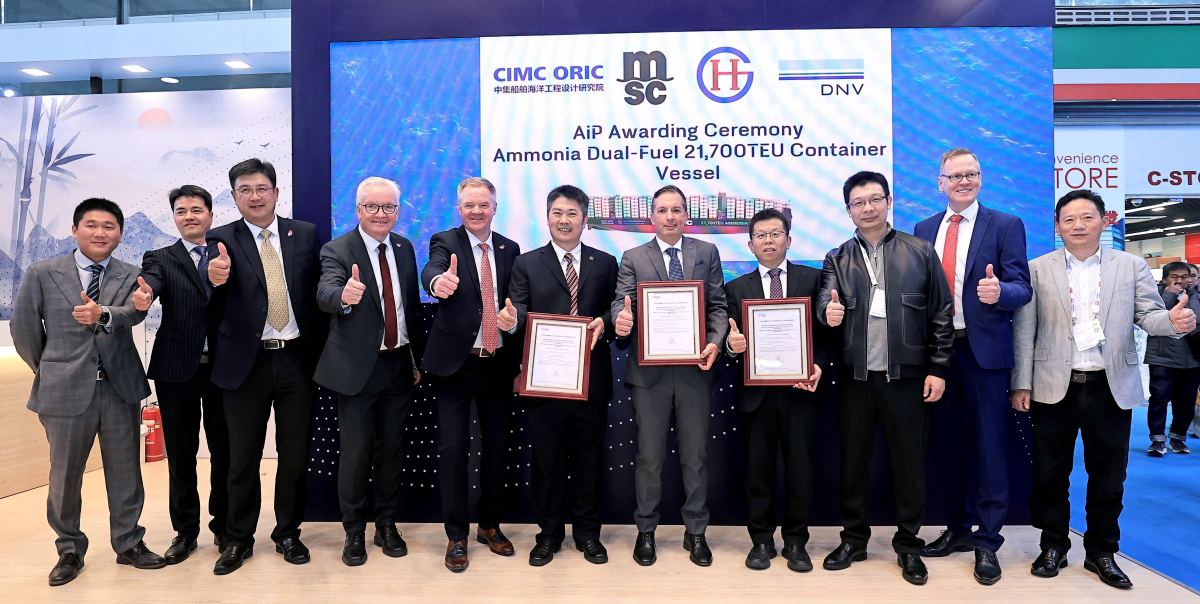
Ammonia-powered 'mega' container ship awarded AiP
DNV has awarded an approval in principle (AiP) to the consortium of MSC, Zhoushan Changhong International and CIMC ORIC for a 21,700-TEU ammonia dual-fuel ultra-large container ship design


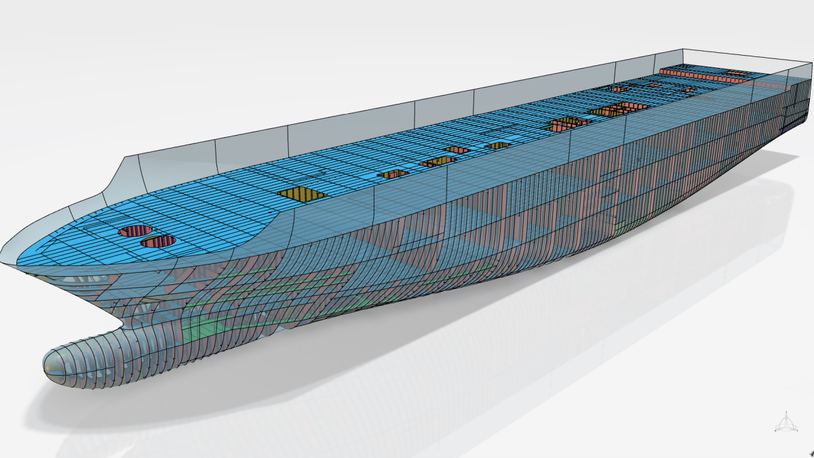
The proposed 21,700-TEU container ship integrates the latest-generation of ammonia dual-fuel main engines alongside oversized C-type ammonia tanks.
The hull design, with a vertical bow, optimised stern and hull lines, alongside low-resistance coatings, high-efficiency propellers and energy-saving hydrodynamic features, targets improved fuel efficiency, with validation through CFD simulations and model tests.
DNV’s classification experts have reviewed the concept design against the relevant DNV and international standards, including the fuel system (ammonia tank and handling), propulsion arrangement, and safety and mitigation systems for ammonia. The award of the AiP lays the groundwork for more detailed engineering studies and potentially commercial construction to DNV class rules.
CIMC ORIC general manager Yin Xunbin said, “This vessel concept offers shipowners an option for a high-capacity, energy-efficient, zero-carbon container ship as part of the next generation sustainable global liner services.”
DNV senior vice president and maritime regional manager for Greater China, Norbert Kray added, “Ammonia dual-fuel options are firmly in the decarbonisation race, we have gone from concept to orders, and soon will see the first deliveries. At DNV, we have continued to develop our rules and standards to enable these new technologies, alongside guidances and practical decision support. The AiP demonstrates the design is in line with industry’s leading safety and design standards, reinforcing confidence in ammonia as a viable fuel for large container vessels.”
The design has been optimised for a high load-to-capacity ratio, and efficient hold utilisation. In addition, the twin-island deck layout and foredeck design allows additional 40-ft container bays to increase cargo capacity while maintaining port and operational compatibility. As the project develops, the consortium is proceeding towards more detailed design and safety analyses including ammonia mitigation and gas handling, and integration into the fuel system.
An approval in principle is an independent evaluation of a concept based on a predefined framework of requirements. It confirms the feasibility of the design and ensures there are no significant technical obstacles hindering its implementation.
Sign up for Riviera’s series of technical and operational webinars and conferences:
- Register to attend by visiting our events page.
- Watch recordings from all of our webinars in the webinar library.
Related to this Story

Events
Offshore Support Journal Conference, Middle East 2025
09 Dec 2025DUBAI
Maritime Regulations Webinar Week
16 Dec 2025GMT - ONLINE
Maritime Decarbonization Conference, Americas 2026
22 Jan 2026HOUSTON
Offshore Wind Journal Conference 2026
02 Feb 2026London
© 2024 Riviera Maritime Media Ltd.


