


Business Sectors
Events

Floating energy: successfully unlocking stranded gas using FLNGs and FSRUs
 24 Feb 2026
 GMT - ONLINE
Contents
Molslinjen taps Incat Tasmania to build third fully electric, high-speed ferry
The battery-powered vessel will join two fully electric ferries already under construction at Incat’s Tasmania shipyard


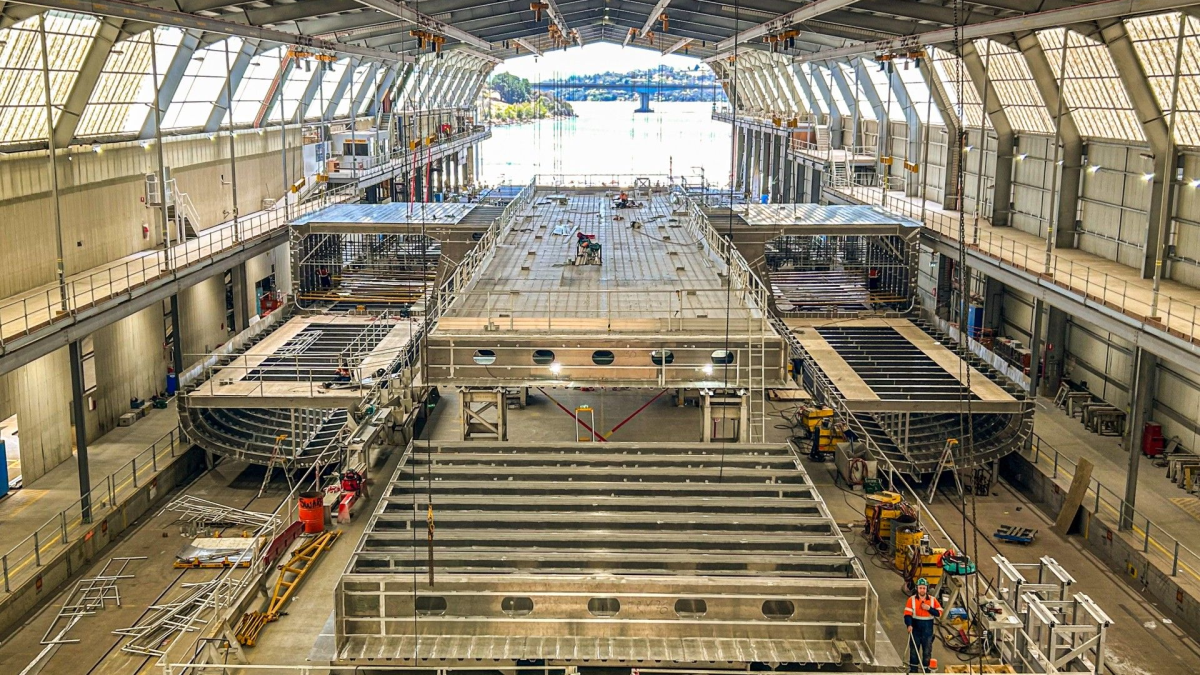
A third, 100% battery-operated, emissions-free ferry is destined for Danish waters after Molslinjen added to its newbuilding contract with Tasmania, Australia-based shipyard Incat.
The 129-m-long vessel will join the two electric ferries whose builds are already underway at Incat’s shipyard in Hobart, Tasmania.
Once finished, the three-ferry fleet will operate across Denmark’s Kattegat routes between Aarhus–Odden and Ebeltoft–Odden, connecting Denmark’s Jutland and Zealand provinces and providing emissions-free transport on one of Denmark’s busiest domestic transport corridors.
Posting on its professional social media profile on LinkedIn, Molslinjen said the ’mega-catamaran’ ferries will make the company’s "entire Kattegat operation emissions free" from the first ferry’s launch. It is scheduled to enter Danish waters at the end of 2027, the second in mid-2028, and the third in early to mid-2029.
"With three fully electric ferries on the way, we are creating the largest electrification project at sea in the world to date," Molslinjen said.
"There will be obvious advantages in having the three ferries built in the same place, and there will be valuable learning along the way from the first to the last ferry. And it has been important for us to have a stable and solid supplier," Molslinjen chief executive Kristian Durhuus said.
In total, Molslinjen said the price to build the trio of ferries and to supply the necessary charging infrastructure in the ferries’ ports of call is costing the company Dkr3.5Bn (US$546M).
Mr Durhuus acknowledged the significant expense of the project and the ’crucial’ financial support provided by the government of Denmark.
"We and our owners are leading the way here and trying to show the way for a green transition with technology that was not present until very recently. That kind of innovation is expensive, and it has been crucial for us to get the government’s support for this electric adventure," he said.
The electric vessels will each be powered by a 45-MWh battery system. The ferries will have space for up to 1,500 people and 500 cars per crossing, with drive-through loading for rapid turnarounds.
The zero-emissions vessels will operate at 40 knots on 90-minute crossings with 30-minute, 58-MW charging available at each end.
“This is an important milestone for both organisations,” Incat Tasmania chief executive Stephen Casey said. “Molslinjen is leading the way in the decarbonisation of high-speed ferry services in Europe, and we are proud to be delivering vessels that will play a central role in Denmark’s clean-transport future.”
Sign up for Riviera’s series of technical and operational webinars and conferences:
- Register to attend by visiting our events page.
- Watch recordings from all of our webinars in the webinar library.
Related to this Story


Events

Maritime Regulations Webinar Week
16 Dec 2025GMT - ONLINEFloating energy: successfully unlocking stranded gas using FLNGs and FSRUs
24 Feb 2026GMT - ONLINE
© 2024 Riviera Maritime Media Ltd.


