


Business Sectors
Events
Floating energy: successfully unlocking stranded gas using FLNGs and FSRUs
 24 Feb 2026
 GMT - ONLINE
Contents
Autonomous ships code gathers momentum as commercial concepts proceed at practical pace
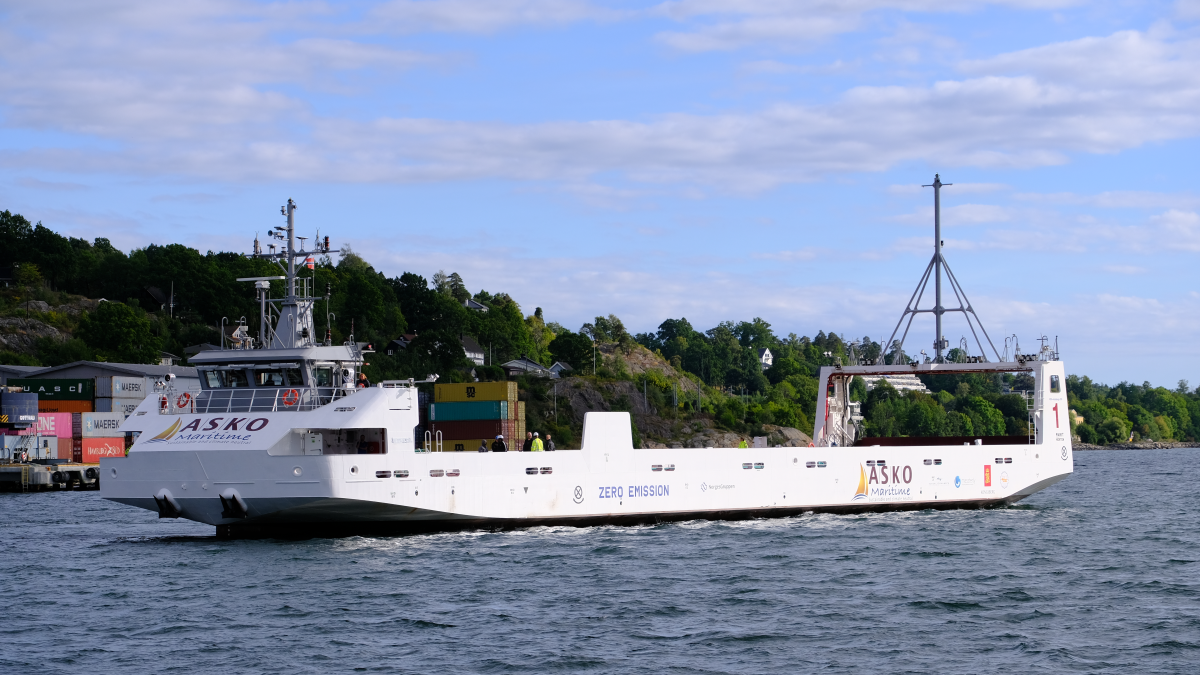
Momentum for maritime autonomous surface ships (MASS) is accelerating, and IMO is moving decisively to support the evolution of autonomous shipping into a practical and commercial reality


As IMO drafts MASS safety requirements, the International Association of Classification Societies (IACS) has brought forward critical insights and technical guidance around this technological innovation’s operational realities.
A stronger emphasis on safety assurance, inherently safer design, and clearer expectations for how autonomy should be integrated into existing maritime frameworks is necessary to scale and safeguard intelligent ships at sea.
IMO is expected to finalise and adopt the non-mandatory MASS Code at MSC 111 in May 2026. Following this, a framework for the experience building phase (EBP) will be developed at MSC 112 in December 2026.
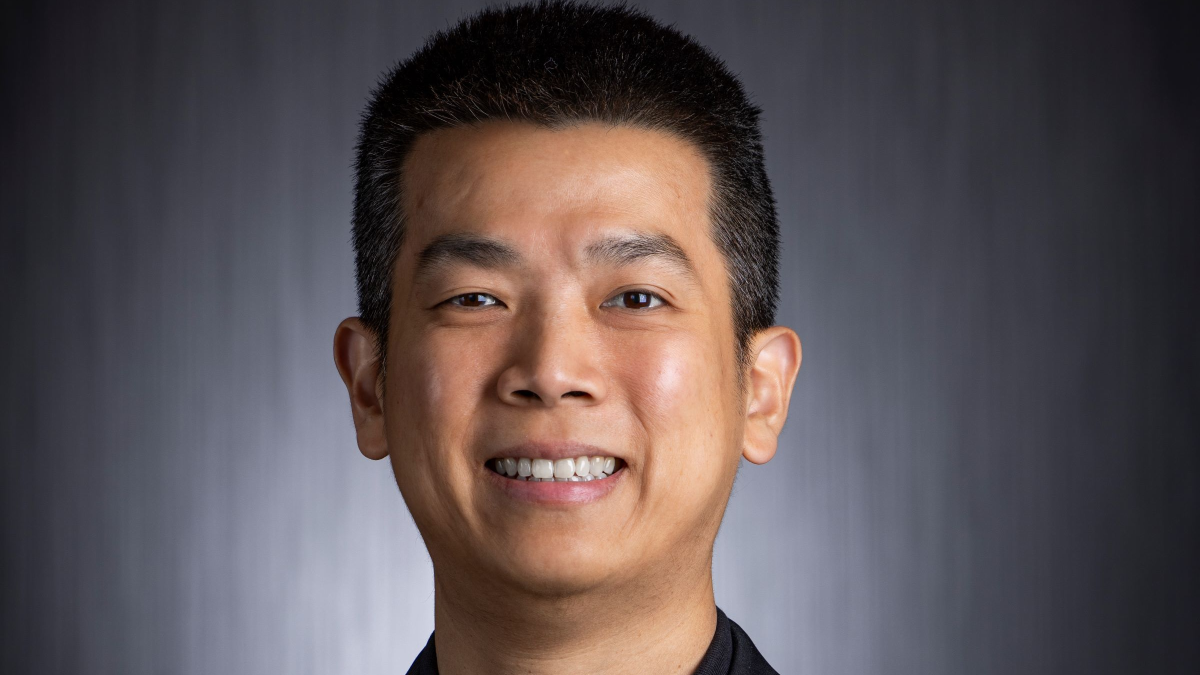
“As the conversation has matured following an extended period of consultation, the focus is shifting from early ideas of fully unmanned ships to a more realistic spectrum of supervised, autonomous and remotely supported operations,” said ABS vice president for technology, Michael Kei.
“This reflects a growing understanding that autonomy is not a single destination; rather, it is a continuum that still relies on human involvement, whether on board or ashore.”
Insights gained during the EBP, which will take place between 2026 and 2028, will inform the development of the mandatory MASS Code, which, under current plans, is set for adoption by 2030 and is scheduled to enter into force on 1 January 2032.
“MASS’s gradual evolution has prompted the industry to think carefully about the regulatory, technical and human element of autonomy,” said Mr Kei. “It also highlights the responsibility placed on regulatory bodies to offer strong oversight.”
For vessel owners and operators, autonomy is not always the ultimate goal or single end-state, but rather a tool that can be applied at different levels depending on operational needs.
“In that sense, a higher autonomy level is not always better,” said Mr Kei. “The right level depends on the operational context, risk profile and human involvement required, and different operations may require different degrees of autonomy.
“Autonomy is a journey, and its incremental steps should be developed through a gradual, safety-focused progression that introduces new capabilities in controlled phases.”
Mr Kei said early steps may rely on advanced, non-autonomous decision-support systems, such as automated monitoring, advisory functions, and other smart tools that enhance situational awareness across vessel systems.
“This phased approach allows the maritime industry time to test technical feasibility"
“As operational experience increases, higher levels of autonomy can be introduced incrementally, expanding from decision-support functions to more autonomous capabilities across multiple shipboard domains,” he explained.
“Regulatory and technical requirements that apply a step-wise approach provide progressive assurance, testing and validation at each stage, which ultimately supports learning from real-world experience while also building trust among crew, operators, regulators and other stakeholders.”
Bridging human factors and training gaps
Human factors engineering (HFE) remains one of the most significant challenges in the progression toward autonomous maritime operations, according to Mr Kei.
“While many emerging technologies must consider how they influence human activity, autonomy is fundamentally built around human involvement,” he said. “Every autonomous function interacts with human decision-making, oversight and intervention, which means the human element cannot be treated as an afterthought.”
Current industry gaps in HFE for autonomous operations are a lack of focus in research and development work, clear definitions, and a common benchmark for evaluating autonomous navigation solutions.
"The pace of technological development is now outstripping the ability of onboard personnel to adapt,” said Mr Kei. “Skills, competencies and training pathways have not evolved at the same rate as the systems being introduced."
This creates a widening gap between what technology can do and what the workforce is prepared to manage.
“Without targeted investment in training and human-centric design, this gap will continue to grow,” said Mr Kei. “As a result, verification and validation remain at the heart of safety assurance for autonomous technologies. Traditional testing alone cannot capture the full range of scenarios that an autonomous system may encounter at sea.”
Virtual testing and both system-level and full-mission bridge simulation allow developers and assessors to explore edge cases, stress conditions and rare events that would be difficult or unsafe to reproduce in physical trials.
When combined with real-world testing, this creates a more complete picture of system performance.
“To improve transparency, consistency and trust, virtual testing could not only verify and validate test scenarios and standardise performance indicators, but it could also provide data to support regulatory decision-making for MASS,” said Mr Kei.
Regulations explained
IMO’s MASS Code will govern varying degrees of autonomy. Operations range from vessels with automated processes and full crews to remotely controlled vessels with reduced manning, all the way to fully autonomous ships navigating without human intervention.
The MASS Code provides a common international reference point. As a goal-based set of standards, it has evolved alongside the development of autonomous technology since 2021, when IMO began scoping MASS trials.
Its goal-based approach aims to define safety objectives while also maintaining flexibility for the industry to adapt to emerging risks.
For the first-phase launch, IMO has advanced the non-mandatory guidelines with support from member states and IACS as part of the working groups helping to refine its structure, core principles and key technical chapters (for example, around navigation and fire safety).
“This phased approach allows the maritime industry time to test technical feasibility and validate the safety of autonomous operations before binding regulations take effect,” said Mr Kei.
Riviera’s International Chemical and Product Tanker Conference will be held in London on 21-22 April 2026. Use this link for more information and to register for the event.
Related to this Story
CIC finds ballast water systems driving detentions
IMO sets out work plan for MEPC 84
Events
Maritime Regulations Webinar Week
16 Dec 2025GMT - ONLINEFloating energy: successfully unlocking stranded gas using FLNGs and FSRUs
24 Feb 2026GMT - ONLINE
© 2024 Riviera Maritime Media Ltd.


