


Business Sectors
Events

Floating energy: successfully unlocking stranded gas using FLNGs and FSRUs
 24 Feb 2026
 GMT - ONLINE
Contents
Register to read more articles.
Japanese hydrogen dual-fuel engine advances towards operational trials
ClassNK awards type-approval, NOx certificates to Yanmar Power Solutions for high-speed, four-stroke hydrogen dual-fuel engine


Hydrogen as a fuel has seen several pioneering applications in coastal shipping and offshore vessels, enabling significant reductions in CO2 and other greenhouse gas emissions compared with marine fossil fuels.
Japan’s Nippon Foundation’s Zero Emissions Ships Project, established in 2022, has been an incubator for hydrogen breakthroughs.
In October 2025, The Hydrogen Engine Zero Emission Vessels Consortium, led by JPN H2YDRO Co, took delivery of the tug Ten-Oh, which is equipped with BeHydro high-output hydrogen dual-fuel engines. Built by Japanese consortium member Tsuneishi Shipbuilding, the 38-m tug’s two engines are fed by a high-pressure, large-capacity hydrogen gas storage and supply system provided by JPN H2YDRO.
Each of Ten-Oh’s BeHydro V12 hydrogen dual-fuel engines uses hydrogen and fuel oil, delivering 1,618 kW, while reducing CO2 emissions by roughly 60% compared with tugboats using conventional fossil fuels.
BeHydro is a joint venture of Belgian companies, Anglo Belgian Corp and CMB.TECH.
Japanese hydrogen engine gets green light
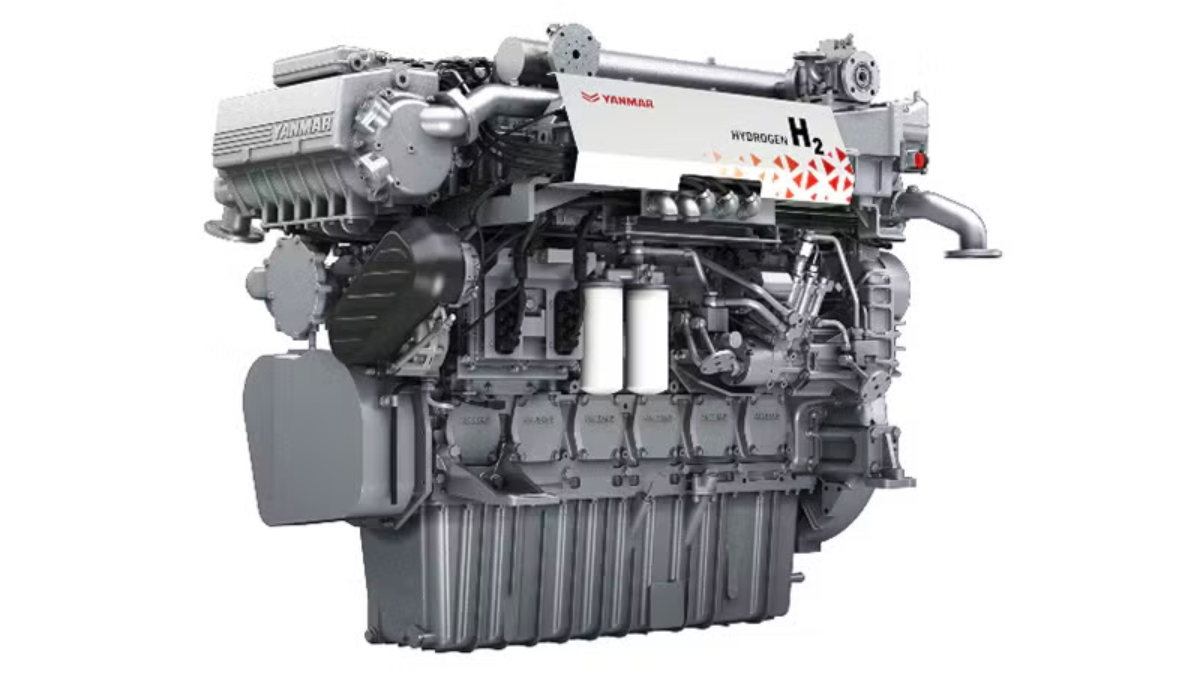
Now, a new hydrogen dual-fuel engine has been developed as part of the Nippon Foundation’s Zero Emission Ships Project by Japan’s Yanmar Power Solutions. In January, it was announced that class society ClassNK awarded type-approval and an NOx certificate for a new hydrogen-fuelled engine, clearing the way for shoreside demonstration of the marine engine.
Yanmar Power Solutions reported the class society issued its type-approval in October 2025 and an NOX certificate in December 2025. The pilot-ignition hydrogen-fuelled four-stroke, high-speed engine is designed for power generation for Japanese coastal vessels.
Testing on hydrogen engines, hydrogen storage and hydrogen loading is carried out at the Hydrogen Engine R&D Center, operated by JPN H2YDRO Co in Fukuyama, Japan.
Last year, Yanmar Power Solutions began land-based testing using a small amount of hydrotreated vegetable oil (HVO) as a pilot fuel, while preparing for planned demonstration operations. Type-approval and NOx certificates are required for demonstration operations.
The engine specifications covered by these certifications are designated as Electronically Controlled Gas Only Engine (Hydrogen). Yanmar Power plans to conduct operational trials in Japanese coastal vessels starting Q3 2026. Several other engine makers are adding hydrogen prime movers to their portfolios.
One of the key concerns when using hydrogen as a marine fuel is that its flammability range of 4% to 75% by volume in air is wider than most common fuels, increasing the risk of ignition in the event of a leak, resulting in fire or explosion, points out Lloyd’s Register. The class society has wide experience in supporting hydrogen-powered vessel development, including the first hydrogen-powered tug, Hydrotug 1.
In September 2025, the 11th session of the IMO Sub-Committee on Carriage of Cargoes and Containers finalised interim guidelines for the use of hydrogen as fuel. Aligned with the IGF Code, these goal-based draft guidelines are expected to be approved at MSC 111 in May 2026. The guidelines provide further specific provisions for the arrangement, installation, control and monitoring of machinery, equipment and systems that use hydrogen as a fuel to minimise the risk to the ship, its crew and the environment.
The 28th International Tug & Salvage Convention, Exhibition & Awards will be held in Gothenburg, Sweden, in association with Caterpillar, 19-21 May 2026. Use this link for more details of this industry event and the associated social and networking opportunities.

Related to this Story

Events

Maritime Regulations Webinar Week
16 Dec 2025GMT - ONLINEFloating energy: successfully unlocking stranded gas using FLNGs and FSRUs
24 Feb 2026GMT - ONLINE
© 2024 Riviera Maritime Media Ltd.


