


Business Sectors
Events

Floating energy: successfully unlocking stranded gas using FLNGs and FSRUs
 24 Feb 2026
 GMT - ONLINE
Contents
Register to read more articles.
Focus shifts to building tugs for sustainable Asian harbour towage
Owners and shipyards in Asia and Australasia are increasingly building battery-electric and hydrogen-hybrid tugboats to cut port emissions


Authorities in Asia and Australia are determined to reduce emissions from ship and barge towage and promote sustainable harbour operations.
In response, shipyards have begun building tugs and owners operating them with energy storage systems or engines running on biofuels and alternative fuels for harbour, coastal and emergency towage, and for offshore and deepsea operations.
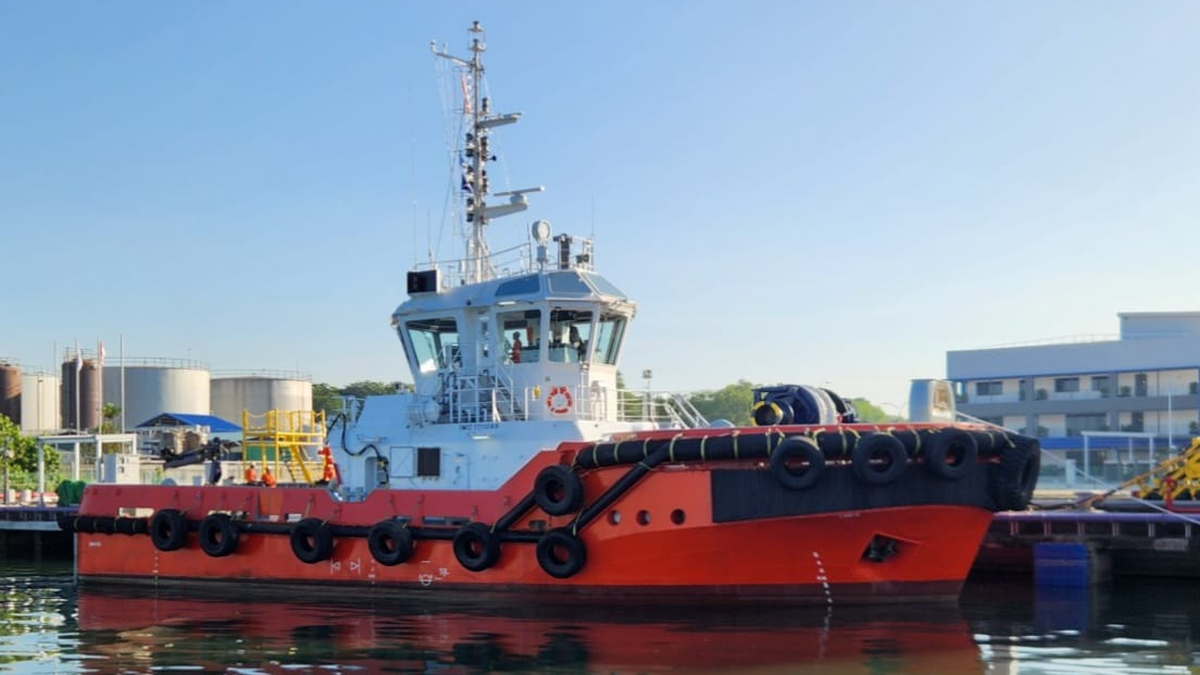
In Singapore, two owners are investing in battery-powered tugs. Kuok Maritime is preparing to bring its first fully electric tugboat into operation in April 2026 after it is outfitted, commissioned and tested in Singapore during Q1 2026.
PXO-Ace-1 was built in Batam, Indonesia and transferred to Singapore in December 2025. The 50-tonne bollard pull tug is seen by Singapore’s Maritime and Port Authority (MPA) as a first step towards electrifying the city-state’s 1,600-plus harbour vessels.
PaxOcean, a member of the Kuok Maritime Group, worked with ABB on the electric powertrain, with PXO-Ace-1 having a 3-MWh energy storage system, direct current (DC) grid and power management system.
“Developing Singapore’s first fully electric tug is a significant achievement and an important step in advancing maritime decarbonisation,” said PaxOcean Group chief executive and managing director Tan Thai Yong.
ABB supplied and integrated the battery module, Onboard DC Grid and PEMS power and energy management system to optimise the use of the onboard energy and to support wide variations in power demand, including instant high torque.
“The operational integrity, safety, and performance of this vessel depend on reliable systems and effective integration,” said Mr Tan.
PaxOcean is opening a new shipbuilding facility in Singapore, with two graving docks and a floating dock, at Jalan Samulun in February 2026, moving from its existing shipyard in Tuas, Singapore.

Elsewhere in Singapore, an unnamed vessel and shipyard owner, thought to be Seatrium, is building a newbuild battery-electric tugboat.
Swedish manufacturer Echandia was selected to supply a 3-MWh battery system with a 25-year lifetime for the tugboat, which will be built to provide zero-emissions towage in Singapore’s harbour.
It has an option to supply a second similar unit for another tugboat that the owner is planning to build.
This is all part of Singapore’s ambitious plan to electrify its harbour craft fleet, including tugboats, workboats and pilot transfer vessels, to ensure all newbuild harbour vessels introduced in the nation’s ports are either fully electric or compatible with B100 biofuels or net-zero fuels by 2030.
“Developing Singapore’s first fully electric tug is a significant achievement”
Echandia will supply its lithium titanium oxide battery system, which it claims will last the entire lifetime of the tugboat due to its minimal degradation over time, eliminating the need for replacements and ensuring predictable performance.
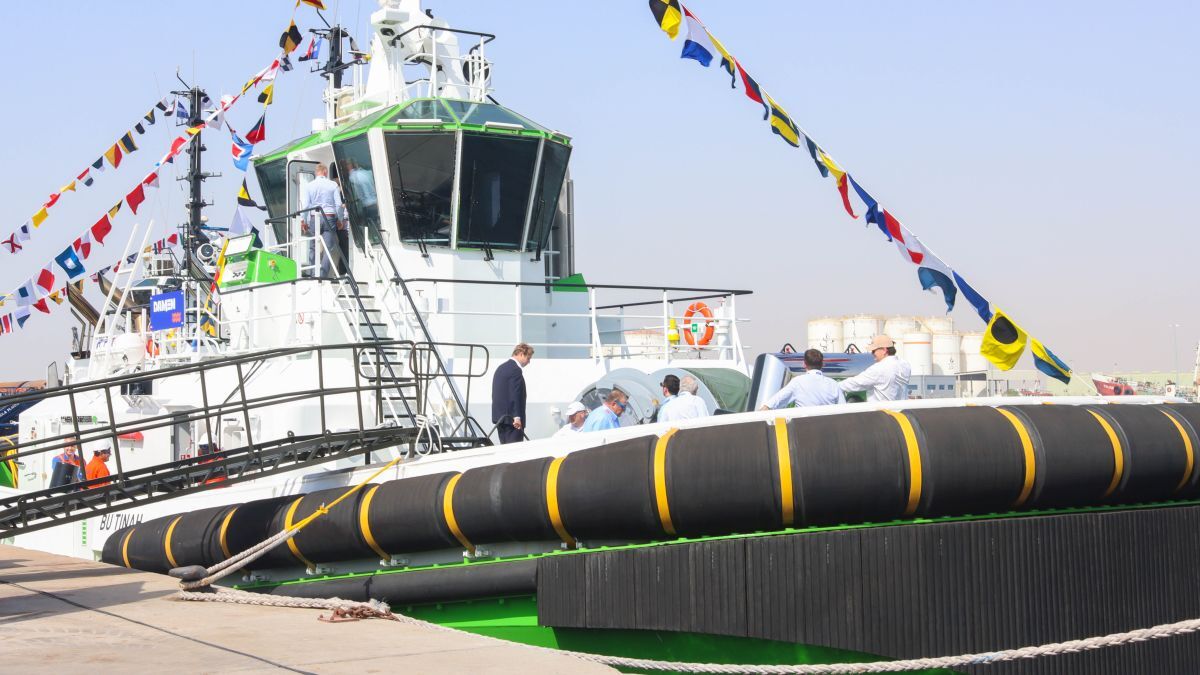
In Vietnam, Damen Shipyards has been building electric-powered reverse stern drive (RSD) tugboats for international clients and its own fleet, with Bu Tinah and Bu Tinah 2 operating in the United Arab Emirates (UAE); Sparky in New Zealand; Volta 1 and Aqua Pollux in continental Europe; along with Aqua Stentor in India and the UAE.
These were built in Damen Song Cam Shipyard to Damen’s RSD-E 2513 design with a beam of 13 m, a maximum draught of around 7 m, and Toshiba-supplied battery modules designed to last throughout the tugboat’s 25-year life.
They have two Ramme TW 1400r L permanent-magnet electric motors driving two Kongsberg US255 L drives, and two Caterpillar C32 generator sets for additional power, back-up when batteries cannot be charged, and for long voyages.
Hydrogen-fuelled tugs
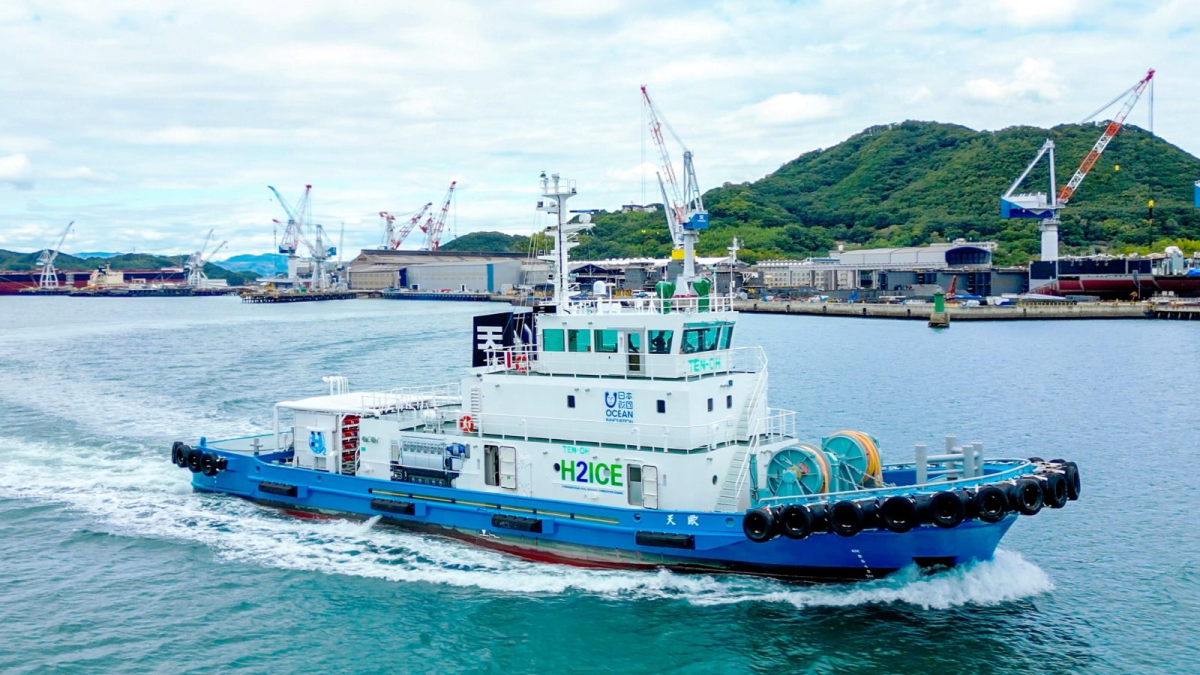
In Japan, Tsuneishi Shipbuilding completed the first hydrogen-fuelled tugboat in the nation in August 2025, under the Nippon Foundation’s zero-emissions ships project.
Ten-OH is equipped with two BEH2ydro 12-cylinder hydrogen dual-fuel engines, enabling the use of marine diesel if hydrogen is not available. When combusting hydrogen, this 38-m tugboat can manoeuvre ships, transit between jobs and undertake towage without emitting any CO2 emissions.
JPNH2ydro, a joint venture between Tsuneishi Group and Belgium’s CMB.TECH, supplied the engines, high-pressure hydrogen storage unit and fuel supply system for Ten-OH.
250 kg of hydrogen can be stored in high-pressure tanks, and each engine generates 3,280 kW of power. Ten-OH has a beam of 10 m, a draught of 4 m and two azimuth thrusters on the stern.
In China, Jiangsu Zhenjiang Shipyards built the nation’s first hydrogen-electric tugboat, Qing Dian Tuo 1, for Qingdao Port, signalling a technological leap for the major tugbuilding nation.
The azimuth stern drive (ASD) tug has a hybrid propulsion system featuring a 7,838-kWh capacity, liquid-cooled lithium battery system, two 100-kW hydrogen fuel cells and a backup generator to drive two azimuth thrusters that generate 82 tonnes of bollard pull, and a top speed of 14 knots.
The propulsion system enables the port operator to provide zero-emissions operations from this 39-m tugboat, with a projected annual reduction in CO2 emissions of 1,500 tonnes.
The ASD tug has a beam of 11 m, a depth of 5 m and a draught of 4 m. Its onboard batteries are charged from a quayside facility between towing operations, via a fully automatic charging device. Qing Dian Tuo 1 has been awarded the AUT-0 notation from China Classification Society.
Other Chinese shipyards are active in the domestic market, with Rizhao Gangda Shipbuilding Heavy Industry building Ri Gang Tuo 32 and Ri Gang Tuo 33 for Rizhao Port, and Fuzhou Xingshun Shipbuilding constructing Sea Cod for Qingdao Bohwa Shipping.
Lianyungang Hongyun Industry delivered battery-electric tugboat Siugang Dian Tuo 01 to Guangzhou Port, and Fujian Baozhong Ocean Engineering built Shun Da Tou Yi for Rongchuangda Trading.
Hybrid propulsion
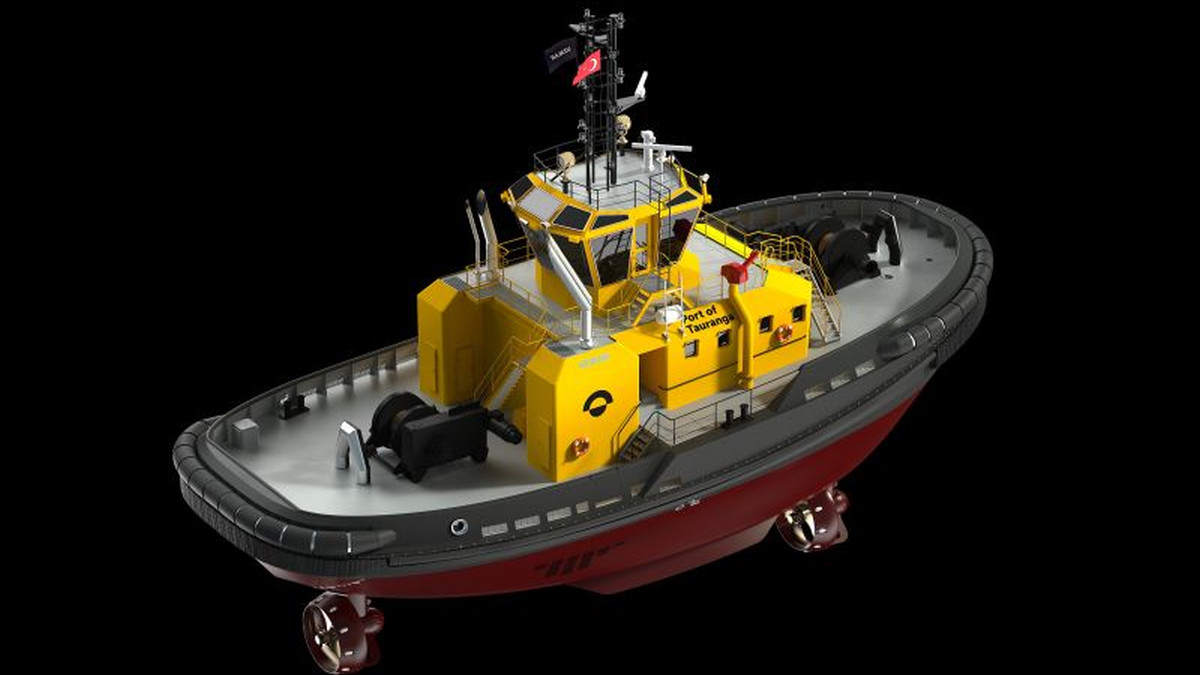
In New Zealand, Port of Tauranga has ordered a new tugboat with hybrid propulsion from Uzmar Shipyard in Turkey as part of its fleet renewal and to expand towage capabilities in New Zealand’s busiest harbour.
Uzmar will construct a 32-m hybrid advanced Rotortug with around 80 tonnes of bollard pull for delivery in 2027 for the port, which has more than 1,400 ship visits per year.
Port of Tauranga chief executive, Leonard Sampson, said the purchase followed a detailed design phase to address the harbour’s operational, environmental and safety requirements.
“The Rotortug design will provide us with enhanced manoeuvrability and precision, with greater strength in emergencies, and reduce our reliance on diesel, reducing greenhouse gas emissions thanks to the hybrid technology,” said Mr Sampson.
“Overall, it will be a welcome addition to our marine fleet’s efficiency, capability, flexibility and sustainability as we prepare for more frequent visits from larger ships.”
In Western Australia, Svitzer has replaced batteries on four 33-m ASD tugs supporting gas carriers at Chevron’s Gorgon LNG production and export plant on Barrow Island.
These tugs – Svitzer Boodie, Svitzer Dugong, Svitzer Euro and Svitzer Perentie – were built with 80 tonnes of bollard pull and diesel-electric propulsion for the Gorgon terminal in 2012. Their hybrid propulsion systems have batteries which are charged by the two diesel engines and can be used to supplement diesel power or replace it, cutting carbon emissions and noise.
Svitzer’s hybrid vessels can operate on one engine or purely on battery power while maintaining full steering and manoeuvrability when lower levels of power are required.
These tugs also have electric deck equipment to minimise the risks of an oil spillage associated with hydraulic machinery, fuel tanks protected by a double-skin arrangement, solar panels for water heating and a water recycling plant.
The 28th International Tug & Salvage Convention, Exhibition & Awards will be held in Gothenburg, Sweden, in association with Caterpillar, 19-21 May 2026. Use this link for more details of this industry event and the associated social and networking opportunities.

Related to this Story
Events

Maritime Regulations Webinar Week
16 Dec 2025GMT - ONLINEFloating energy: successfully unlocking stranded gas using FLNGs and FSRUs
24 Feb 2026GMT - ONLINE
© 2024 Riviera Maritime Media Ltd.


