


Business Sectors
Events
Offshore Support Journal Conference, Middle East 2025
 09 Dec 2025
 DUBAI
DUBAIContents
Register to read more articles.
Biofuels provide swiftest way to reduce emissions
Experts predict a mixture of alternative methanol, hydrogen and ammonia fuels will become available to tug owners in the future


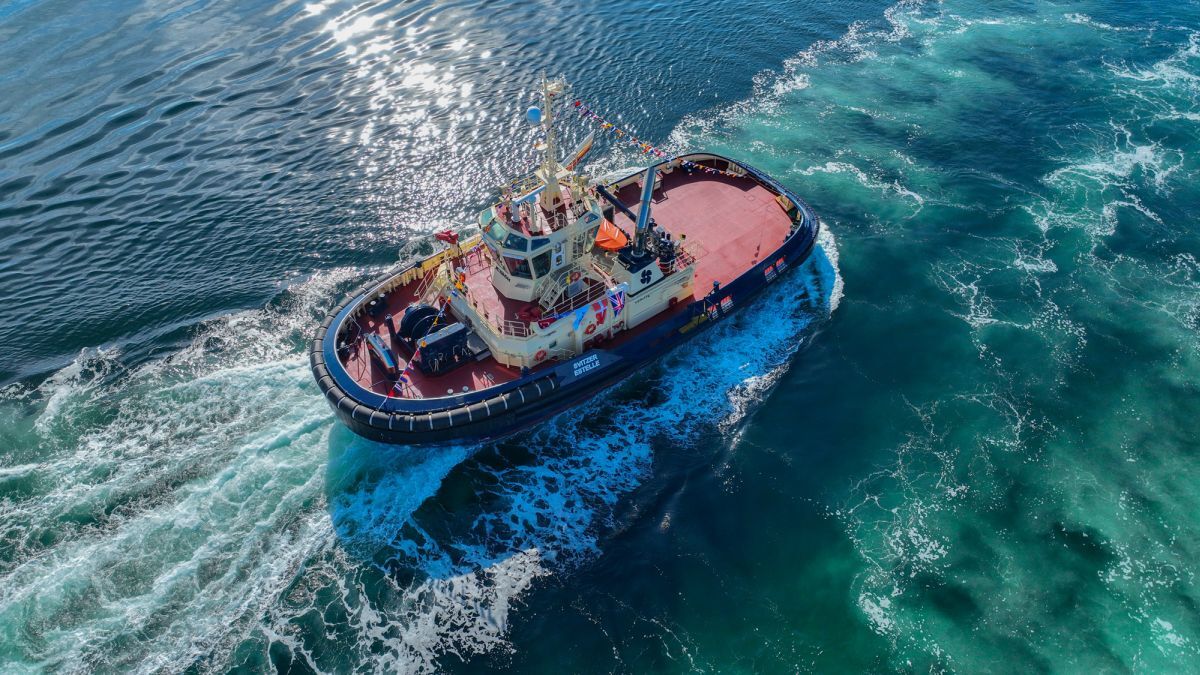
The use of biofuels and alternative fuels for tugboat propulsion has so far been limited to a fleet of tugs using hydrogenated vegetable oil (HVO) fuels in the UK and a few pilot projects around the world. But this is changing as more resources are introduced and engine technology is further developed, tested and implemented.
Svitzer is leading the pack on biofuels, as around 70 tugs in the UK fleet are running on HVO with engine manufacturers confirming no major changes in engines, performance or maintenance, nor fuel processing. Other owners are either considering or implementing a biofuels strategy and a few are starting to work with methanol or plan to do so in the next two years.
During Riviera’s Marine Propulsion: Fuels Webinar Week experts covered the issues, challenges and solutions for various alternative fuels to marine diesel.
Peninsula head of biofuels Nikolas Nikolaidis explained how biofuel availability will be improved as more sources are introduced in bunkering hubs. Peninsula supplies marine fuels from more than 20 ports, with biofuels and blends available in European ports and in Singapore, and will soon be ready in Panama, the UAE, Egypt and the Canary Islands.
It is important biofuels are from sustainable resources and are certified by classification societies to ensure they are generated from waste and residues and do not change land use away from food production.
“Sustainable biofuels are a way to reduce expense and comply with all regulations simultaneously, to get the real value from the tonnes purchased,” said Mr Nikolaidis. These regulations are IMO’s carbon intensity index, the European Union’s ETS and FuelEU Maritime, which is coming in 2025.
Available sustainable biofuels include fatty acid methyl esters (FAME), hydrogenated vegetable oil (HVO) and residual biofuels. FAME will be mainly used for commercial shipping as it needs heating. “HVO blends are mainly for small vessels as no internal heating or engines changes are required,” said Mr Nikolaidis.
“We will ensure fuels are fit for purpose, comply with specifications and regulations, and are available.”
Mr Nikolaidis added the maritime industry will increasingly be competing with other sectors, especially aviation, for available biofuel supplies. RBC Capital director of renewables and energy transition markets Eduardo Famini Silva said developers of sustainable biofuels and synthetic fuels would be seeking long-term supply contracts to back their investment.
“In the future, there will be competition for feedstock,” said Mr Silva. “Capital is restricted, so companies will make decisions on what industry will be ready, and aviation is seen as having the best appetite. Airlines are willing to underwrite projects with long-term contracts and revenue visibility.”
Investors in biofuel production projects need protection against the volatile commodity prices which come from not having long-term supply deals. “With no long-term contracts it would be harder to get investment,” said Mr Silva. “Investors are more interested in synthetic fuels, such as e-methanol, so biofuel’s new capacity will be funded by traders and energy companies.”
There could be alternative resources developed to produce sustainable biofuels from organic stocks such as algae. HutanBio founder and chief scientific officer John Archer said the company has produced synthetic fuels from algae grown in plastic bags in the heat and high levels of sunlight encountered in desert environments. This also uses industrial effluent liquid to produce organic oil compounds with 16-18 carbon atoms in a chain link, which could be dropped into marine fuels.
“We are scaling up for engine tests using blends and we are looking at certification; we are confident these will be passed,” said Mr Archer. “We will turn our nursery into production systems, with an automated artificial intelligence-managed farm over one hectare, growing algae in the desert sunlight, and linked to a port.”

As several speakers at Riviera’s 27th ITS Convention confirmed, methanol has become a frontrunner for tugs and workboats, and the first pilot project to use this fuel was launched.
Port of Antwerp-Bruges introduced Methatug in May 2024 after an existing harbour tug was converted to store and combust methanol in retrofitted Anglo Belgian Corp (ABC) dual-fuel engines under the European Union-funded Fastwater project. This 30-m vessel has a traction force of 50 tonnes and can store 12,000 litres of methanol, enough for two weeks of tug work, and two ABC 8DAC dual-fuel, medium-speed engines for methanol and marine gasoil.
Port of Antwerp-Bruges chief executive Jacques Vandermeiren said this project is one of three to pilot using different propulsion technologies and fuels, the others being the world’s first hydrogen-powered tugboat, Hydrotug 1, unveiled in December 2023 and Volta 1, a battery-electric reverse stern drive tug, coming in 2024.
During Riviera’s fuels webinar week, Methanol Institute senior advisor Kjeld Aabo said there has been an acceleration in methanol fuel bunkering on merchant ships and port infrastructure construction. 257 vessels have been completed or are on order at shipyards worldwide “and more orders are coming” all ready to run on methanol fuel.
Plans are being made to build green methanol production plants from renewable sources, mainly in North America, China and Europe. Methanol Institute forecasts there will be more than 28M tonnes of annual production, if low-carbon fuels are included, in 2028, up from just 0.9M tonnes in 2024.
“The engine technology is there and there is growing storage and bunkering infrastructure,” said Mr Aabo. “There are no excuses for not choosing methanol due to the technology.”
Major tug owners, including Svitzer, Kotug International and Boluda Towage, have ordered methanol-ready newbuilds and green corridors between leading ports have been set up.
“There are 44 different corridors around the world,” said Mr Aabo. “Methanol will have a huge impact on future fuels.”
Zero Emissions Ship Technology Association secretary general Madadh MacLaine is confident hydrogen, either liquid hydrogen (LH2) or compressed gaseous hydrogen (CGH2), will be increasingly used for harbour tugs, workboats and other port vessels. But IMO and class societies need to produce regulations and rules to enable this. Existing projects, such as Hydrotug 1, are leaning on IMO’s International Code of Safety for Ships using Gases or other Low-flashpoint Fuels (IGF) Code, which Ms MacLaine said was “not fit for purpose” for hydrogen.
“IGF Code addresses LNG, but this is different to how LH2 behaves,” she said. “We cannot assume anything in IGF Code is appropriate in hydrogen, so we have to go through everything. We will not get anywhere until regulations are in place.” IMO is working on guidelines for using hydrogen fuels, as it is with other alternative fuels, using the IGF Code as a starting point. Ms MacLaine is looking for guidance, which she expects to come in 2025, that is focused on safety, but with open options.
Ricardo head of hydrogen business Joanna Richart expects hydrogen will become a marine fuel of choice once carbon trading becomes expensive. “The industry has awoken. Carbon levies mean owners will be paying penalties for not having solutions, so there will be people to buy hydrogen fuel,” she said.
“But it is not easy for vessel owners to make decisions, and ports need to be ready for bunkering. Owners will be buying vessels that will still be at sea when regulations come into force.”
There are challenges with hydrogen, storage being the greatest of them. Ammonia could be an answer for storing hydrogen for engines and fuel cells. Japanese shipowner NYK is bunkering ammonia fuel, supplied by JERA, from a lorry to Shin Nippon Kaiyosha’s ammonia-fuelled tugboat, A-tug, in the port of Yokohama, Japan. Ammonia is combusted in two IHI Power Systems Niigata 28ADF dual-fuel, four-stroke engines on this 37-m, ClassNK-classed tug, operating in Tokyo Bay since June.
Riviera Maritime Media’s Maritime Decarbonisation Conference, Europe 2024 will be held in Amsterdam, 24 September 2024, click here for more information on this industry-leading event

Related to this Story


Events
Offshore Support Journal Conference, Middle East 2025
09 Dec 2025DUBAI
Maritime Regulations Webinar Week
16 Dec 2025GMT - ONLINE
Maritime Decarbonization Conference, Americas 2026
22 Jan 2026HOUSTON
Offshore Wind Journal Conference 2026
02 Feb 2026London
© 2024 Riviera Maritime Media Ltd.


