


Business Sectors
Business Sectors
Events
Contents
Register to read more articles.
Can simulation-led technology extend LNG’s compliance?
Advanced modelling offers LNG carriers and LNG-as-a-marine-fuel shipping a route to maintain compliance under developing IMO rules


The outcomes of MEPC 83 have placed LNG-fuelled shipping at a regulatory crossroads. Once considered a long-term transition fuel, LNG now risks falling into a lower compliance band under IMO’s Net-Zero Framework, with methane slip, lifecycle GHG intensity and onboard measurement under intense scrutiny. From 2028, LNG carriers must calculate their GHG Fuel Intensity (GFI) annually. Without changes, many could face financial penalties or be forced to purchase surplus units from compliant vessels. By 2031, according to an initial analysis by Bureau Veritas (BV), LNG may fall into Tier 2 non-compliance, triggering a charge of US$380 per tonne of CO2-equivalent emissions.
In this altered context, technology offers a counterweight to regulatory pressure. Shipowners are increasingly turning to integrated, physics-based simulation to reduce onboard emissions and unlock efficiencies across the power and propulsion chain. The goal is to preserve LNG’s commercial viability, not by disputing its environmental footprint, but by using advanced tools to improve performance within the evolving regulatory envelope.
As IMO, through MEPC, introduces tighter controls, it simultaneously enables mitigation through more granular measurement and digital oversight. New onboard measurement guidelines allow for the use of actual methane and nitrous oxide slip data in place of default values. While this could highlight inefficiencies, it also opens the door to optimisation. Maritime researcher and lecturer, Dr Mikko Heikkilä, noted that LNG’s GHG intensity from well-to-wake is driven by two main elements: a well-to-tank footprint that compares poorly with conventional liquid fuels; and methane slip that tends to increase when engines operate outside their optimal load range. The revised rules acknowledge this complexity by accepting measured data from compliant systems, a provision that can favour operators prepared to invest in integrated digital tools.
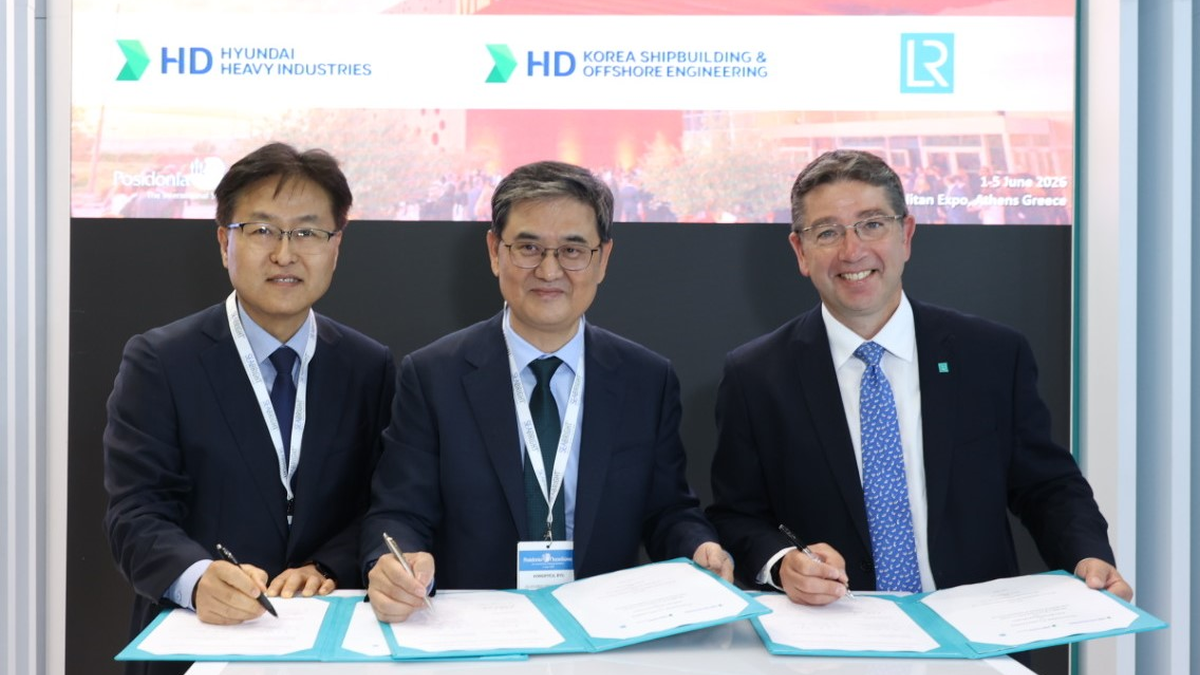
Such tools are already in play. The recent development of a digital twin-based power management system for a 174,000-m³ LNG carrier by Hyundai Heavy Industries illustrates how simulation can pre-empt non-compliance. Verified by DNV, the system used a physics-based digital twin to conduct virtual commissioning of the ship’s power systems. “Simulation-based testing and verification enable repeatability and provide transparency,” noted DNV in its report on the project. This approach allowed class approval to be based on a validated digital model, reducing time to delivery and avoiding the need for physical testing in some areas.
“Simulation, digital twins, and onboard measurement systems offer a pathway to maintain compliance within the revised framework”
The key benefit lies in how integrated simulations model entire ship systems – from propulsion and generators to auxiliary machinery – within a unified environment. Software platforms such as Gamma Technologies’ GT-SUITE and Siemens’ Simcenter (as used by shipbuilder Hanwa Ocean) allow engineers to evaluate how changes in one subsystem affect others. By co-simulating power, heat, and control systems under various operating conditions, LNG carriers can be modelled as holistic energy systems. “Integrated simulation is necessary for the design of sustainable ships,” noted a Siemens marine engineering lead, referencing the coupling of system models with real-time operating data to adjust performance.

For LNG carriers, the ability to predict and manage boil-off gas (BOG) volumes is central to both commercial efficiency and emissions reduction. Companies like Nautilus Labs have introduced digital twins capable of forecasting BOG behaviour with high accuracy, allowing for smarter decisions around cargo management, reliquefaction and engine load balancing. In one 17-day LNG voyage, a twin system predicted tank pressure and BOG volumes within 2% of actual figures. These forecasts can be used to schedule optimal engine usage, minimising slip and fuel waste.
This predictive capability extends into voyage optimisation. As MEPC 83 redefines “underway” in a manner likely to penalise idle time under power, simulation tools offer a way to recast operations. By simulating propulsion demands under various sea states and loads, operators can identify efficient speed and routing strategies that comply with the updated CII and GFI metrics. ABS has noted that simulation models provide a “faster, more efficient, and more comprehensive” method of evaluating compliance scenarios compared with spreadsheets or empirical estimates.
Digital twins also support retrofit planning, a necessary step for LNG carriers facing mid-life reassessments. With LNG’s GHG intensity now viewed unfavourably on a well-to-wake basis, owners may consider hybridisation, energy-saving devices, or alternative fuel integration. By simulating these changes ahead of investment, owners can evaluate the operational and regulatory outcomes. Wärtsilä, for instance, has used full-ship simulation to design bespoke propeller and engine pairings optimised for each hull form. This opti-design approach ensures that propulsion systems operate at peak efficiency, reducing emissions under real operating profiles, rather than theoretical ones.
At the system level, the emergence of hardware-in-the-loop (HIL) testing allows real-world components to be inserted into simulations. This technique, used by HD Hyundai Mipo Dockyard in electric ship development, is now being considered for LNG ship systems. By testing generators, switchboards and control systems against simulated vessel models, integration issues can be resolved before installation. This process reduces commissioning time and enhances system reliability – both critical under MEPC 83’s tightened timelines.
Class societies are adapting their frameworks to support this technological pivot. DNV’s Simulation Trust Center and Recommended Practice RP-0513 offer a route to verify models used in digital twins. Data generated through simulation is recorded in tamper-proof ledgers, enabling it to serve as a basis for class approvals. BBV has similarly begun to explore 3D model-based design submissions, a step towards digital-first verification methods. This institutional acceptance of simulation not only validates the models themselves but allows shipowners to use digital evidence to meet compliance criteria.
The transition to synthetic LNG variants, such as bio-LNG or e-LNG, remains on the horizon. Ahti.io’s ceo, Risto-Juhani Kariranta, cautioned that onboard slip may be less consequential than pre-combustion emissions, noting that “the majority of the slip happens before the LNG gets onboard.” While shifting to bLNG or e-LNG may eventually be necessary, especially if upstream emissions become central to regulatory calculations, simulation tools can still support current vessels in minimising onboard emissions and optimising efficiency in line with present rules.
What emerges is a picture in which LNG’s future as a marine fuel may depend less on its intrinsic properties and more on the ability of shipowners to extract its full potential using digital tools. Simulation, digital twins, and onboard measurement systems offer a pathway to maintain compliance within the revised framework. While MEPC 83’s outcomes challenge previous assumptions, they also favour those with the technological means to adapt. In this context, LNG carriers have not reached the end of their regulatory road, but instead, arrived at a more complex intersection – one that can be navigated, if not with ease, then with precision.
Sign up for the free webinar: How integrated system simulation is revolutionising vessel power generation and propulsion efficiency on LNG carriers and other vessel types.
Related to this Story
Events

Maritime Regulations Webinar Week
 16 Dec 2025
 GMT - ONLINE
Floating energy: successfully unlocking stranded gas using FLNGs and FSRUs
24 Feb 2026GMT - ONLINE
© 2026 Riviera Maritime Media Ltd.


