


Business Sectors
Business Sectors
Events
Contents
Korean shipyards take on next-generation, hybrid-electric LNG carrier propulsion
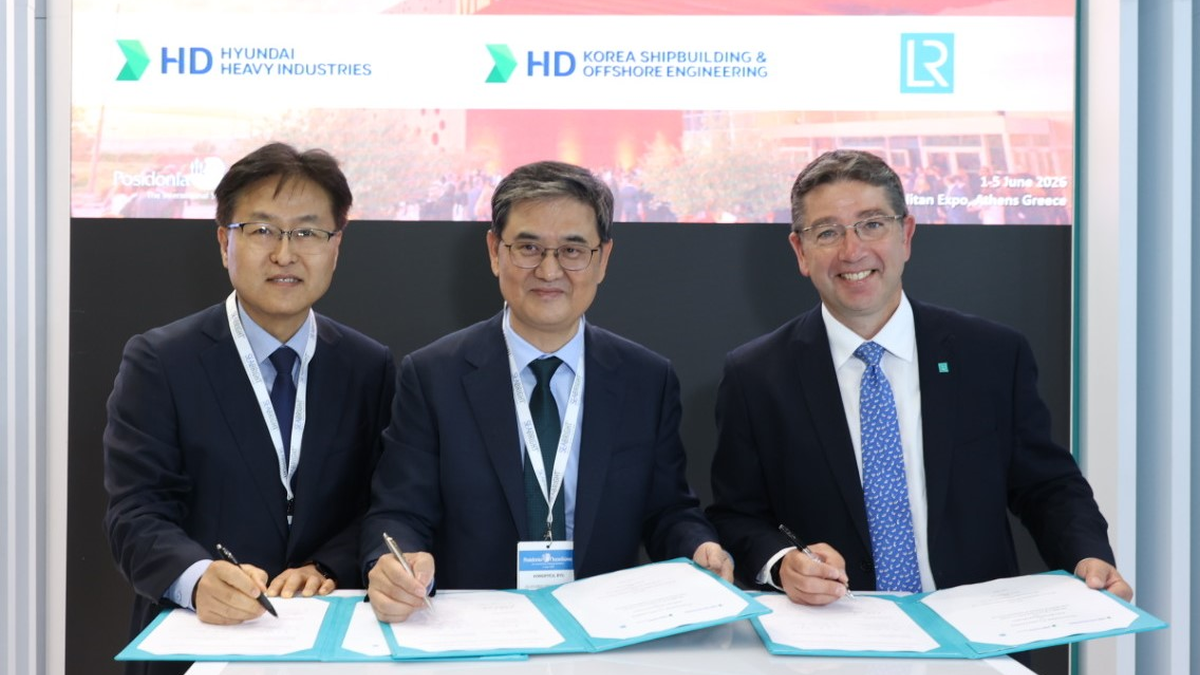
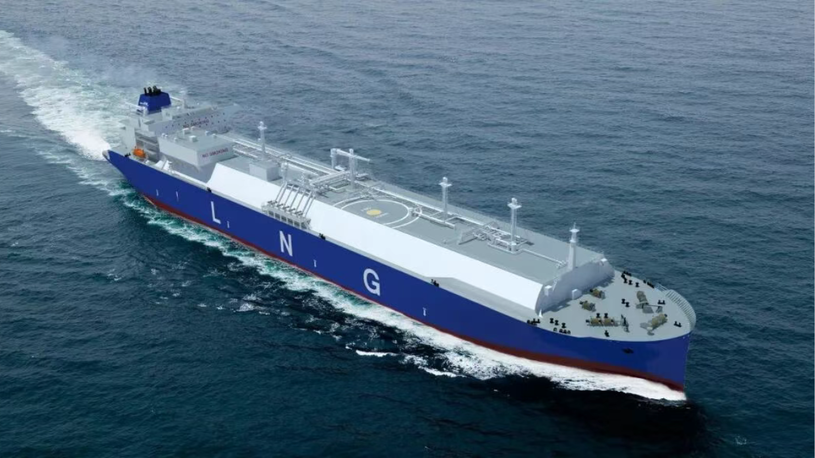
A joint development project (JDP) agreed on 2 June at Posidonia aims to advance the design of a 185,000-m3 LNG carrier powered by a hybrid-electric propulsion system


South Korean shipyards have agreed a deal to work together on a new battery-assisted propulsion system for LNG carriers.
Under the JDP, the partners, which include HD Korea Shipbuilding & Offshore Engineering (KSOE) and HD Hyundai Heavy Industries (HHI) and class society Lloyd’s Register (LR), said they will work on the development and safety verification of the vessel’s hybrid-electric propulsion system, "with a focus on strengthening system architecture, redundancy philosophy and battery integration".
The project also aims to develop guidance and technical requirements for the emerging technology, providing a framework to support wider adoption across the LNG carrier market.
"For LR, early involvement will support the development of technical guidance in an area where formalised standards are still evolving, strengthening its ability to support future projects involving electric propulsion systems and low-carbon vessel concepts," the classification society said.
The partners expect the project to generate insights that extend beyond LNG carriers, informing future developments in electric propulsion, fuel cell integration and other advanced vessel concepts.
In 2024, through a JDP with Wärtsilä, classification society ABS began a collaboration on the design of a hybrid-electric LNG carrier and working with PSA Marine on a hybrid-electric pilot launch boat. Modelling and simulation are key tools used in evaluating energy efficiency for novel energy system design projects, according to the classification societies involved.

Related to this Story

Events

Maritime Regulations Webinar Week
 16 Dec 2025
 GMT - ONLINE
Floating energy: successfully unlocking stranded gas using FLNGs and FSRUs
24 Feb 2026GMT - ONLINE
© 2026 Riviera Maritime Media Ltd.


