


Business Sectors
Events
Floating energy: successfully unlocking stranded gas using FLNGs and FSRUs
 24 Feb 2026
 GMT - ONLINE
Contents
Cruise orders: a ‘remarkable turnaround’
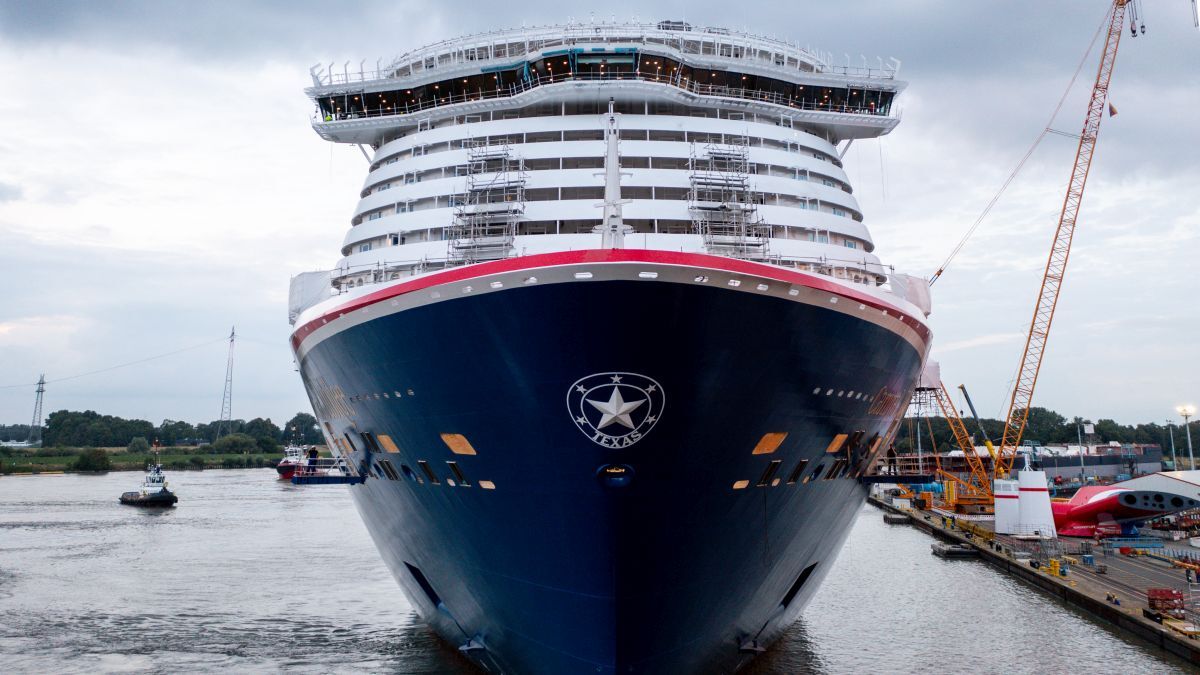
European shipyard dominance and the move towards large cruise liners are major themes in cruise ship newbuilding, says Maritime Strategies International’s Niklas Carlen


After almost halving from 9.5M gt at the end of 2019 to 4.8 M gt at the end of 2023, the cruise ship orderbook closed out 2024 at 6.6 M gt, or 67 vessels.
Twenty-five cruise ship orders were placed in 2024, slightly lower than MSI had previously anticipated, as some orders at the LOI stage in Q4 slipped into 2025 before finally being confirmed. Nevertheless, this marks a remarkable turnaround for an industry making up lost ground in the wake of the pandemic.
European shipyards laid claim to the lion’s share of orders placed in 2024, as contracting surged and the focus shifted from smaller luxury and expedition ships towards large cruise liners.
China’s long-anticipated emergence as a builder of cruise ships remains an industry footnote, at least for now. Apart from the series of Infinity-class expedition ships built by CMHI for Sunstone (of which one remains under construction), the only other meaningful venture into the realm of cruise shipbuilding has been that of Shanghai Waigaoqiao (SWS) in partnership with Fincantieri. SWS delivered its first vessel in 2023, based on Fincantieri’s Vista class, with a second vessel due to be delivered in 2026. However, the surge in demand for merchant ships across almost every sector has seen Chinese yards fill their orderbooks for the next 3+ years, temporarily limiting the capacity required to venture further into cruise shipbuilding.
One of the orders that failed to make it across the line in 2024 was Norwegian Cruise Line’s order for four methanol-fuelled cruise ships, each with a nominal capacity of 5,100 lower berths. However, these orders were subsequently confirmed in Q1 2025 with delivery of the first vessel scheduled in 2030 and the last due in 2036. Interestingly, long delivery dates have become a feature of the cruise newbuilding market during 2024-25, with Carnival, Disney, Crystal and Viking all placing orders for vessels with delivery dates stretching into the next decade.
This is symptomatic of the fact that, for the time being at least, European shipbuilders remain the only viable option for cruise lines seeking to build large cruise ships. With those shipbuilders almost exclusively focused on the cruise sector, it has been important for the cruise industry to protect those yards by effectively guaranteeing a future pipeline of vessels for construction.
The chart on this page illustrates the historical deliveries (2016-24) and forward delivery schedule to 2036 for the four major European cruise shipbuilders – Fincantieri, Chantiers de l’Atlantique, Meyer Werft and Meyer Turku. It should be noted, Meyer Werft’s delivery schedule for 2025 includes Disney Adventure, originally ordered by Genting Hong Kong at Genting-controlled MV Werften but subsequently sold unfinished to Disney in 2022 following the bankruptcy of Genting Hong Kong and MV Werften. The vessel is currently being completed by Meyer Werft at MV Werften’s Wismar facility, after which, the Wismar yard will be repositioned away from cruise to focus on naval vessels under new owners Thyssen Krupp.
As the chart illustrates, the combined large cruise ship capacity of the four European shipbuilders is to deliver around 10 ships per year. Although there appear to be gaps in the schedule after 2028, MSI expects those slots to be filled in relatively short order on the back of robust growth in passenger volumes. MSI’s forecast calls for global cruise passenger numbers to expand by approximately 5% per annum to 2029.
Gotlandsbolaget orders hydrogen-ready ferry
Austal Australasia has been awarded a contract by Gotlandsbolaget of Sweden to design and construct a 130-m combined cycle, hydrogen-ready vehicle passenger ferry.
Part of Gotlandsbolaget’s Horizon X programme, the high-speed ropax catamaran will be the largest vessel ever constructed by Austal, and will feature a "unique, highly efficient" combined cycle propulsion system that includes both gas and steam turbines – a first for high-speed craft.
With a capacity to transport up to 1,500 passengers, cargo and 400 vehicles, Horizon X multi-fuel catamaran will be designed by Austal with construction at the Austal Philippines shipyard commencing in the first half of 2026, utilising green aluminium produced using energy-efficient processes and technologies that use less carbon, resulting in lower emissions. Construction is scheduled to complete in mid-2028.
Austal chief executive Paddy Gregg says, "Horizon X is an incredibly exciting project that is going to redefine commercial ferry capabilities, with a multi-fuel and hydrogen-capable combined cycle powerplant and a class-leading, efficient hull design. The flexible fuel technology demonstrated in Horizon X is leading the transition to decarbonise commercial ferries, and we’re proud to be at the forefront, partnering with Gotlandsbolaget to deliver this industry-leading new ferry."
Gotlandsbolaget chief executive Håkan Johansson says, “Thanks to the great collaboration between Gotland Tech Development and Austal, we can now move forward in supplementing our existing fleet of larger passenger and cargo vessels with a high-speed, multi-fuel catamaran, which is also hydrogen ready.
“Horizon X is not only designed for speed and efficiency but also for sustainability, as it incorporates cutting-edge green technology, including a hydrogen-ready, highly efficient gas turbine propulsion system. This vessel is a key step in our strategy to achieve climate-neutral operations, utilising lightweight green aluminium and advanced hydrodynamic design to minimise fuel consumption and emissions.”
“Serving the island of Gotland and the Swedish mainland in a climate and environmentally responsible way is at the heart of our mission, and Horizon X represents a significant milestone in that journey," Mr Johansson adds.
Austal and Gotlandsbolaget first announced plans for the development of the 130-m multi-fuel high-speed vehicle passenger ferry design, with the flexibility to be able to operate on a variety of fuel types including hydrogen, in April 2023.
Sign up for Riviera’s series of technical and operational webinars and conferences:
- Register to attend by visiting our events page.
- Watch recordings from all of our webinars in the webinar library.
Related to this Story
Events

Maritime Regulations Webinar Week
16 Dec 2025GMT - ONLINEFloating energy: successfully unlocking stranded gas using FLNGs and FSRUs
24 Feb 2026GMT - ONLINE
© 2024 Riviera Maritime Media Ltd.


