


Business Sectors
Business Sectors
Events
Contents
Register to read more articles.
Developing immersive learning tools to close the competence gap at sea
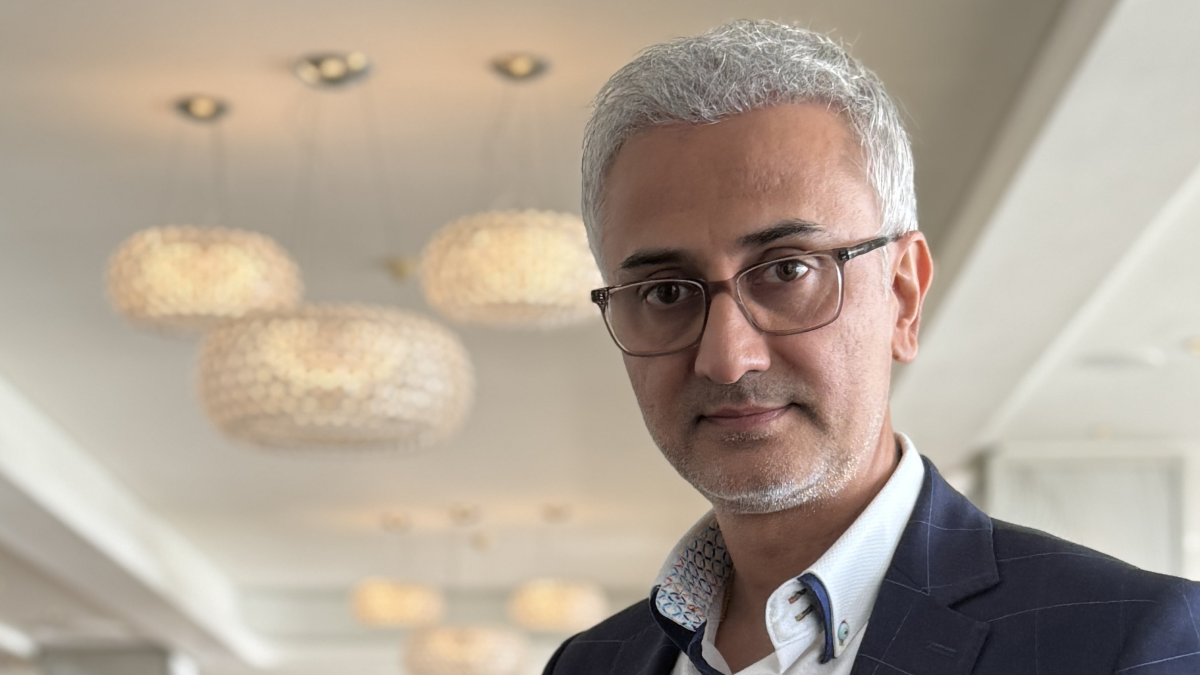
Alternative fuels and new vessel technologies demand new technical expertise and operational excellence from seafarers, requiring new approaches to training, says Mintra senior vice president, Sartaj Gill


Engine technology, bunkering infrastructure and fuel availability dominate discussions around maritime decarbonisation. Yet the defining challenge of the transition is not hardware - it is human capability.
According to DNV, around 33,000 additional seafarers will require alternative-fuel training in the next few years. Longer term, the scale is far greater. It is estimated that by 2030, up to 450,000 seafarers will need additional competence to safely manage emerging fuels and technologies.
“The real risk is not access to new technology,” said Sartaj Gill, senior vice president at Mintra. “The risk lies in whether knowledge translates into safe application onboard.”
Measurable competence
Captain Gill brings more than two decades of ship management and operational experience, combined with over a decade in maritime learning and development. His perspective is clear: the traditional model of digital learning - sit, watch, complete, certify - is no longer sufficient.
“Knowledge acquisition does not automatically equal operational competence,” he explained. “The real question is whether the individual can apply that knowledge under real-world conditions at sea.”
“Knowledge acquisition does not automatically equal operational competence”
This distinction - between learning and competency - sits at the core of Mintra’s strategy.
Through its flagship platform, Trainingportal, Mintra integrates structured learning pathways with competence frameworks, role-based requirements and onboard task verification. Training is mapped to vessel type, rank and operational risk profile.
Crucially, the system allows operators to measure whether learning has translated into verified onboard capability. Assessment data, scenario-based testing, behavioural evaluations, revalidation cycles and competence dashboards provide operators with measurable performance indicators - not just certificates.
“In safety-critical environments, measurement matters,” Capt. Gill said. “What gets measured, gets managed. We help clients move from ‘training delivered’ to ‘competence demonstrated and verified’.”
Technology advances
While alternative fuels and automation demand new technical expertise, operational excellence continues to depend on human behaviour.
“Technology enhances operations, but it does not replace human intuition and accountability,” said Capt. Gill. “Leadership, teamwork, safety culture, behavioural awareness - remain the foundation of operational excellence.”
Mintra therefore embeds human factors alongside technical competencies. Safety leadership, crew resource management, wellbeing and behavioural safety awareness competencies are integrated into structured learning journeys, rather than treated as optional add-ons. The objective is ensuring not just technical proficiency, but behavioural and operational resilience.
Immersive and future-ready learning
To accelerate practical readiness, Mintra is expanding immersive learning formats, including interactive 3D simulation environments that allow seafarers to engage with procedures and equipment virtually before stepping onboard.
Micro-learning modules and AI-enabled advisory tools provide flexible, just-in-time learning. An integrated AI bot assists users with query-based learning, reinforcing continuous development beyond formal courses.
Mintra’s platforms have received DNV SeaSkill certification (ST0029 Maritime Training Providers and ST-0595 Training Platform), reflecting alignment with recognised industry standards.
As alternative fuels and new vessel technologies reshape shipping, competitive advantage will depend not only on advanced assets but on the competence and judgement of those operating them.
“Our mission,” Capt. Gill concluded, “is to ensure that training delivers measurable results onboard - technically and behaviourally - so the industry can transition safely and sustainably.”
Related to this Story
Events

Maritime Regulations Webinar Week
 16 Dec 2025
 GMT - ONLINE
Floating energy: successfully unlocking stranded gas using FLNGs and FSRUs
24 Feb 2026GMT - ONLINE
© 2026 Riviera Maritime Media Ltd.


