


Business Sectors
Business Sectors
Events
Contents

Register to read more articles.
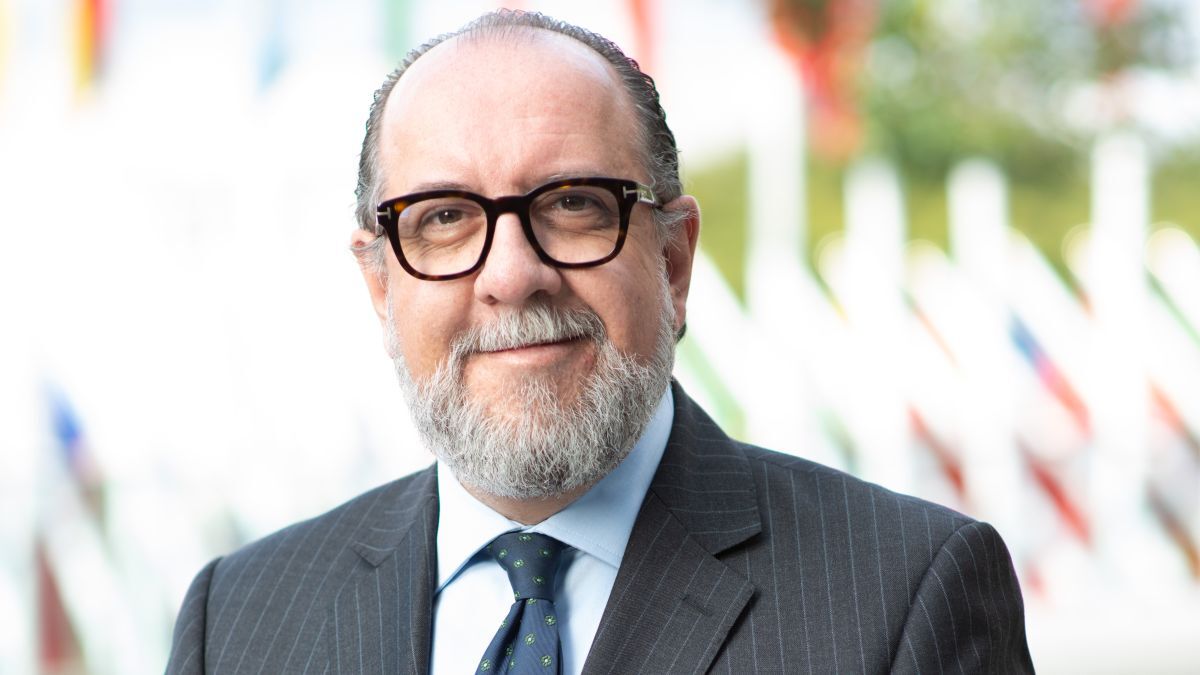
Discussions at IMO were never so political, says IAPH
International Association of Ports and Harbors (IAPH) managing director Dr Patrick Verhoeven spoke to Riviera on the sidelines of SMM 2026 about this week’s talks at the “political as ever” International Maritime Organization (IMO), as regional measures threaten to further complicate the regulatory landscape for the industry


The IMO is holding an intersessional meeting from 1 to 4 September 2026, followed by a second meeting in November ahead of MEPC 85, in an effort to resolve outstanding concerns and build broader convergence around a global measure.
“It would be good if there was some sort of agreement, even if it is not the perfect one, because no agreement means that the door remains open to regional systems,” Dr Verhoeven noted.
“We have the EU Emissions Trading System (ETS), we may have others, and for shipping and, of course, ports this is not a good thing,” he added.
As Dr Verhoeven explained, the ETS creates a distortion for ports, particularly those competing across borders. European ports in the Mediterranean, for example, are covered by the ETS, while neighbouring ports on the other side of the border are not.
If the European Union could signal that shipping would withdraw from the ETS if an agreement were reached on a global measure, that would be “incredibly positive”, he said.
The levy and politics shaping policy
Dr Verhoeven is confident there will be an agreement on the technical side.
But the heated debate centres on the economic element. “I am absolutely not sure what is going to happen,” he acknowledged.
“There is a number of scenarios on the table now, which are all a variety of the original one (the Net-Zero Framework).”
Dr Verhoeven expects an agreement on the economic element, the levy that was on the table last year, will probably take some diluted form.
“It is a pity because especially for ports it would have been very interesting,” he noted.
“What we saw as an interesting element is the money you generate from that instrument would be reinvested in port infrastructure, especially in developing and least developed countries, to help them protect against the effects of climate change,” he added.
How ambitious the final form will be remains unknown.
“But my guess is that the opinion of the countries that were against the original framework probably hasn’t changed that much,” Dr Verhoeven highlighted.
By the end of the week, there will probably be an indication of where each country stands, but there are still several weeks to go before the actual MEPC meeting in November.
“As always, negotiation in IMO is not over until it is over.”
The reality that has emerged over the last year is that the IMO has become increasingly political.
“That is the difference compared to the past. Discussions in IMO were never so political. Politics took over last autumn (IMO’s extraordinary session) and for many it was a bit of a surprise and disappointment,” Dr Verhoeven said.
The IMO started as a technical body, and its strength was that it was not political, Dr Verhoeven noted.
“This has changed now and it’s a reality that we need to live with,” he added.
Uncertainty challenges ports’ decarbonisation
Turning to the port industry specifically and its efforts to decarbonise operations, Dr Verhoeven cited uncertainty as the biggest challenge.
“If the customer does not know how to move next, how can you as a port know?” he asked.
“You need to provide infrastructure, you need to make sure there is a regulatory framework in place, which can only happen through dialogue with clients,” he added.
According to Dr Verhoeven, the challenge is ensuring that investments made by ports will ultimately be used.
As a port, it depends on what your customer is going to do, but especially for bigger ports, you have to provide multiple options to adjust, Dr Verhoeven concluded.
IAPH members collectively handle well over 60% of the world’s seaborne trade and more than 60% of global container traffic.





Related to this Story


Events

Maritime Regulations Webinar Week
 16 Dec 2025
 GMT - ONLINE

Floating energy: successfully unlocking stranded gas using FLNGs and FSRUs
24 Feb 2026GMT - ONLINE
© 2026 Riviera Maritime Media Ltd.


