


Business Sectors
Business Sectors
Events
Contents
Register to read more articles.
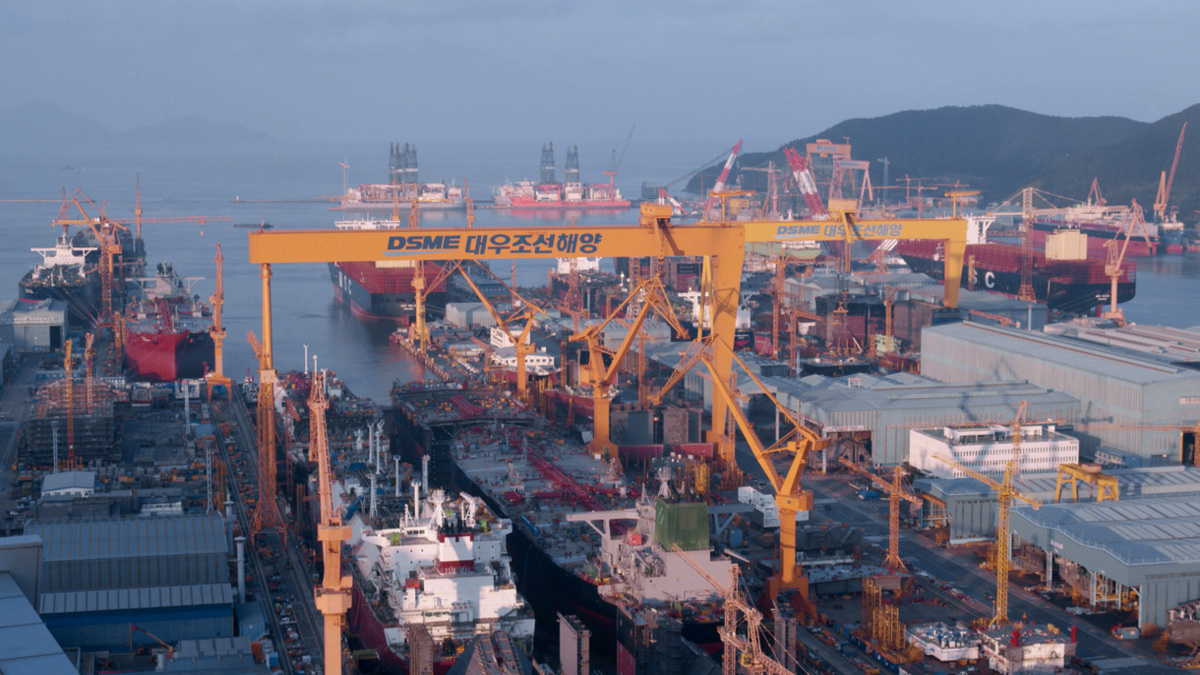
DSME to develop 70,000-m3 LCO2 carrier design
South Korea’s Daewoo Shipbuilding & Marine Engineering (DSME) will partner with ABS to develop designs for a 70,000-m3 very large, liquefied CO2 (LCO2) carrier


The project is responding to developments in carbon capture utilisation and storage (CCUS) technology, which will require larger vessels for CO2 transport than those used in the existing food industry.
While DSME has previously developed a conceptual design of a 100,000-m3 LCO2 carrier, the new design is expected to help increase operational efficiency by increasing tank size. To increase the tank capacity, the project will study the application of various steel materials as well as existing low-temperature steel.
The new vessels will comply with ABS’ Rules for Building and Classing Marine Vessels, the ABS Guide for Liquefied Gas Carriers with Independent Tanks and the IGC Code.
DSME director, head of ship basic design division Nuno Kim said the company aims to maintain its competitiveness in the LNG and LPG segment by developing very large LCO2 carriers adding, “And it will maintain an advanced technology in the market of LCO2 carriers, which is one of the major concerns in the CCUS sector,” said Mr Kim.
“CCUS can play a role in reducing emissions in a range of industries, but the supply chain will need vessels capable of transporting CO2 safely and efficiently. That’s why this JDP with DSME is so important, not just for the maritime industry but for ambitions to reduce the carbon footprint of the entire global economy,” ABS senior vice president, global engineering and technology, Patrick Ryan.
Last week, DSME announced that it has developed a technology to store carbon dioxide captured from ship engine emissions in partnership with South Korean HVAC supplier Hi Air Korea.
Riviera Maritime Media will provide free technical and operational webinars in 2021. Sign up to attend on our events page
Related to this Story
Events

Maritime Regulations Webinar Week
 16 Dec 2025
 GMT - ONLINE
Floating energy: successfully unlocking stranded gas using FLNGs and FSRUs
24 Feb 2026GMT - ONLINE
© 2026 Riviera Maritime Media Ltd.


