


Business Sectors
Business Sectors
Events
Contents
Register to read more articles.
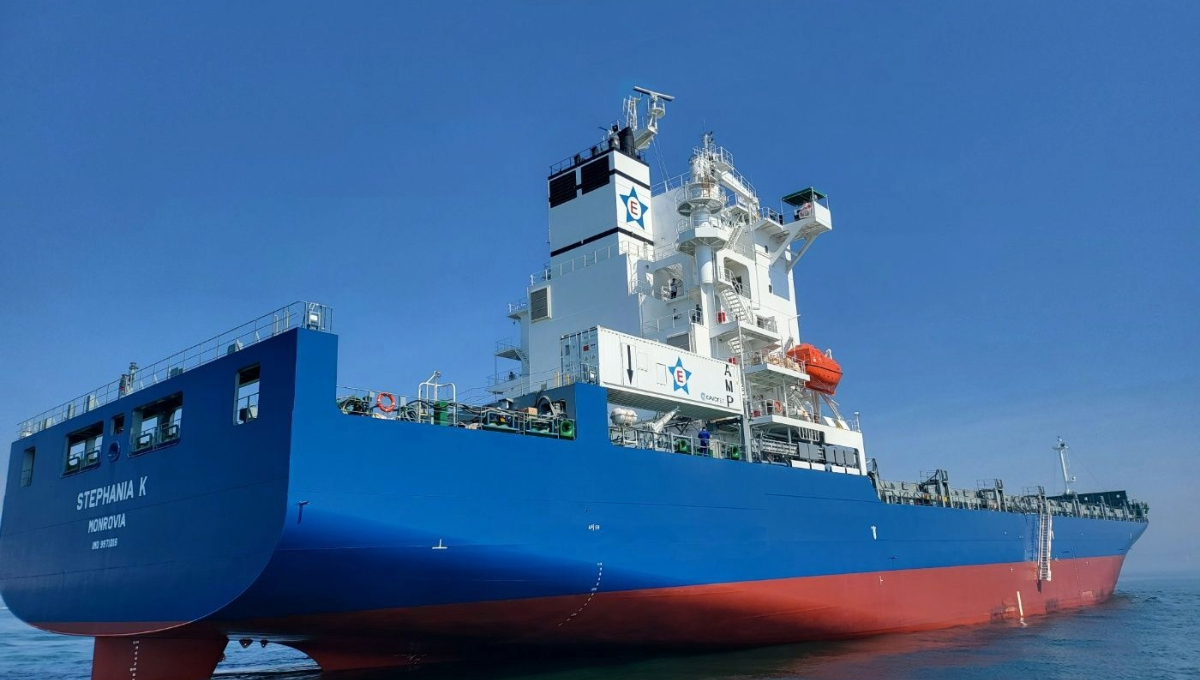
Euroseas' spin-off explores new market opportunities beyond feeders
Aristides Pittas-led Euroholdings, a newly launched entity, is setting its sights on opportunities beyond the traditional feeder container vessel market where its affiliated company, Euroseas, primarily operates


“Euroholdings will explore different opportunities in terms of vessel sizes and types, while Euroseas will maintain its current focus,” Mr Pittas shared during an investor call on 7 January. This statement followed the decision to spin off three ageing vessels from Euroseas’ fleet into Euroholdings, which has applied for a listing on the Nasdaq Capital Market.
The US-listed shipping company emphasised that Euroholdings could act as a consolidator of vessels, capitalising on niche opportunities in a market undergoing transformation driven by decarbonisation and environmental regulations.
Strong charter coverage
The vessels transferred to Euroholdings - Aegean Express, Diamantis P and Joanna - have an average age of 26.4 years and are debt-free, with a combined valuation of approximately US$26.5M, representing about 5% of Euroseas’ net asset value (NAV).
With a shorter remaining economic life and easily quantifiable scrap value, the residual value uncertainty for these vessels is minimised. As a result, the valuation of the company is expected to better reflect its NAV, Euroseas stated.
The three vessels also boast strong charter coverage: 61% for 2025 and approximately 25% for 2026. For example, Aegean Express, Euroseas’ oldest and smallest feeder vessel, has been fixed for 10–12 months at US$16,700 per day, more than double its previous rate of US$8,000 per day as of December 2024. Similarly, Joanna is on charter until October 2026, earning US$16,500 per day.
Post-spin-off, Euroseas will retain a fleet of 22 vessels, including 15 feeder and seven intermediate ships, along with two under construction.
Favourable market fundamentals
Euroseas highlighted promising fundamentals in the container vessel sector, with six- to 12-month time charter rates reaching post-Covid highs in mid-2024 and remaining elevated. The tight capacity, driven by vessel diversions in the Red Sea and strong chartering activity, has been a key driver of these rates.
On the supply side, Euroseas noted the orderbook is heavily concentrated on larger container vessels. In contrast, the feeder and intermediate vessel segments have relatively small orderbooks and an ageing fleet. A significant portion of these vessels are over 20 years old, making them prime candidates for scrapping, especially under the pressure of new environmental regulations.
Sign up for Riviera’s series of technical and operational webinars and conferences:
- Register to attend by visiting our events page.
- Watch recordings from all of our webinars in the webinar library.

Related to this Story
Events

Maritime Regulations Webinar Week
 16 Dec 2025
 GMT - ONLINE
Floating energy: successfully unlocking stranded gas using FLNGs and FSRUs
24 Feb 2026GMT - ONLINE
© 2026 Riviera Maritime Media Ltd.


