


Business Sectors
Business Sectors
Events
Contents
Register to read more articles.
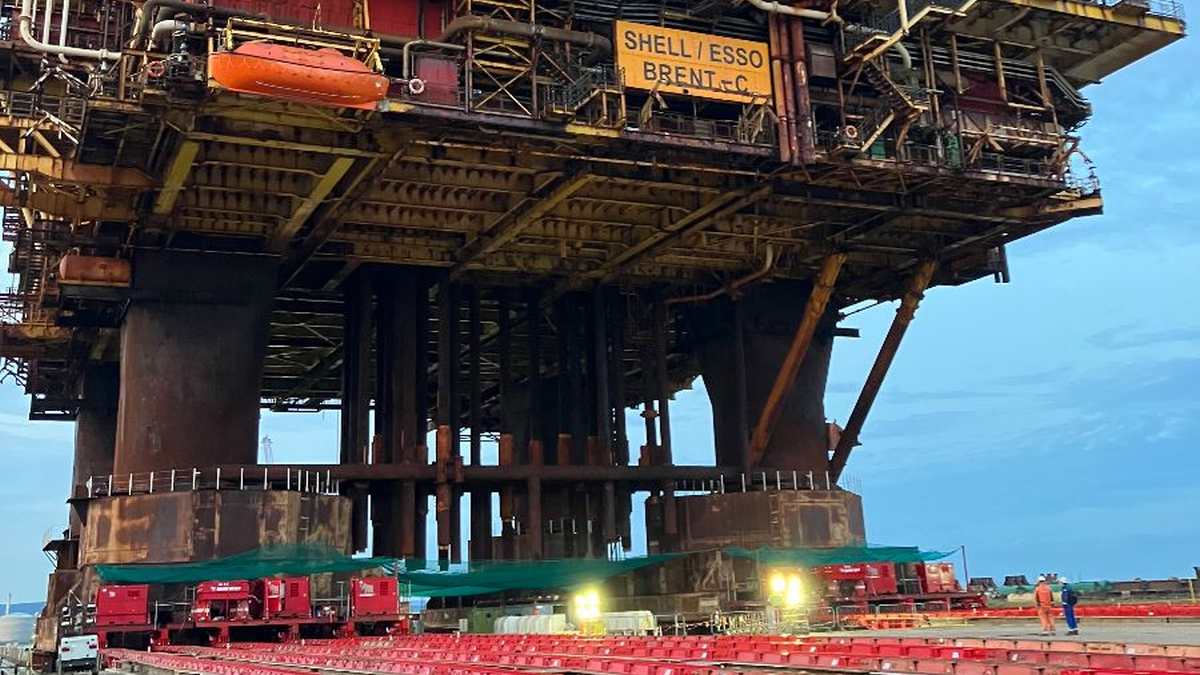
Final Brent topside reaches UK recycling yard
Decommissioning and heavy-lift work on one of the most iconic of offshore oil fields is completed in the UK


All of the topsides from Shell’s giant Brent oil and gas field have been removed through heavy lifting, and the final section has been skidded to the onshore facilities that will recycle this immense structure.
Brent had four oil and gas processing platforms located in the UK sector of the northern North Sea, 186 km northeast of the Shetland Islands.
In October 2024, Charlie, the final topside from these platforms was lifted from a barge to the Able Seaton Port near Hartlepool, UK, for decommissioning. It follows the same route as the other three topsides – Alpha, Bravo and Delta – that have already been through Able Seaton Port for recycling.
Brent Alpha topsides were on top of a steel jacket, while Bravo, Charlie and Delta were attached to gravity-based concrete foundations. Brent Delta ended production in 2011, Alpha and Bravo in 2014, leaving Charlie as the final platform in operation until March 2021.
After production ended, these topsides were lifted off their foundations by a specialised vessel and transported on barges towed by tugs to the decommissioning yard in the UK.
Mammoet performed the decommissioning load-ins from the barges to the shore of all three gravity-based topsides. Brent Charlie was the third - the last and heaviest.
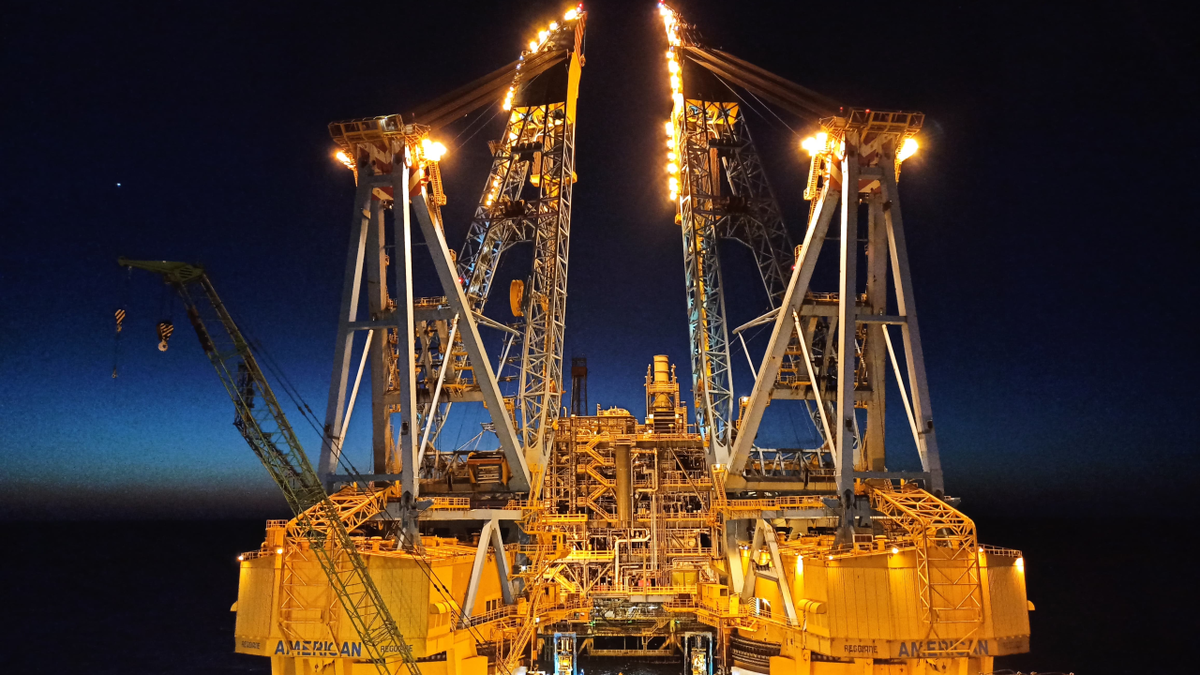
Allseas motion-compensated, heavy-lift vessel Pioneering Spirit removed this 31,000-tonne topside from the foundations in a single lift in July 2024 and transported it to shallow waters, where the topside was transferred onto Iron Lady, Allseas’ cargo barge, which was towed and manoeuvred, then moored at Able Seaton Port.
Mammoet had already fitted Iron Lady with skidding equipment, using 45 lorry loads of material, which would be needed to offload Brent Charlie at the port. The company also provided mooring winches for Iron Lady within specific guidelines provided by Allseas on lengths and drum load capacities.
Once the barge had moored at Able Seaton Port and settled into the seabed, the team could determine the starting height of the skid tracks on the quayside and begin laying them down.
The topside was skidded over 12 skid tracks, which needed to be perfectly aligned with the skid tracks installed on the barge.
The skidding operation was performed in two stages. First, the topside was skidded 5 m to the aft of the barge. Then, after 12 hours to allow for further settling, it was skidded the remaining 130 m onto the quay, to its final position.
A configuration of 76 skid shoes – divided between the four legs of the platform – and 40 push-pull units were used to skid the topside 15 m/hr. The combined pushing capacity was 3,320 tonnes; the total lift capacity was 51,000 tonnes.
Suspended netting was used to collect any falling debris and marine growth that might come away from the structure.
All movements were remotely controlled from a control room to minimise the presence of people underneath the platform and prevent accidents.
One of the biggest challenges in the operation was managing Brent Charlie’s four legs, which meant the structure was less stable and more likely to deflect during skidding.
“When you look at stability, three legs are always stable; four legs are not,” explained Mammoet sales director Richard Verhoeff. “You try to keep a three-point suspension when performing a load-in, and still need to achieve that even with four legs. That is where hydraulic grouping comes in very handy.”
But there can also be some level of deflection between the legs, so the force needs to be able to communicate between the different hydraulic groups. This is why there were hydraulic cylinders under each leg, and why the cylinders between both pairs of two legs had to be connected – to ensure the pressure on each remained the same.
OSJ week 2025: Join the discussion - the Annual Offshore Support Journal Conference, Awards & Exhibition 2025 will be held in London on 4-5 February 2025. OSJ is the world’s largest forum for vessel owners, operators, shipbuilders, charterers and suppliers across the global OSV sector. Use this link to get tickets and join this prestigious event.
Related to this Story



Events

Maritime Regulations Webinar Week
 16 Dec 2025
 GMT - ONLINE
Floating energy: successfully unlocking stranded gas using FLNGs and FSRUs
24 Feb 2026GMT - ONLINE
© 2026 Riviera Maritime Media Ltd.


