


Business Sectors
Business Sectors
Events
Contents
Register to read more articles.
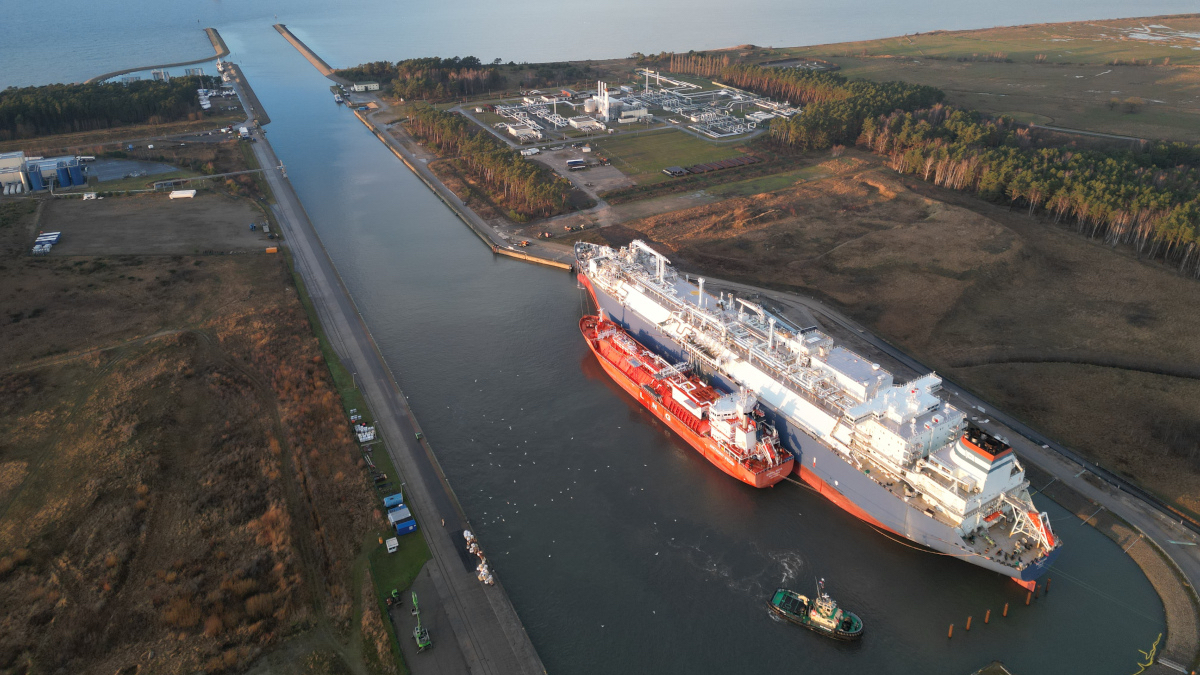
Germany’s first privately financed LNG receiving terminal opens in record time
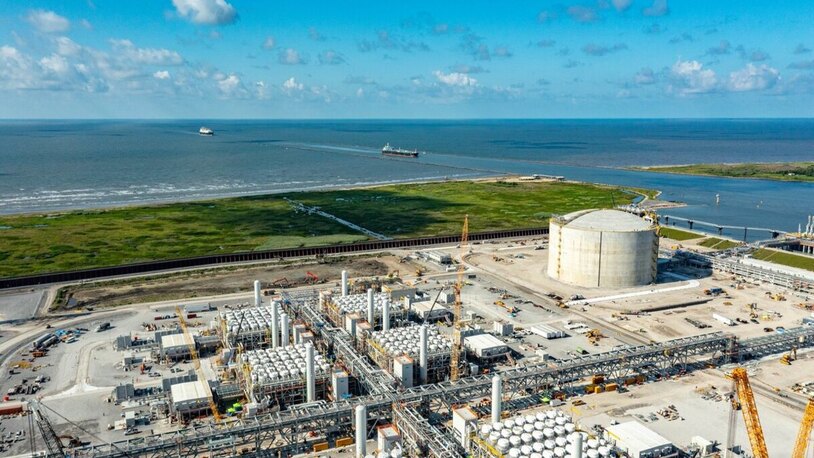
Deutsche ReGas’s LNG Terminal Deutsche Ostsee officially opened at the port of Lubmin, Germany amid much fanfare on 14 January


Among the dignitaries in attendance were German chancellor Olaf Scholz and the Parliamentary State Secretary at the Ministry for Economy and Climate Protection Michael Kellner.
Completely privately financed, the Deutsche Ostsee LNG Terminal was constructed in record time using a floating storage and regasification unit (FSRU) as Europe pivoted quickly to LNG imports to replace Russian pipeline gas supplies. The heart of the new receiving terminal is 145,130-m3 FSRU Neptune chartered from Höegh LNG.
“Today is an important milestone for Deutsche ReGas. Almost half a year after submission of the first application documents and less than four months after the start of the first construction activities in the port of Lubmin, we have all the permits necessary for operation,” said Deutsche Regas managing director Ingo Wagner. “After the final tests, we can immediately go into permanent operation," he said, adding, "Now we can too finally make our important contribution to the supply of eastern Germany with natural gas.”
On 10 January, the LNG terminal began producing the first quantities of gas for transmission into the country’s gas network.In the meantime, Deutsche ReGas has awarded contracts to TotalEnergies SE and MET Group as LNG suppliers for the German Baltic Sea terminal in Lubmin. With that, 80% of the annual capacity tendered in the tendering process for phase I - that is 3.6 of 4.5Bn m³ – has been allocated as long-term capacities. The beyond capacities up to a maximum of 5.2Bn m³ are available as variable capacities at short notice by corresponding bidders.The interest in the Binding Open Season held in Q3 2022 was significantly oversubscribed, ensuring long-term LNG deliveries for the LNG Terminal Deutsche Ostsee.
Deutsche ReGas has inked a charter agreement with Anthony Veder for three small-scale LNG carriers, Coral Fraseri, Coral Favia and Coral Furcata, the last of which brought the first LNG cargo to the terminal on 30 December.
“As integrated shipowner with extensive experience in ship-to-ship operations worldwide, we are looking forward to collaborating with all parties involved to successfully bring LNG via this new distribution route to Germany”, said Anthony Veder chief executive Jan Valkier.
The Dutch gas shipping company has a minor stake in the terminal.
In phase II, starting in December 2023, another FSRU will be installed offshore to increase the regasification capacity at the terminal to 11.5Bn m³ of natural gas per year. By relocating FSRU 1 from the port of Lubmin to an offshore location from mid 2024, the planned regasification capacity will be increased by a further 2.0Bn m³ of natural gas per year. In this state of expansion, the planned regasification capacity of the Deutsche Ostsee LNG terminal from mid 2024 will total up to 13.5Bn m³ of natural gas per year.
Want to learn more about FSRUs? Register for Riviera Maritime Media’s free webinar, How to fast-track FSRUs safely and efficiently on 14 February 2023 as part of LNG Shipping & Terminals Webinar Week.
Related to this Story
Events

Maritime Regulations Webinar Week
 16 Dec 2025
 GMT - ONLINE
Floating energy: successfully unlocking stranded gas using FLNGs and FSRUs
24 Feb 2026GMT - ONLINE
© 2026 Riviera Maritime Media Ltd.


