


Business Sectors
Business Sectors
Events
Contents
Register to read more articles.
Experts warn of compliance gaps in ship wastewater
Experts compared approval-based sewage rules with real-world performance and argued for continuous monitoring, recycled water and evidence-based updates to Marpol Annex IV


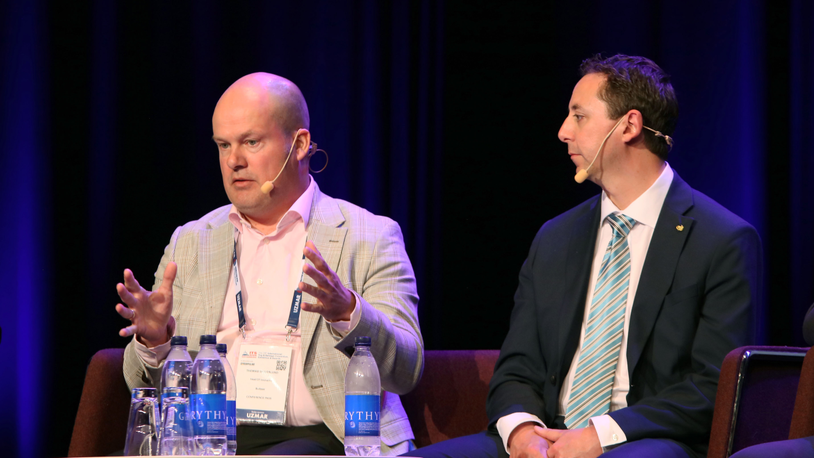
In the Riviera webinar Greywater and blackwater: improving the compliance gap webinar, panellists said the industry’s approval-based approach to sewage treatment had left a wide gap between type-approved performance and what ships actually discharge.
But plans have been developed to mitigate some areas of greywater performance, as Innovation Approach Oz chief executive Kayla Peperkamp outlined.
She noted an Australian circular water pilot designed to replace portside potable supply with recycled water for toilets, heating, ventilation and air conditioning (HVAC) and firefighting.
She said the scheme, developed with Department of Energy, Environment and Climate Action in Victoria, Australia, the environmental regulator and other partners, was projected to “save us 1.2Bn litres of portable water for Australia, which is very high”.
Marinfloc Service & Support managing director Ola Larsson focused on the “compliance gap” between type-approval and in-service operation.
Current rules allowed a unit to be approved once under laboratory conditions, then installed with no requirement for follow-up performance checks.
“We need to move from approved once to monitor continuously,” he said, arguing for practical onboard measurements, turbidity meters and better crew training, supported by digital tools that aggregate data for crews, offices and manufacturers.
CSignum chief operating officer Graeme Boyce said manual, intermittent monitoring of black and grey water left ports and authorities reacting after the fact.
He described wireless, low-frequency electromagnetic communications linking submerged, cabled or battery-powered sensors to topside gateways and cloud platforms.
“The technology to create a smart port system and to create a more compliant port and harbour system is available in the market right now,” he said.
EN Decision Ltd consultant owner/director Dr Wei Chen contrasted land-based “evidence-based regulations”, built around routine sampling, enforcement and iterative standard-setting, with the maritime sector’s “approval-based regulation”, where type-approval and paperwork often stopped short of discharge verification.
He noted IMO discussions citing sewage treatment plant non-compliance rates of around 97%, and warned that some type-approved units lacked the basic treatment principles needed to perform.
A poll asked about the biggest challenge when treating sewage on board to which 50% of respondents selected “systems are not continuously monitored, so we do not receive immediate feedback on our actions”, ahead of 30% who cited insufficient treatment systems and 20% who pointed to outdated regulations.
Three-quarters of voters believed their existing plants could be improved by introducing a sewage management plan and record book.
In their closing remarks, panellists converged on the need for continuous monitoring, independent auditing tools, structured crew training and active engagement with the ongoing Annex IV revision.
“Technologies are regulation driven,” Dr Chen concluded. “We do need good regulation,” he said, urging industry to help regulators design practicable rules that close the compliance gap rather than widen it.
Sign up for Riviera’s series of technical and operational webinars and conferences:
- Register to attend by visiting our events page.
- Watch recordings from all of our webinars in the webinar library.
Related to this Story

Events

Maritime Regulations Webinar Week
 16 Dec 2025
 GMT - ONLINE
Floating energy: successfully unlocking stranded gas using FLNGs and FSRUs
24 Feb 2026GMT - ONLINE
© 2026 Riviera Maritime Media Ltd.


