


Business Sectors
Events

Floating energy: successfully unlocking stranded gas using FLNGs and FSRUs
 24 Feb 2026
 GMT - ONLINE
Contents

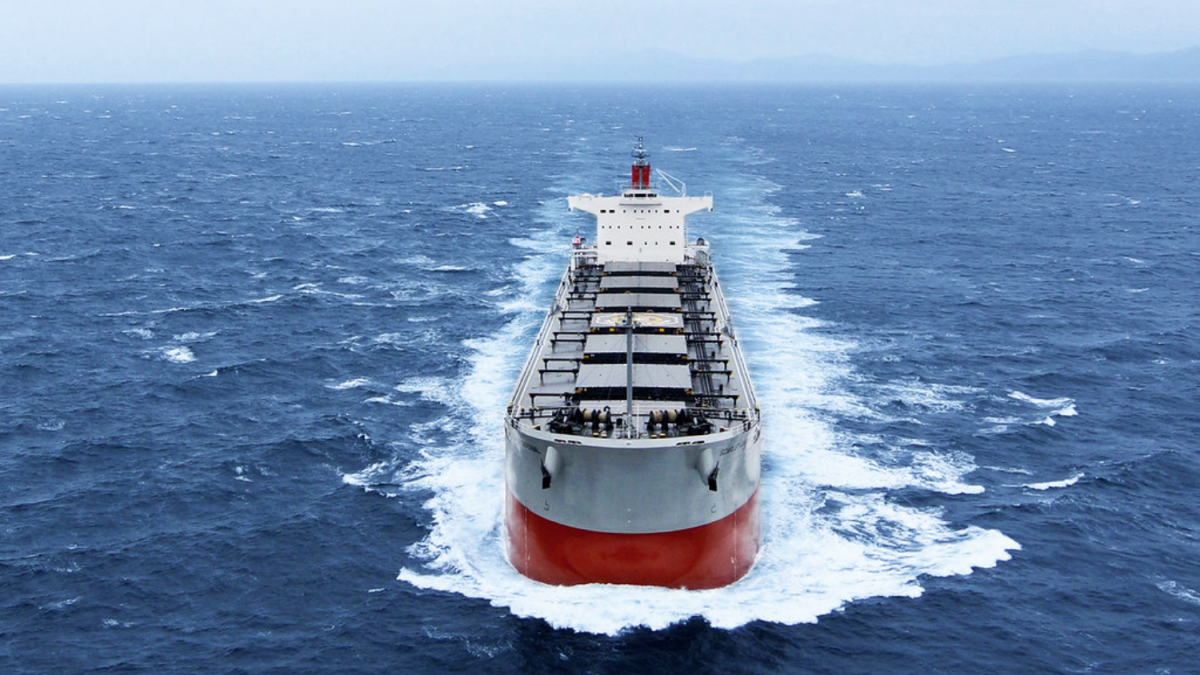
Rising compliance costs create rough seas for bulk carrier owners
Research suggests the cumulative costs of complying with the IMO GFI scheme will substantially exceed the original newbuilding cost of a ship over its lifetime


Operating on traditional marine fossil fuels, bulk owners will be saddled with exorbitant carbon reduction fees to comply with increasingly stringent environmental regulations over the next two decades, according to a recent technical paper.
Escalating compliance costs under IMO’s greenhouse gas fuel intensity (GFI) scheme for bulk carrier owners “will substantially exceed” the original newbuilding cost of the ship, according to research by authors, Wenyu Xu of COSCO Shipping Heavy Industry and Nan Wang of Nantong Cosco KHI Ship Engineering.
Collected in the latest ClassNK Technical Journal, the research estimates that combined Tier-1and Tier-2 deficit costs under GFI for a bulk carrier operating on low sulphur heavy fuel oil will balloon from about US$2M in 2032 to more than US$6M by the end of its life in 2040. “The combined Tier-1 and Tier-2 deficit costs during [the] 2028-2040 period will substantially exceed the vessel’s original newbuilding price,” said the authors.
“Deficit costs under GFI for a bulk carrier … will balloon”
The paper, Research on Carbon Reduction Strategies for Operating Small- and Medium-Sized Bulk Carriers, takes a hard look at how bulk carrier owners can tackle their decarbonisation conundrum. To achieve a commercially viable strategy, the authors suggest a phased approach using a combination of operational improvements, investments in energy-saving technologies (ESTs), and even the use of carbon capture and biofuel blends.
GFI is part of IMO’s Net-Zero Framework, which has not yet been adopted. But bulk carriers must comply with IMO’s existing Carbon Intensity Indicator (CII), which requires increasingly more stringent carbon reductions over a vessel’s lifetime.
Dependent almost exclusively on fossil fuels, more than 1,000 bulk carriers, about 40% of the global fleet, could face subpar CII ratings in 2026. Loaded with everything from coal to fertiliser to wheat, bulk carriers transport large quantities of agricultural products and raw materials to keep the world fed and industry humming. But unlike container ships that operate on regular routes, bulk carriers tramp, with no fixed schedules or ports of call. This limits their choices to adopt low- and zero-carbon fuels; about 99% of the global fleet of small- and medium-sized bulk carriers rely on conventional marine bunkers.
Using a 10-year-old Kamsarmax bulk carrier with a CII rating of C as the basis of their research, the authors suggested a staged, progressive retrofit pathway would be required to maintain that rating over the ship’s life. The authors made several assumptions regarding the cost of fuel, reduction fees, and energy savings from ESTs to create their model.
Among the key takeaways are that to achieve a CII rating of C throughout the ship’s 25-year lifecycle, the bulk carrier must progressively reduce its fuel consumption: 10% by 2030, 30% by 2035 and 50% by 2040.
Some of the more effective ESTs with short payback periods are silicone-based low-friction coatings and propeller retrofits, which can deliver a combined fuel saving of about 11%. Early investment in these ESTs delays more costly capital investments. In the later stages of the ship’s lifecycle, investments in carbon capture technology (30% capture rate) and biofuel blends are cited as the “most economically beneficial option” to meet both CII and GFI requirements.

Related to this Story



Events

Maritime Regulations Webinar Week
16 Dec 2025GMT - ONLINEFloating energy: successfully unlocking stranded gas using FLNGs and FSRUs
24 Feb 2026GMT - ONLINE
© 2024 Riviera Maritime Media Ltd.


