


Business Sectors
Events
Contents
Register to read more articles.
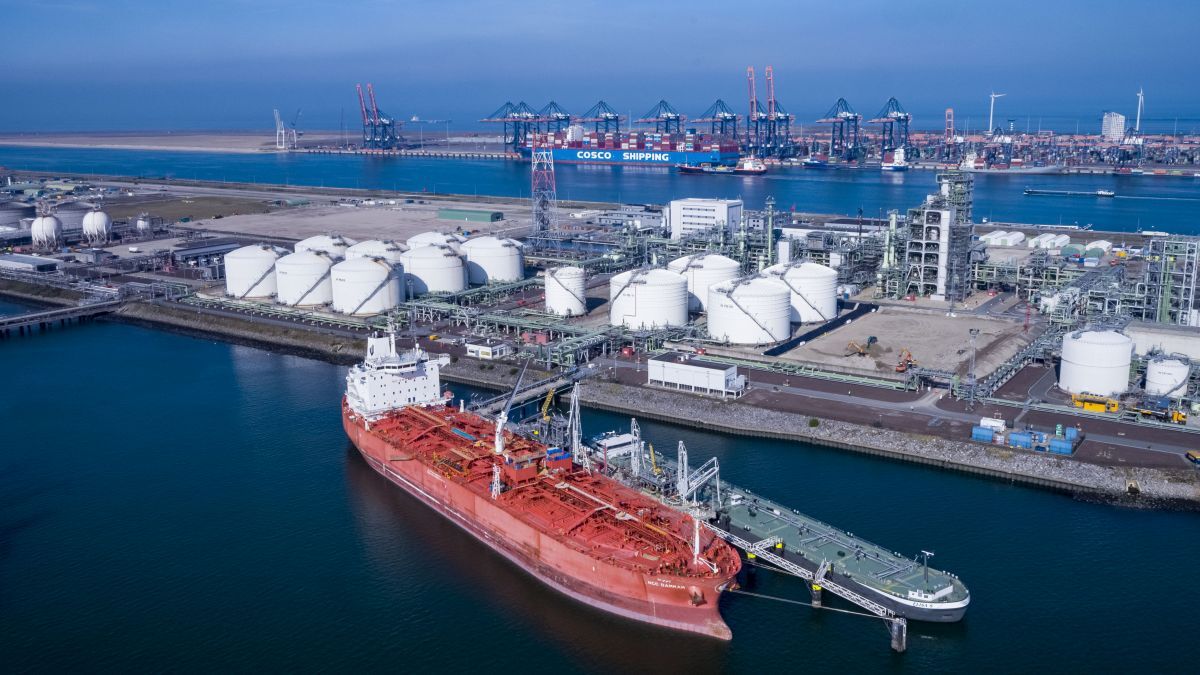
How a refiner uses shipping to achieve its sustainability goals
Neste, an independent refinery, uses time-chartered vessels and low-emissions marine fuels to support its ambitious decarbonisation and sustainability goals


As the shipping industry grapples with the increasing demands of climate regulations, independent refineries are playing a pivotal role in reshaping global energy logistics.
Neste, a leader in renewable fuels production, stands at the intersection of maritime transport and environmental sustainability. Although the company does not own vessels, it uses time-chartered shipping to transport its renewable diesel and other products, which is central to its decarbonisation strategy.
Neste’s involvement in shipping stems from its production of renewable fuels, including sustainable aviation fuel and renewable diesel.
However, ship ownership is not a priority for the company. “Ship ownership is not our core business,” Neste explained, “but we time charter vessels and are a customer of shipping companies.”
This practical approach allows the company to focus on refining renewable products while leaving the transport side to high-quality shipowners.
Time-chartered vessels are an integral part of Neste’s logistics chain, moving renewable fuels across markets and ensuring a steady supply to meet global demand.
Shipping activities, though indirectly managed, form a key part of Neste’s environmental compliance efforts, particularly in relation to European Union regulations.
While Neste is not directly obligated under the FuelEU Maritime regulation, its refineries in Porvoo, Finland, and Rotterdam, Netherlands, fully adhere to the EU’s Emissions Trading System (EU ETS).
“Neste works with high-quality shipowners and ship managers to comply with the EU ETS and EU Maritime legislation to the best of our ability,” the company reports in its 2023 annual review.
Neste’s wider decarbonisation goals go far beyond compliance. The company has set an ambitious target to reduce its production emissions by 50% by 2030, with the ultimate aim of reaching carbon-neutral production by 2035. These commitments are part of a broader roadmap that encompasses more than 100 identified measures to lower greenhouse gas emissions.
Key actions include increasing the share of renewable electricity in production, electrifying operations and improving energy efficiency. Central to this effort is the development of renewable hydrogen, which addresses one of the main sources of emissions in the refining process.
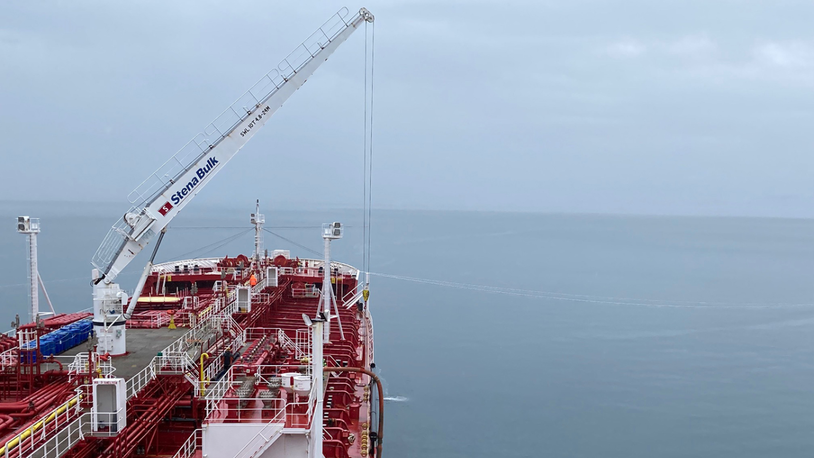
Time-chartered shipping plays a vital role in Neste’s ability to support these decarbonisation goals and in May 2023, Neste began fuelling two of its time-chartered tankers transporting renewable diesel from Finland to Sweden with low-emissions marine fuel, including its own coprocessed products.
“Neste Marine 0.1 coprocessed fuel supports International Maritime Organization’s ambitious targets for the maritime sector to reduce its emissions to combat climate change,” the company explained.
This move demonstrates Neste’s efforts to reduce the environmental footprint of its shipping activities in line with its production objectives. The focus on low-emissions shipping is just one aspect of Neste’s larger investment in sustainability across its refining operations.
The company has embarked on a long-term transformation of its Porvoo refinery, aiming to make it a 100% renewable and circular solutions hub by the mid-2030s. The plan, set to unfold in phases, is designed to cut emissions not just in production, but across the full lifecycle of its products, including transport.
Neste’s Rotterdam refinery is also undergoing expansion, with a completion date of 2026. Once completed, the Rotterdam refinery will add 1.3M tonnes of renewable fuel capacity annually, bringing Neste’s total nameplate capacity to 6.8M tonnes by 2026.
Find out more about tanker shipping’s contribution to sustainability at the Tanker Shipping & Trade Conference, Awards & Exhibition 2024. Register you interest here.
Related to this Story

Events

Maritime Regulations Webinar Week
 16 Dec 2025
 GMT - ONLINE
Floating energy: successfully unlocking stranded gas using FLNGs and FSRUs
24 Feb 2026GMT - ONLINE
© 2024 Riviera Maritime Media Ltd.


