


Business Sectors
Business Sectors
Events
Contents

Register to read more articles.
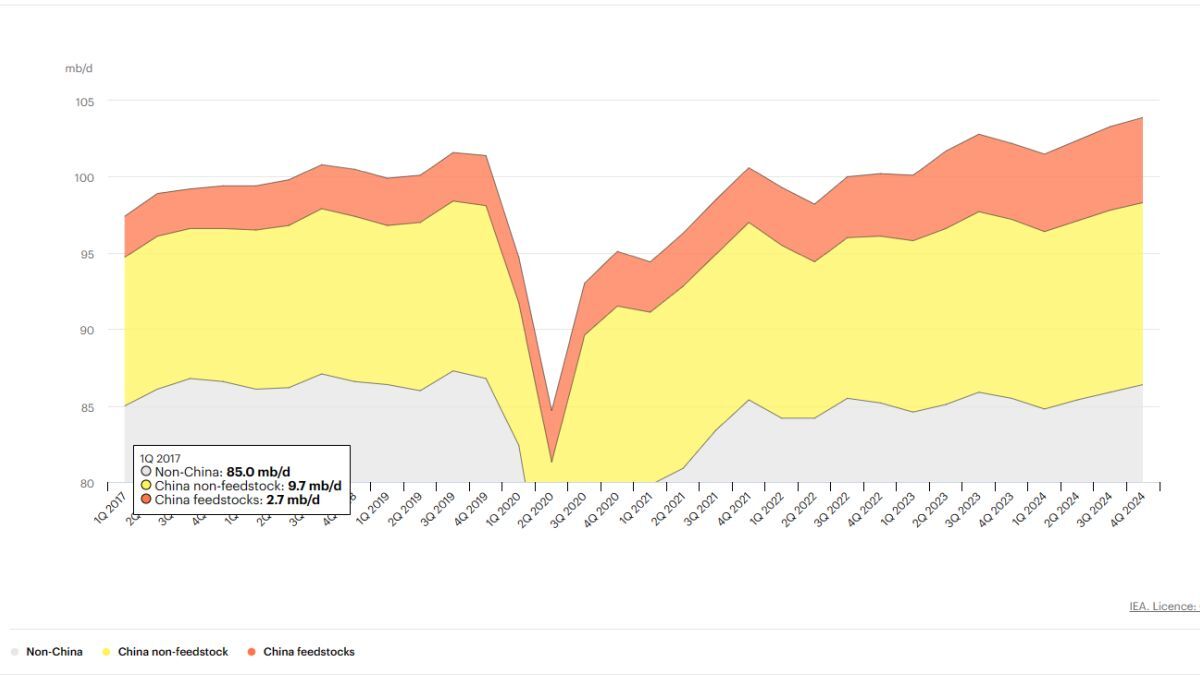
How China’s petrochemical sector is driving LPG demand
Between 2019 and 2024, China is set to add as much production capacity for ethylene and propylene – the two most important petrochemical building blocks – as presently exists in Europe, Japan and South Korea combined, noted IEA oil market analyst Ciarán Healy in a new paper


China’s expanding petrochemical sector is changing the demand for oil-derived feedstocks, causing a shift in suppliers. China, known as the largest importer of polymers and synthetic fibres, accounted for roughly 3% of global oil consumption in 2019 and 2020. With increased production in China, traditional suppliers in the Middle East and Asia have seen a decline in petrochemical activity and oil demand. Shipments of petrochemical products from these regions dropped by almost 30% in the first nine months of 2023 compared with the same period in 2019.
To meet the growing demand, noted Mr Healy, US producers have significantly increased exports of petrochemical feedstocks, intermediates and polymers. This includes shipments to China and Europe from the expanded American steam cracker fleet, which has disrupted global markets. The abundance of ethane and propane in the US has allowed for strong processing margins and supported the rise in exports.
China has become a major importer of US ethane and propane, accounting for nearly three-quarters of the nation’s imports of these products and contributing to over one-third of China’s increased feedstock demand since 2019. Similarly, US exporters have become increasingly reliant on China’s appetite for ethane and propane, with over three-quarters of the increase in shipments going to China.
Mr Healy noted this mutually beneficial relationship between China, the largest driver of demand growth, and the United States, the largest source of supply growth, has allowed both countries’ petrochemical sectors to thrive in unprecedented ways.
This has been enormously beneficial to the shipping sector. Speaking at his company’s Capital Link presentation and webinar, Dorian LPG chief financial officer Ted Young highlighted China’s influence.
New York Stock Exchange-listed Dorian LPG operates 25 very large gas carriers (VLGCs)and operates the Singapore-based Helios LPG pool in a joint venture with partner MOL Energia. While a significant portion of seaborne LPG goes into the heating and cooking sectors, the petrochemical sector is the other large market for LPG.
And this is where the huge growth in petrochemical plants in China has such a significant impact on the shipborne LPG. The LPG, specifically propane, is use to produce propylene, one of the key building blocks in the plastic value chain.
This has produced a fundamental change in the LPG shipping sector. “In 2013, the United States exported about 4.5M tonnes of LPG and imported about the same amount,” he said, “For the coming year (2024), we expect the United States to export somewhere between 55-60M tonnes of LPG.”
This growth in exports is supported by the way LPG is priced on the global market. Saudi Arabia is a major exporter of LPG and sets the price of LPG through its Contract Price (CP) mechanism, which sets the tone for Middle East export prices.
In the USA, the LPG price is set daily by traders. “Historically, the Saudi CP has been consistently several US$100 per tonne more expensive than the comparable US price,” said Mr Young, “The product’s the same: virtually no difference in chemical composition”
The result is a healthy arbitrage between the Middle East CP price and the US LPG price, and an increase in demand for VLGCs to move volumes of US product to China, as noted by IEA oil market analyst Ciarán Healy.
Riviera Maritime Media’s International Chemical and Product Tanker Conference will be held in London, 23 April 2024, click here to register your interest in this industry-leading event



Related to this Story


Events
Maritime Regulations Webinar Week
 16 Dec 2025
 GMT - ONLINE
Floating energy: successfully unlocking stranded gas using FLNGs and FSRUs
24 Feb 2026GMT - ONLINE
© 2026 Riviera Maritime Media Ltd.


