


Business Sectors
Business Sectors
Events
Contents
Register to read more articles.
How electrification is redefining passenger vessel propulsion
Electrification is no longer an emerging concept in passenger shipping but a working reality that is reshaping propulsion decisions across ferries, water taxis and nearshore vessels


In the ferry sector, electrification has moved decisively beyond pilot projects and into fleetwide implementation. The reason why is straightforward. Ferries operate on predictable routes with fixed distances and regular port calls, allowing operators to accurately model energy demand and align it with battery capacity and charging infrastructure. This predictability removes one of the greatest uncertainties in marine propulsion and makes fully electric operation not only feasible, but increasingly practical.
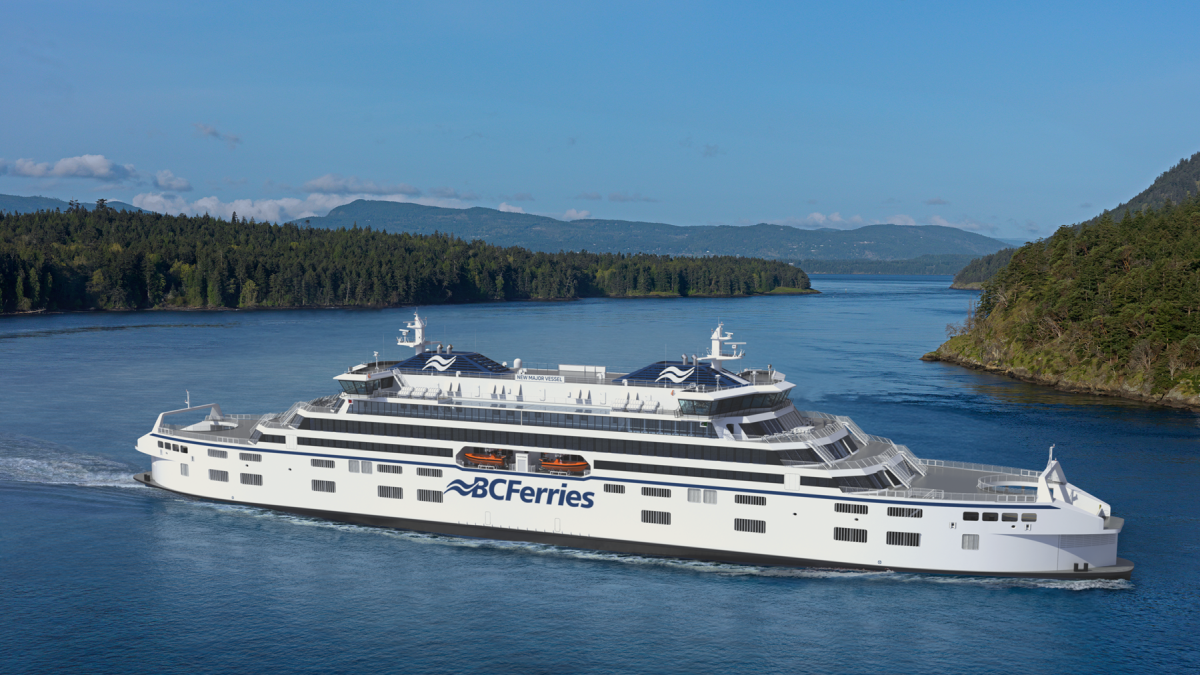
Some owners are now committing significant capital to full‑electric and hybrid‑electric vessels as part of long‑term fleet‑renewal strategies. One of North America’s largest ferry operators, BC Ferries, has deployed multiple battery‑electric hybrid vessels and is designing new tonnage capable of fully electric operation as shore infrastructure expands.
In Europe, Denmark’s Molslinjen is investing in high‑capacity battery‑electric ferries with energy storage systems measured in tens of megawatt‑hours, demonstrating that electrification is no longer limited to small or low‑power applications.
Shipbuilders are responding to this demand with increasingly sophisticated designs. Australia’s Incat has developed some of the largest battery‑electric passenger vessels in operation, pushing the boundaries of speed and capacity. At the same time, system integrators ABB and Wärtsilä are delivering fully integrated electric‑propulsion systems that combine propulsion motors, battery storage, power conversion and automation into a single cohesive architecture.
“Electrification is a key part of our strategy to reduce emissions while maintaining reliable services”
But Norway continues to set the pace for maritime electrification, and few operators illustrate this better than Torghatten, which is quietly building one of the most advanced zero‑emissions ferry portfolios in Europe. The company has moved beyond isolated projects and into full fleet transition, deploying a mix of fully electric and hybrid‑electric vessels across demanding coastal routes. Its fully electric ferry Hinnøy operates on the Bognes–Lødingen route using high‑capacity battery systems supported by a 9.2‑MW shore charging installation, enabling continuous operation at service speeds on exposed one‑hour crossings, entirely emissions‑free. Alongside this, Torghatten is introducing a new generation of battery‑electric vessels such as the Fløytind series, while also deploying hybrid‑electric tonnage like Bjarkøy, which combines battery capacity with diesel backup for redundancy.
“Electrification is a key part of our strategy to reduce emissions while maintaining reliable services for the communities we serve,” said company CEO, Torkild Torkildsen.
This is significant because it comes from a frontline operator responsible for delivering reliable daily transport in some of Europe’s most challenging maritime conditions.
Norway’s significance extends beyond passenger ferries alone. The country is also becoming a testbed for hydrogen‑powered fishing vessels, coastal craft, and workboats, where fuel cells are being paired with battery systems to reduce diesel dependence in sectors that are harder to electrify using batteries alone. This wider ecosystem matters because it accelerates investment in shoreside charging, hydrogen bunkering, safety regulation and power‑management technologies that can also benefit passenger‑vessel operators. In effect, Norway is demonstrating how electrification and alternative zero‑emissions systems can develop in parallel across an entire maritime economy.
The technology enabling this transition is being driven by a relatively small number of system integrators, with ABB playing a central role in large‑scale hybrid and fully electric passenger‑vessel programmes. ABB’s DC grid and integrated propulsion platforms are now being used on multiple hybrid and electric ferries, enabling efficient power distribution between batteries, propulsion motors and onboard systems. These architectures allow operators to transition gradually from conventional diesel to hybrid and ultimately to fully electric operation as infrastructure and vessel design evolve.
“Hybrid and fully electric solutions are essential for reducing emissions and enabling more sustainable operations in the marine industry,” said Juha Koskela, division president, ABB Marine & Ports.
The systems integrator is supplying integrated power, propulsion, and control solutions for BC Ferries’ four new hybrid-electric New Major-class vessels. Scheduled for delivery beginning in 2029 from China Merchants Industry Weihai (CMI Weihai) Shipyard, each of the 360-vehicle, 2,100-passenger ferries will be equipped to accommodate up to 70 MWh of battery energy storage.
When the contract was announced in January, BC Ferries president and CEO, Nicolas Jimenez, said he saw electrification as the direction of travel for his company. “With diesel-battery-hybrid technology that can operate on bio and renewable diesel today and transition to full electrification as infrastructure evolves, these ships are a critical part of building a cleaner, quieter, and more reliable ferry system for the future," said Mr Jimenez.
Electrification is not achieved by simply installing batteries in place of fuel tanks; it requires a complete rethinking of the vessel’s energy system. Modern electric passenger vessels are built around distributed electrical networks, where power flows between batteries, propulsion motors and onboard systems in a controlled and optimised manner. Advanced energy‑management systems continuously balance load demand, ensuring that energy is used as efficiently as possible while maintaining redundancy and operational reliability.
Battery technology sits at the centre of this transformation. Marine battery systems have advanced rapidly in recent years, with lithium‑ion installations now reaching capacities that would have been considered impractical a decade ago. Suppliers such as Corvus Energy are delivering high‑capacity energy‑storage systems for large passenger ferries, enabling zero‑emissions operation over defined routes while maintaining the performance characteristics expected by operators and passengers alike.
The benefits of electrification are both immediate and tangible. From an environmental perspective, battery‑electric propulsion eliminates emissions at the point of use, removing nitrogen oxides, sulphur oxides and particulate matter from operations in sensitive coastal and urban areas. This is particularly important for passenger vessels, which often operate close to populated regions.
Maintenance requirements are also reduced. Electric‑propulsion systems have fewer moving parts than conventional engines, resulting in lower wear and tear, reduced maintenance intervals and improved reliability. For operators, this translates directly into lower operating costs and increased vessel availability, strengthening the business case for electrification.
Electric cruise ship concept
Despite these advances, electrification is not a universal solution. The limitations of battery energy density remain a significant constraint, particularly for larger vessels and longer routes. While ferries and nearshore passenger vessels are well suited to fully electric operation, deep‑sea cruise ships face a very different set of challenges.
It is against this backdrop that Meyer Werft has introduced its “Vision” concept – a fully battery‑electric cruise ship that demonstrates how far electrification could ultimately extend. According to the yard, the concept vessel would be 275 m in length, around 82,000 gt and capable of carrying 1,856 passengers.
The battery system, supplied by Corvus Energy, is designed to support a large portion of typical European cruise routes, with Meyer stating that a journey such as Barcelona to Civitavecchia could be completed on battery power alone. Meyer Werft also states that greenhouse‑gas emissions could be reduced by up to 95% compared with conventional cruise ships.
The yard’s published material suggests that around 100 ports across Europe are expected to have suitable high‑capacity charging infrastructure by 2030, and that if ordered this year, the first vessel could be delivered by 2031. For longer voyages, the concept could be delivered as a hybrid, with small generators supplementing the battery system. Architecturally, the concept removes the conventional funnel and exhaust‑gas treatment shaft, freeing up space for additional passenger amenities while significantly reducing onboard noise and vibration.
This is where the next phase of the quiet revolution becomes visible. Batteries alone may not power every vessel type, but electrification as an architecture can integrate multiple energy sources, from batteries and shore power to hydrogen fuel cells and future low‑carbon fuels. In practical terms, even vessels that cannot be fully battery‑electric are increasingly likely to become electrically propelled.
Riviera’s Maritime Hybrid, Electric & Hydrogen Fuel Cells Conference & Exhibition will be held in Bergen, Norway, on 21-23 October 2026. Use this link for more information and to register for the event.

Related to this Story

Events

Maritime Regulations Webinar Week
 16 Dec 2025
 GMT - ONLINE
Floating energy: successfully unlocking stranded gas using FLNGs and FSRUs
24 Feb 2026GMT - ONLINE
© 2026 Riviera Maritime Media Ltd.


