


Business Sectors
Business Sectors
Events
Contents

Register to read more articles.

How vessel owners gain from AI, digitalisation
Digital technologies are increasingly used for monitoring and improving operational and environmental performance of vessels and across fleets


Developments in data harvesting, artificial intelligence (AI), cloud-based storage and vessel communications systems have facilitated the widening use of digital tools to lower fuel consumption and emissions, optimise maintenance and improve profitability in port services.
Some of the current and future benefits of digitalisation and AI were discussed at Riviera’s 28th ITS Convention, in Gothenburg, Sweden, in May 2026.
During the event, owners said they were seeing benefits from using data to improve tugboat performance and change behaviour of tug masters to lower fuel consumption during transits between jobs and in planning vessel deployments.
Kotug International’s Maritime Excellence Centre director, Patrick Everts, said digitalisation is facilitating optimisation of port operations.
“We need to use software to have the right tug with the right pilot in the right location for ship assistance,” he said.
Raising the competence of tug masters and their coordination with pilots will improve efficiency, safety and performance of ship towage and handling.
Digital information from real-life towage projects can be used to develop training simulator models and scenarios for tug masters to practise on.
Training helps owners and operators identify areas of improvement in tugboat and master performance and offers lessons for use in future projects.
“Systems need to be cyber-secure by design”
“For safe and efficient operations, we need to understand what the operations require and have the right assets and people in place,” said Mr Everts.
AI can assist in finding these assets, raising the competence of crews, improving towage operations and reducing operational expenditure and enhancing safety, according to European Tugowners Association chairman and Svitzer Europe managing director, Arjen van Dijk.
He anticipates AI will “create disruption” in the towage industry and reduce costs while helping owners and operators identify opportunities for investments.
“AI will have a role in the future,” said Mr van Dijk. “We need to find ways to invest in AI to improve operations and manage costs. We need to accelerate technology development and deployment.”
Seaspan Marine Transportation president, Captain Jordan Pechie, agreed that AI has great potential to enhance operations and the performance of tugboats. “AI is an unlimited resource that needs to be used to improve operations. It is evolving fast. We need to keep up with the pace,” he said.
Harbor Star Shipping Services president and chief executive, Geronimo Bella, has seen improved operational efficiency and greater abilities to adapt to varying performance requirements in different ports and terminals. He anticipates digital tools will help reduce maintenance costs and raise efficiency of tugboats further.
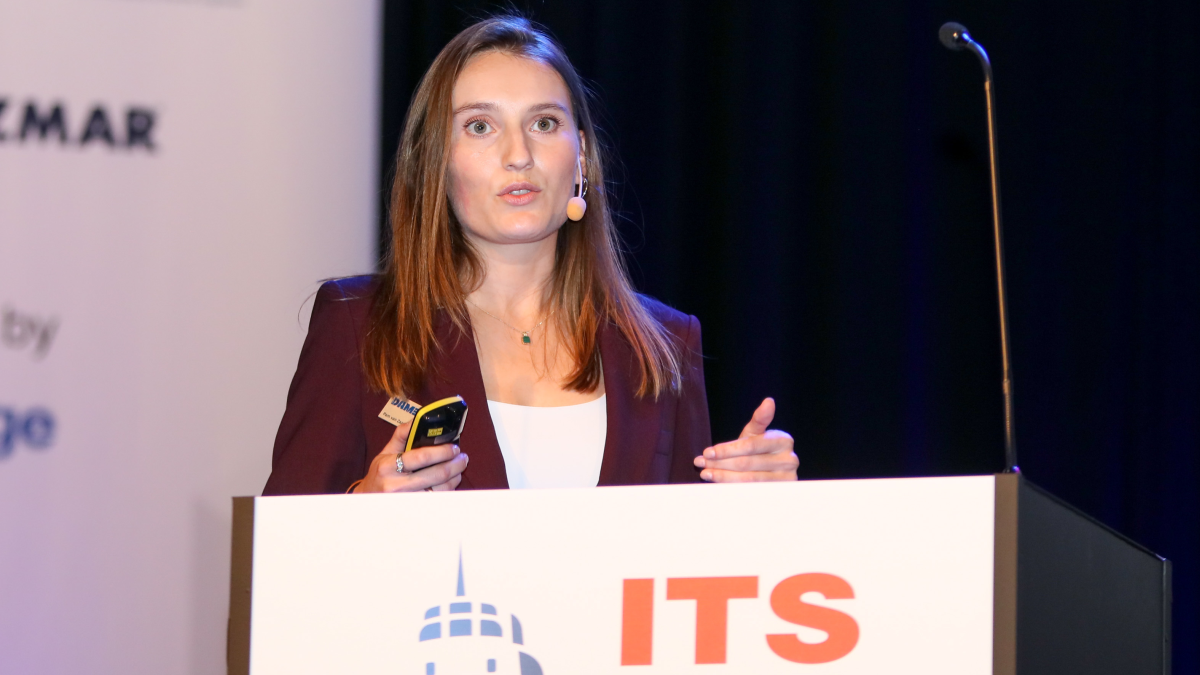
Damen Shipyards team leader for digital integration, Pam van Zaanen, listed some of the key benefits from digitalisation as gaining insights from data analytics, optimising operations, predictive maintenance, route planning and enhanced safety.
However, with benefits come challenges when deploying digitalisation, she warned.
“As automation and digital integration advance, the complexity of vessel systems increases, bringing new challenges in cybersecurity, regulatory compliance, and operational reliability,” said Ms van Zaanen.
“The proliferation of onboard software and data traffic requires new integration and maintenance strategies to ensure safe, secure and reliable vessel operations,” she added.
Other challenges in implementing digitalisation include hidden digital dependencies, connectivity limitations and differing data communications protocols.
“We need to manage the interconnections and the communications, and make sure we know the configurations and the compatibility of various systems,” Ms van Zaanen said.
“Systems need to be cyber-secure by design and compatible and talking with each other,” she added.
Cyber vulnerabilities stem from increased automation, navigation and power-management systems connected to online threats through satellite communications, cloud connections, and service engineers using memory sticks for software and firmware updates.
Some of the key digitalisation benefits come from analysing vessel data onshore to gain insights into fuel consumption, emissions and different operational modes.
Cetasol chief executive and founder, Ethan Faghani, described how analysis of engine data can help vessel owners reduce fuel consumption and the resulting emissions by as much as 25%.
Fuel costs make up a significant portion of a tug’s operating expenses. But data collected and analysed from virtual mass-flow meters and engine sensors can provide actionable insights to masters and onshore teams to cut fuel consumption and reduce greenhouse gas emissions, he said.
Cetasol also uses digital twins of vessels to help predict how onboard machinery and captains will behave over a set period of time. “Then, we provide an agentic-AI to tell the captain the best course of action to take,” he said.
Fuel consumption is calculated from the temperature, pressure and rpm of the engines. This information is displayed on the bridge and in fleet management offices on shore.
The introduction of AI assistants for fleet managers, captains, chief engineers, and shipping company board members is rapidly changing the technology landscape in the maritime, offshore, and ports sectors, said Mr Faghani.
“The whole world has changed in 2026. If you look at the technologies now compared to six months ago, it is a revolution,” he said.
AST Reygar has provided its BareFleet digital tools to tugboat owners for real-time monitoring to cut fuel consumption, track CO2, NOx and SOx emissions, analyse vessel performance and provide crew with live onboard fuel insights.
BareFleet can also support preventative maintenance on onboard machinery and alert owners of potential engine issues and abnormalities in performance, and it can monitor vessel motions in various sea conditions.
“If you look at the technologies now compared to six months ago, it is a revolution”
The UK-based company’s technology was shortlisted for the ITS Innovation of the Year Award 2026, sponsored by Damen, for its proven fuel savings and digital twin capabilities.
According to AST Reygar general manager and director, Daniel Clark, BareFleet has “delivered proven fuel savings of around 15%” and “increases safe working practices on board via live performance monitoring of vessel motion and vibration levels.”
He said BareFleet “monitors winch line tensions during towage to lower the potential of tugboat girting and to support safer operations and training opportunities” and said it has “digital twin capabilities to enable scenario modelling to reduce fuel burn and emissions.”
BareFleet reports on bunkering activities and fuel tank levels, and “alerts when engine parameters are exceeding safe working limits,” said Mr Clark.
It also monitors vibration levels on board for machinery and crew exposure and alerts when these levels also exceed safe working limits.
Owners using BareFleet have reported reductions in vessel downtime by around 20% through innovative engine performance alerting and a 20% drop in manual interventions, said Mr Clark.
Propulsion design
Berg Propulsion uses AI, machine learning and computer modelling to design integrated power and propulsion systems on newbuild tugs and digital twins for ongoing lifecycle maintenance insights.
The Swedish manufacturer is applying data analytics to its large pool of operational data from 5,000 propellers in service on more than 2,000 vessels to optimise the performance of its thrusters and to design integrated energy systems on tugs.
“We sit on a large body of experience and operational data gathered over decades of project execution, customer interaction and vessel performance monitoring,” said Berg Propulsion engineering manager, Tobias Huuva.
“We have developed an AI agent based on large language model technology and gained real-time insights to feed back into daily work and strategic decision making,” he said.
“This helps optimise propeller design, improve fuel efficiency and enhance manoeuvrability.”
Berg is using graphical neural networks and algorithms to analyse and optimise propeller designs and digital twins to support the configuration and maintenance of integrated propulsion systems.
Riviera will host TUGTECHNOLOGY ‘27 in Rotterdam, the Netherlands, 19-20 May 2027. Use this link for more information and to register.





Related to this Story

Events

Maritime Regulations Webinar Week
 16 Dec 2025
 GMT - ONLINE

Floating energy: successfully unlocking stranded gas using FLNGs and FSRUs
24 Feb 2026GMT - ONLINE
© 2026 Riviera Maritime Media Ltd.


